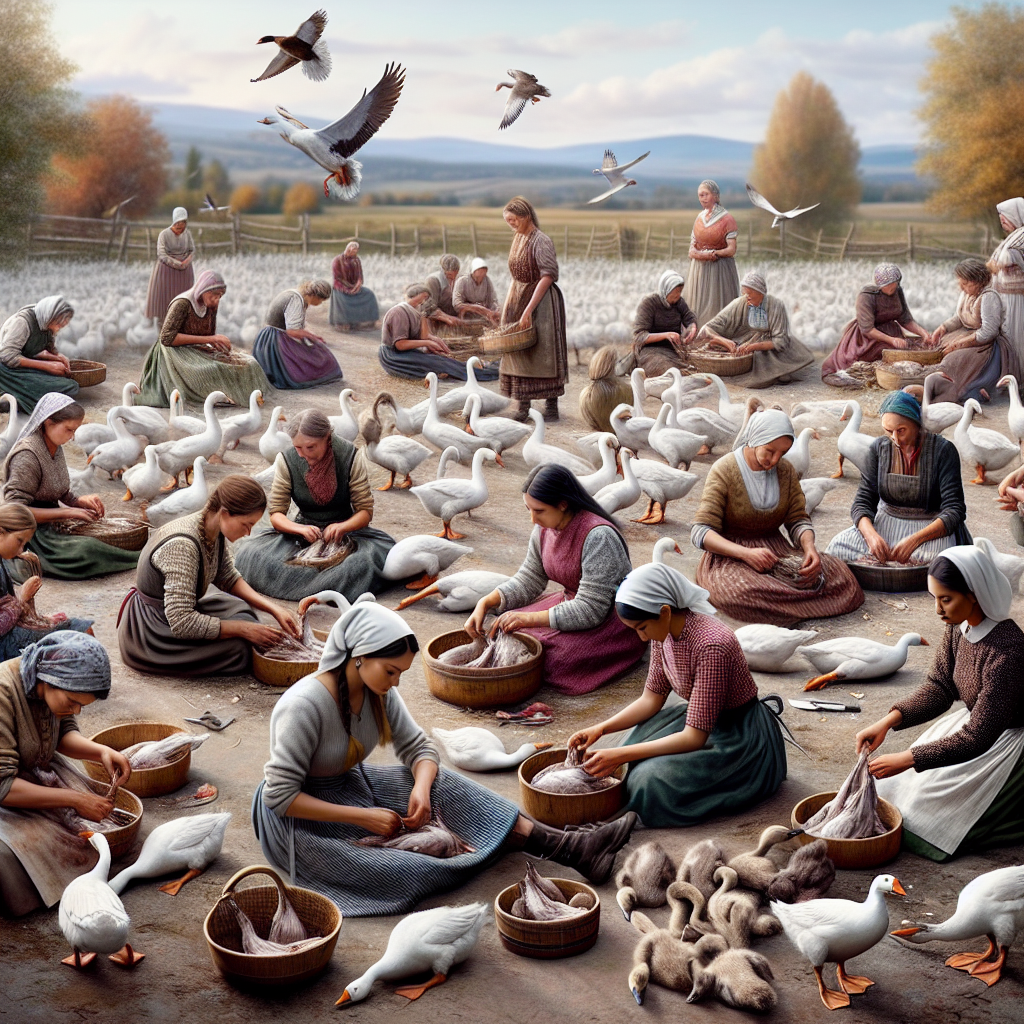

What do the Middle Ages and cozy down comforters have in common? As surprising as it may sound, the answer is artisanal women who excelled in the time-honored craft of plucking geese! Historically, women in rural European communities, particularly in regions like Flanders, Germany, and the Netherlands, became the skilled experts of this essential trade. These women, often laboring away in communal settings during the colder months, meticulously harvested the downy feathers of geese, a practice that’s more riveting than it might initially appear.
The Historical Tapestry of Goose Plucking
Goose plucking has roots stretching back to the early Middle Ages, though the craft truly soared in the 16th century as trade expanded across the continent. Women, often gathering in the warmth of their homes or barns, performed this laborious task. The tactile symphony of deft fingers tugging down feathers not only filled the air with fluff but also acted as a vital social glue, binding communities during the bleak winter months. Although it was arduous, the work was profitable, as the soft down fetched a good price and provided essential warmth against the harsh European winters.
The Craft: Art Meets Precision
To fully appreciate the nuance of goose plucking, one must understand the process, akin to a skilled artisan molding clay. The feathers need to be at the correct stage of maturity; too soon, and the bird would be harmed, too late, and the feathers lose their quality. Women used to pluck feathers after a natural molting phase to ensure geese remained unharmed—a testament to an intuitive understanding of animal welfare that resonates with today’s sustainability principles.
The art involved gently extracting the soft plumage, primarily from the chest and underbelly of the geese. These were then sorted by hand, selecting only the finest, lightest feathers suitable for producing the luxurious items that graced the homes of both the wealthy and the ingenious resourcefulness of ordinary folks.
The Science of Warmth
Why all the fuss over mere feathers, you ask? It’s simple: insulation. Goose feathers, particularly the coveted down, are remarkable insulators. This natural material traps air efficiently, which in turn retains heat, making it the perfect filling for quilts and featherbeds. This insulating capability, steeped in a blend of biology and physics, keeps you warm and toasty during chilly nights.
Further, the lightweight nature of down makes it exceptionally comfortable, offering warmth without weight, a quality synthetic materials still pursue. In fact, the precise science behind why goose down is such a superb insulator is a delightful concoction of thermodynamics and evolutionary biology—traits that geese naturally perfected over millennia to survive brisk temperatures.
The Social Stratum: Women and Work
Beyond the craftsmanship involved, the role of women in this domain speaks volumes about historical gender roles and economic networks. During an era when women's work was often unacknowledged, goose plucking shifted the narrative modestly yet significantly. It provided many women with a degree of financial independence and a respected place within their communities.
These gatherings for goose plucking acted as more than mere work sessions. They fostered a dynamic cultural exchange, where stories, songs, and skills were passed down through generations. It was a period of learning and connection, a time when women bonded and formed supportive networks, paving pathways for both social and economic empowerment.
Beyond the Feathers: A Modern Reflection
While times have certainly changed—industrialization mechanized the production of such items, significantly reducing the need for manual goose plucking—the spirit and ingenuity of these women remain commendable. Today’s appreciation for handmade, sustainable, and ethically sourced products finds roots in practices like geese plucking. This historical perspective offers rich wisdom for today’s push toward conscious consumerism and environmental stewardship.
In the continuous journey of learning and adapting, looking back at how society functioned centuries ago provides us valuable lessons in resilience, skill, and community values. These women plucked more than just feathers; they wove a tapestry of history, culture, and science that continues to influence how we live and work today.
Their legacy inspires a reflection on the interplay between tradition and progress, urging us to appreciate the crafts that shape our human experience—one feather at a time.