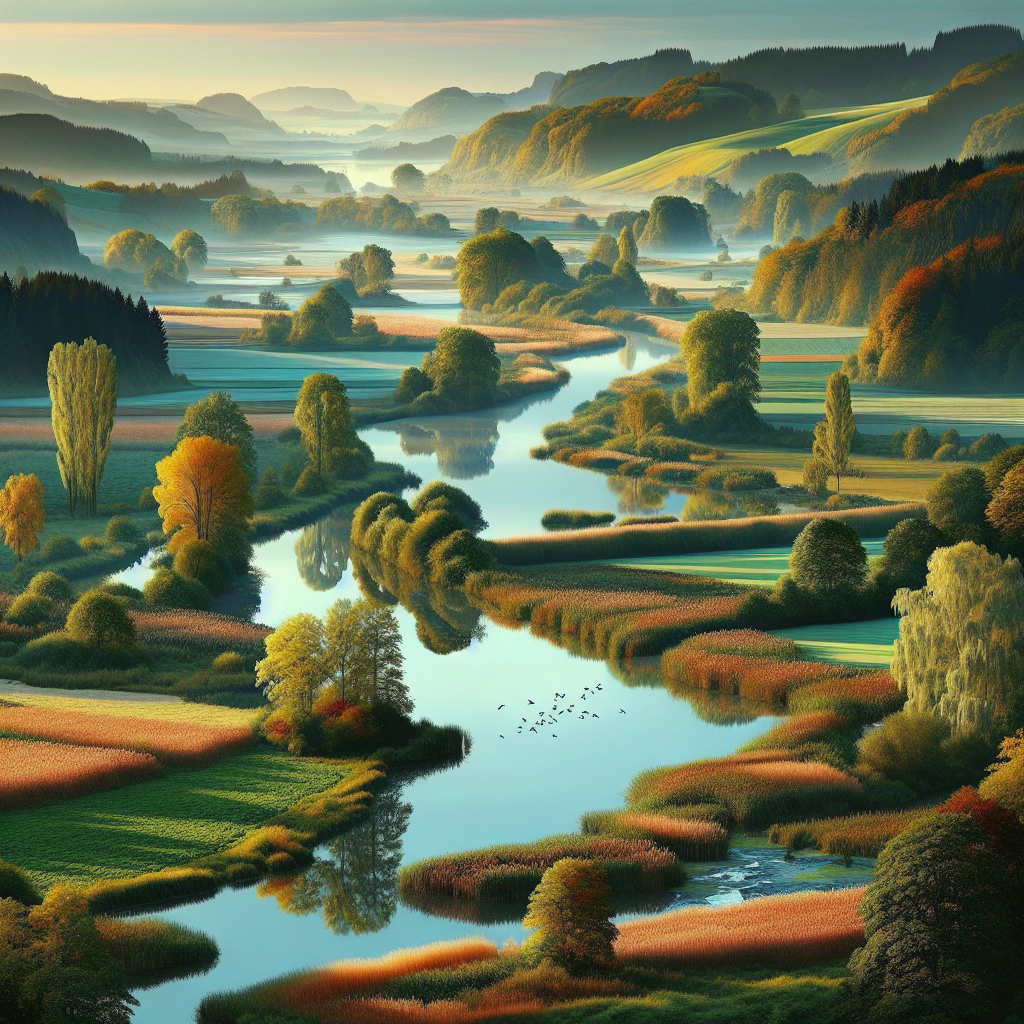


Filled with the magic of meandering rivers, lush landscapes, and a rich history woven into its very soil, the Westphalian Lowland is a hidden gem waiting to be explored. Located in the heart of North Rhine-Westphalia, Germany, this region is known for its breathtaking scenery, diverse ecosystems, and significant cultural heritage. The 'Westphalian Lowland,' or 'Westfälische Bucht' in German, serves as a cradle of Germany's industrial history and a reservoir of natural beauty—a perfect blend that calls out to scientists, historians, and nature enthusiasts alike.
A Glimpse Into the Past: The Who, What, When, Where, and Why
The Westphalian Lowland is not just a locality; it is a testimony to millions of years of geological history and human habitation. Its formation, approximately dating back to the Pleistocene epoch, showcases a landscape sculpted by glacial movements that created the distinct lowlands we see today. This shaped a region that bears the footprints of ancient tribes, medieval towns, and the dawn of the Industrial Revolution. Geographically positioned between the Teutoburg Forest and the Lower Rhine Bay, it forms part of the German Central Uplands and covers around 4,000 square miles.
But why should we care about the Westphalian Lowlands? This region embodies a living history lesson, reminding us of the complex interplay between natural forces and human ingenuity. From being a cradle of agriculture, thanks to its fertile plains, to evolving as a hub for coal mining and textile industries during the 19th and 20th centuries, the Lowland reflects human adaptation and survival. Today, it serves a greater role—an ecological haven and a cultural hotspot, merging past and present in a harmonious dialogue.
Nature's Masterpiece: Geography and Ecology
Picture rolling fields punctuated by ancient woodlands, interspersed with charming towns and villages. That’s the Westphalian Lowland in a nutshell. This fertile valley is characterized by its vast plains, some dotted with bogs and moorlands that are home to a diverse range of flora and fauna. Wetland areas like the Rieselfelder Münster are of significant importance, hosting a multitude of bird species, making it a birdwatcher's paradise.
Beneath its surface, the fertile earth supports agriculture, while the hidden veins of coal have historically powered industries. Key rivers, including the Ems, Lippe, and Ruhr, carve their way through the landscape, facilitating water supply, transport, and a natural habitat for aquatic life. The varied geographical features have also created multiple microclimates, supporting different ecosystems in the region.
The Human Footprint: Historical and Cultural Significance
It isn’t just the natural scenery that makes the Westphalian Lowland remarkable—it's also the stories embedded in its cobblestones and timbers. Archaeological findings suggest that human settlement in this region predates the Roman Empire, as evidenced by prehistoric sites and Roman artifacts.
Fast forward to the Middle Ages, and the region becomes a tapestry of fortified towns and enigmatic castles. Munster's Prinzipalmarkt is a stark reflection of medieval architecture that narrates tales of trade, power, and conflict. The Renaissance and Baroque periods left their mark through the majestic city palaces and churches dotting the landscape today.
Furthermore, the Westphalian Lowland played a crucial role during the Industrial Revolution, with coal mining and steel manufacturing industries blossoming around the Ruhr area. This transformation from agrarian plains to industrial powerhouse not only impacted Germany but influenced industrial advancements across the globe.
A Modern Renaissance: Tourism and Conservation
Today, the Westphalian Lowland entices visitors with its cocktail of nature and history. It has become a symphony of life, where cultural festivities, eco-tourism, and recreational activities beckon travelers from all corners of the world. Cities like Münster, Dortmund, and Bielefeld serve as hubs for exploring the rich tapestry of rural and urban landscapes.
Joyful festivals such as Münster's Hanseatic City Festival and Dortmund’s Christmas Market breathe life into the streets. Meanwhile, hiking and cycling trails weave through lush meadows and historic landmarks, offering a safe haven for those seeking solace in nature's arms.
Conservation efforts in the Westphalian Lowland are robust. Local and national initiatives focus on preserving its biodiversity and cultural landmarks. The Münsterland region, for instance, is known for its initiatives towards sustainable farming and land use practices, maintaining the delicate balance between use and preservation of its valuable resources.
Embrace the Spirit of Westphalia
The Westphalian Lowland stands as a testament to the incredible resilience of both nature and humans. Its lush landscapes and rich history invite us to explore, learn, and reflect. They challenge us to appreciate the complexity of ecosystems and human resilience, inspiring us to foster a deeper connection with the world around us.
So the next time you find yourself pondering the intricate dance of time, space, settlements, and ecosystems, consider this awe-inspiring region. It demonstrates not just where we've been, but where we're headed—towards a sustainable future that bridges the wonders of history with the promises of tomorrow.