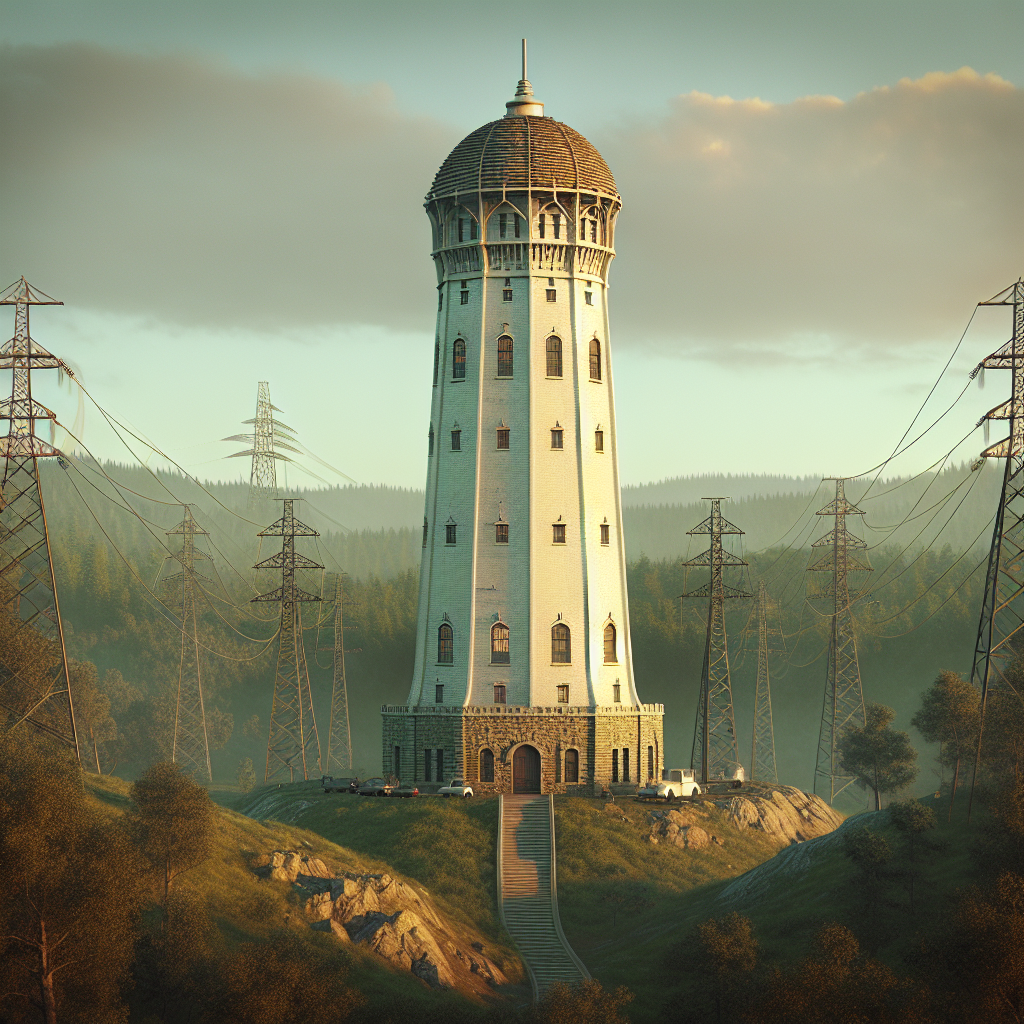

Wardenclyffe Tower: Tesla’s Unfinished Symphony of Wireless Dreams
Imagine a world where electricity flows through the air as freely as your inspiring thoughts—this was the vision of Nikola Tesla, the great inventor of the early 20th century. Wardenclyffe Tower, located in Shoreham, Long Island, New York, was Tesla's ambitious attempt to revolutionize the way humanity communicates and distributes energy. Built between 1901 and 1902, this mysterious structure was more than 200 feet tall and promised to transmit wireless electricity and data across great distances. Unfortunately, due to financial setbacks and the advent of competing technological advancements, the project was never completed, yet it remains a fascinating chapter in the history of human innovation.
Tesla, often dubbed the wizard of electricity, envisioned Wardenclyffe Tower as a groundbreaking marvel that could harness the earth's natural energy systems to power the globe without wires. This dream was not just a whimsical pursuit; it was rooted in Tesla's extensive work on alternating current (AC), which had already set the stage for modern electrical systems.
The Birth of an Idea
So, how did Tesla conceive of such an extraordinary idea? Tesla was guided by his curiosity and a relentless pursuit for pushing the boundaries of what was possible. After successfully commercializing alternating current with the help of financier George Westinghouse, Tesla turned his attention to wiring the globe—not with more wires, but with invisible energy that anyone could tap into. His belief was simple yet groundbreaking: energy and communication could be standardized, free, and anywhere. Tesla visualized a world interconnected by radio waves carrying not only voices but also images and information—essentially the outline for modern-day wireless technology.
The birth of Wardenclyffe Tower was catalyzed by the growing demand for wireless telegraphy, which was an exciting new frontier at the dawn of the 20th century. The project was financed partly by J.P. Morgan, a towering figure in the American industrial landscape. Morgan's involvement was crucial, considering the high costs and risks associated with Tesla’s uncharted waters of technological innovation.
The Tower: A Goliath with a Gentle Heart
Tesla’s design for the tower was nothing short of spectacular. At its core was a large wooden and steel framework housing a massive copper dome. The intricate architecture was deliberate; the tower was to serve as the prototype for a series of plants that would transmit signals and energy to any point on the surface of the earth. What made this vision even more mesmerizing was Tesla’s intention to tap into the natural geomagnetic forces of the planet. He hypothesized that using the ionosphere as a medium would spread energy in waves around the globe, much like a stone tossed into a still pond.
The construction of Wardenclyffe was a feat of engineering in itself. Local materials were used extensively to build the tower, ensuring it was rooted in the very land it sought to electrify. The community in Long Island watched as the gigantic structure rose, a testament to human ingenuity and the grandeur of one man's dreams.
Challenges and Setbacks
However, just as fascinating stories of exploration often encounter turbulent seas, so too did Tesla's Wardenclyffe Tower. The first and most significant hurdle was financial. Tesla had exhausted his funding and turned to J.P. Morgan for more support. Still, Morgan, driven by the practicalities of business, was cautious about investing further in a project perceived as highly speculative.
In addition to financial woes, Tesla faced scientific hurdles. His theories, though groundbreaking and elegant, were ahead of their time. The technology and materials necessary to fully realize his vision were not yet available. Even more pressing was the emergence of competitors like Guglielmo Marconi, who were making rapid advances in wireless telegraphy. As Marconi's systems gained momentum, Tesla's seemed less viable to investors.
An Idea Ahead of Its Time
The building of Wardenclyffe Tower was halted; its dreams, seemingly abandoned, turned into whispers in the history books. Sadly, in 1917, the tower was dismantled, sold for scrap to cover debts. While the tower might have fallen, the legacy of what it intended to achieve—wireless transmission of energy and information—endured in the minds of innovators.
In recent years, there’s been a renewal of interest in Tesla's work. The Wardenclyffe property has been acquired by The Tesla Science Center at Wardenclyffe, a non-profit organization committed to turning it into a museum complex aimed at inspiring future generations. This initiative represents more than a tribute to past triumphs; it views the tower's story as a beacon for future exploration and boundary-pushing innovations.
Tesla's conceptions of wireless technology have become a part of our everyday lives. From Wi-Fi to global positioning systems, his dreams resonate around us today, making his work seem less like abandoned visionary musings and more like prophecies fulfilled. The tale of Wardenclyffe Tower reminds us that extraordinary goals may require extraordinary bounds, but even dreams that seem to fall short can spark the innovation that reshapes our world.
Conclusion
Wardenclyffe Tower stands as a monument to ambition and imagination. As we explore the towering vistas of science and technology today, we are carefully traversing the maps drawn by pioneers like Tesla. His work not only sparked innovations that succeeded long after his lifetime but also continually beckons us toward the future’s infinite possibilities.