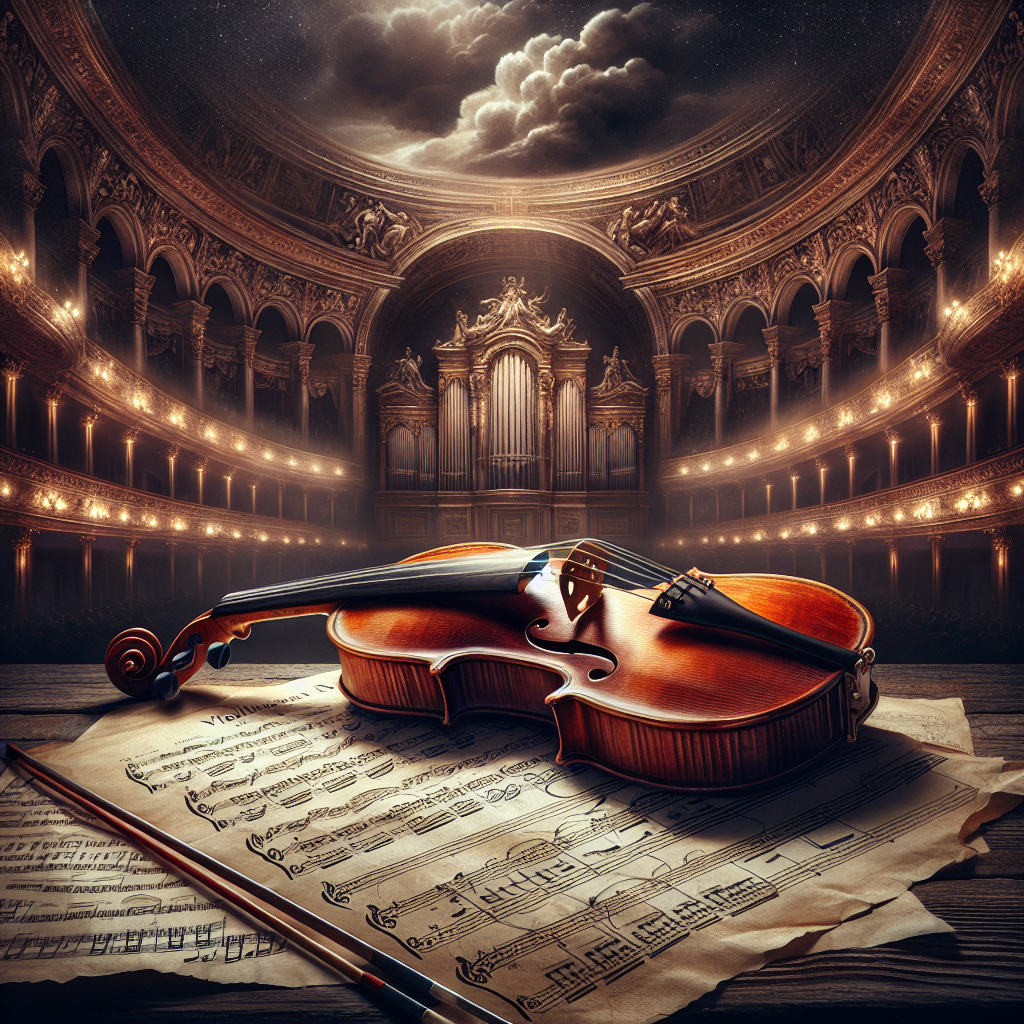

Unlocking the Passionate Soul of Beethoven's Violin Sonata No. 9
Intrigue and innovation dance together in Beethoven's Violin Sonata No. 9, a composition that embodies the extraordinary spark of human creativity. Created by Ludwig van Beethoven in 1803 in the heart of Vienna, this sonata, also known as the "Kreutzer Sonata," was intended for the violinist George Bridgetower, but was eventually dedicated to Rodolphe Kreutzer. It exemplifies the dramatic and passionate energy that has come to define Beethoven’s work and has kept audiences captivated for over two centuries.
Setting the Stage: A World on the Brink of Change
Before immersing ourselves in the beauty of the Kreutzer Sonata, let's take a step back to see the world Beethoven lived in. The year 1803 was a pivotal time in European history. Napoleon Bonaparte was reshaping the continent’s politics, and society was on the edge of monumental changes. Vienna, a vibrant hub of artistic life, was the perfect cocoon for Beethoven's genius to unfold.
Within this dynamic backdrop, Beethoven challenged the classical boundaries of music, continuously innovating and experimenting with emotional depth. His ninth violin sonata was a powerful testament to this rebellious spirit, setting a new standard in both composition and execution.
The Creation: A Symphony of Drama and Emotion
Beethoven’s Violin Sonata No. 9 is no ordinary composition. Spanning three movements, it courageously explores new emotional territories. Its first movement, Adagio sostenuto – Presto, is an electrifying statement that sets the stage with a slow, elaborate introduction that then bursts into a fast-paced, tumultuous presto. Here, the listener is bombarded with a whirlwind of emotions—anger, passion, perhaps even defiance—capturing the essence of a world undergoing transformation.
The second movement, Andante con variazioni, shifts the atmosphere entirely. Now, the rhythm is more reflective and peaceful, like gentle ripples on a tranquil lake. Beethoven introduces variations on a theme, demonstrating his genius for structural innovation paired with emotional expressiveness. Each variation adds a new layer of complexity, inviting listeners to float away from the chaos into a serene world of contemplative beauty.
Finally, the last movement, Finale: Presto, brings the sonata to a breathtaking climax. It’s lively, it’s exuberant—it’s inherently celebratory. Through its contagious energy, Beethoven enchants us into the dance-like vitality of this closing piece, leaving us breathless and speechless.
The Human Element: Dedication and Inspiration
Though the sonata is famously linked to Rodolphe Kreutzer, Beethoven’s original dedication reveals a different story. George Bridgetower, a prodigious violinist of mixed race, was the first to perform the sonata with Beethoven himself at the piano. Their collaboration was supposedly nothing short of spectacular. However, due to a personal quarrel, Beethoven rededicated the sonata to Kreutzer, who apparently never performed the piece—claiming it too complex and beyond his taste.
This shift in dedication speaks volumes about Beethoven’s impassioned personality, his ability to break away from societal norms, and his determination to push musical boundaries. Through the sonata, Beethoven honors human diversity and genius, embedding a universal spirit of determination and passion into its notes.
The Lasting Legacy: A Timeless Influence
The influence of the Kreutzer Sonata has penetrated deeply into the realm of classical music. It ignited a new era for the violin sonata, combining the instrument’s expressiveness with unprecedented dramatic depth. Its challenging technical demands have also made it a right of passage for seasoned musicians across the globe.
Inspiration from this piece races beyond the world of music. The sonata was notably featured in Leo Tolstoy’s novella “The Kreutzer Sonata,” where it becomes a potent symbol of human passion and jealousy. This cross-medium interaction underscores the universal appeal and the profound emotional truths embedded within Beethoven’s creation.
Embracing Beethoven's Vision: A Scientific Perspective
From a scientific standpoint, Beethoven’s Violin Sonata No. 9 serves as a fascinating study in the neurological impact of music on the human brain. Its ability to elicit powerful emotional responses reflects our innate neurological reactions to melody and rhythm, speaking to music’s role as an essential element of human culture.
Moreover, Beethoven’s work invites us to reflect on the influence of our environment on creativity. Living amidst political upheaval, Beethoven transformed turbulence into artistic expression, showing how adversity can fuel creative brilliance. This observation is not just inspiring but scientifically intriguing, emphasizing the adaptability and resilience of the human mind.
The Joy of Continuous Exploration
Beethoven’s Violin Sonata No. 9 invites each of us into an ongoing journey of exploration. As we engage with this masterpiece, we uncover layers of emotional complexity and technical prowess, gifting us with newfound insights each time we listen. Indeed, Beethoven’s sonata endures not only for its musical genius but for its celebration of the imaginative spirit and indefatigable will of humanity.
To embrace Beethoven’s creation is to marvel at the profound depths of human potential—how, even amidst uncertainty, we can craft beauty that resonates through time, magnifying both the grandeur and fragility of existence through art.