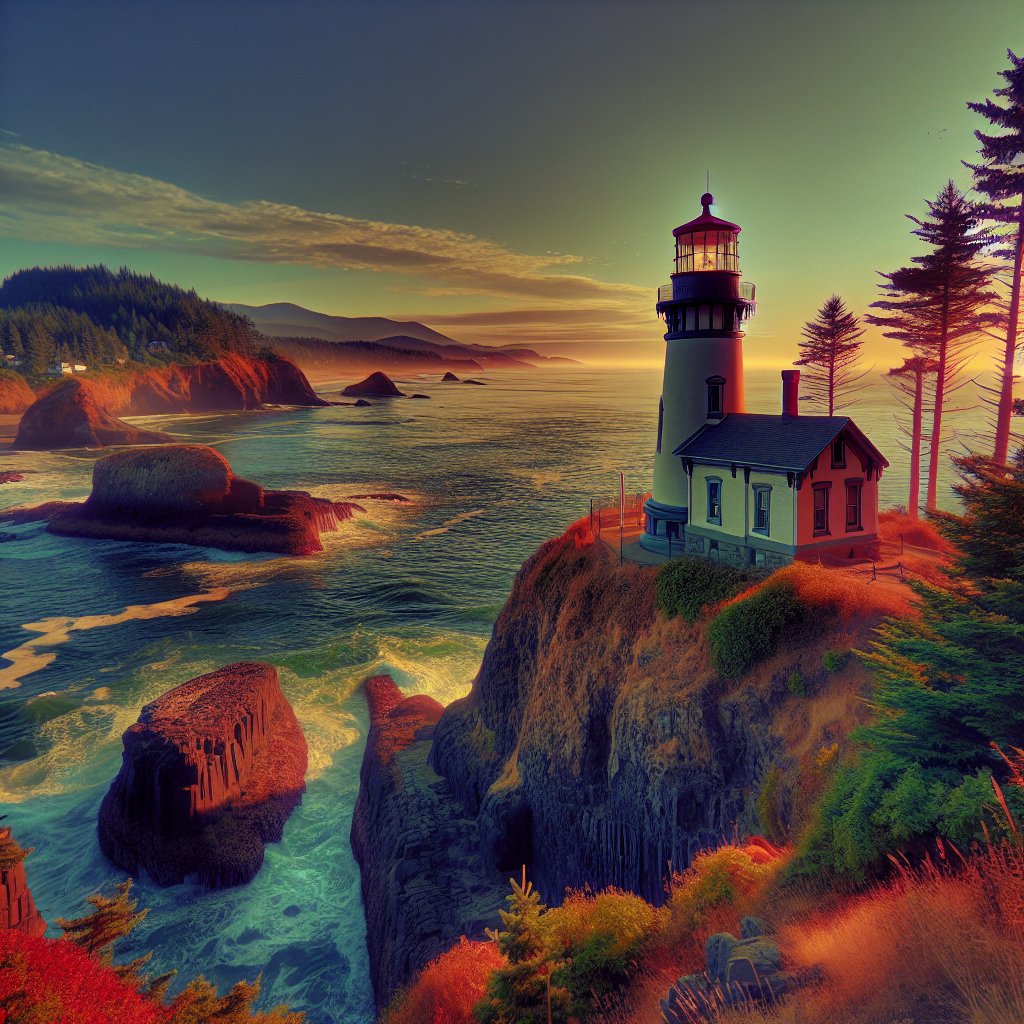


In the world of lighthouses, few stand as beacons of resilience and history like the Umpqua River Light. Nestled on the picturesque Oregon coast near the town of Winchester Bay, this lighthouse has not only witnessed the turbulent waters it guides ships through, but it has also endured a fascinating history of destruction, rebirth, and innovation. Established in 1857 and rebuilt in 1894, the Umpqua River Light enchants visitors with its unique, captivating design and impressive lens that flashes beams of nostalgic red and white light to ensure mariners safely sail their journeys.
Historical Significance: Witness to Change
The original Umpqua River Lighthouse was built before Oregon even joined the United States, crafted in 1857 to serve the burgeoning seafaring routes along the Pacific. Unfortunately, the location was prone to flooding, and the first structure was swept away in 1864. This early catastrophe was a blessing in disguise as it led to the lighthouse being rebuilt, better than before, positioned on a cliffside to withstand time and tide more effectively.
The new lighthouse showcased architectural forethought, erected from brick to endure the harsh coastal climate. The unique Fresnel lens, introduced in the second structure, was groundbreaking for its time. These lenses revolutionized lighthouse technology by more efficiently focusing the light, providing far-reaching visibility like never before.
The Magic of Fresnel Lenses
Let’s take a brief detour into the fascinating world of Fresnel lenses. Invented by French physicist Augustin-Jean Fresnel, these lenses consist of a series of concentric grooves that magnify light into a powerful beam. This innovative design reduces the amount of material required compared to a conventional lens, making it not only lighter but also far more effective. To this day, the Fresnel lens of the Umpqua River Light casts a beam visible for up to 21 nautical miles, guiding mariners safely to shore.
Architectural Beauty and Technological Might
The Umpqua River Light is indeed a sight to behold. With its elegant red and white architecture, it seems to blend seamlessly into the vibrancy of its surroundings. Its beauty, however, serves a purpose far beyond aesthetic appeal; the coloring increases visibility against the backdrop of the sometimes foggy coastline. Moreover, its position on a cliff provides a vantage point that maximizes the reach of its light.
One cannot overlook the human ingenuity imbued in this structure. It hasn’t merely been a lighthouse; it has been a technological hub and a canvas for architectural exploration. Over the years, automation has modernized the operation of the light, but the soul of this majestic lighthouse remains untouched — a tribute to relentless human pursuit of safety and innovation.
A Visit to Remember
A trip to the Umpqua River Light offers more than just a photo opportunity. Visitors can explore the nearby museum, which is a treasure trove of artifacts and stories. It aids in understanding the cultural and historical context of lighthouse keepers, who played vital roles in the maritime history of the region. The museum also conducts guided tours, giving you a deeper insight into the operational intricacies and historical anecdotes surrounding this venerable lighthouse.
Moreover, the area around the lighthouse is peppered with the natural beauty of Oregon's coast. The lush landscape and the rhythmic sound of waves are inviting perks for nature lovers and history enthusiasts alike. It is a great place to sit back, imagine a time devoid of modern navigational technology, and respect the challenges—and triumphs—of maritime history.
Keeping the Light Alive for Future Generations
There is something inherently optimistic about maintaining such historical landmarks. The Umpqua River Light serves as a beacon of heritage and education. Dedicated preservation groups and volunteers work tirelessly to ensure that this piece of functional art continues to stand, not only as a lighthouse but as a source of inspiration.
The gratitude towards these custodians of history cultivates a want to learn, protect and cherish the engineering marvels and the stories they carry. In celebrating these historic lighthouses, we are not just preserving bricks and lenses, but we are also embracing the living chapter of humanity’s quest to navigate through the unknown.
Conclusion
In the dance between progress and preservation, the Umpqua River Light epitomizes an optimistic narrative of human capability and endurance. Though technology evolves, these stalwart towers of light remind us of an era where the human element was essential to navigating the world’s vast and unpredictable seas. Whether you’re a student of history, an enthusiast for engineering, or simply a seeker of beauty, the Umpqua River Light is an inspiring historical beacon urging us to keep exploring and learning.