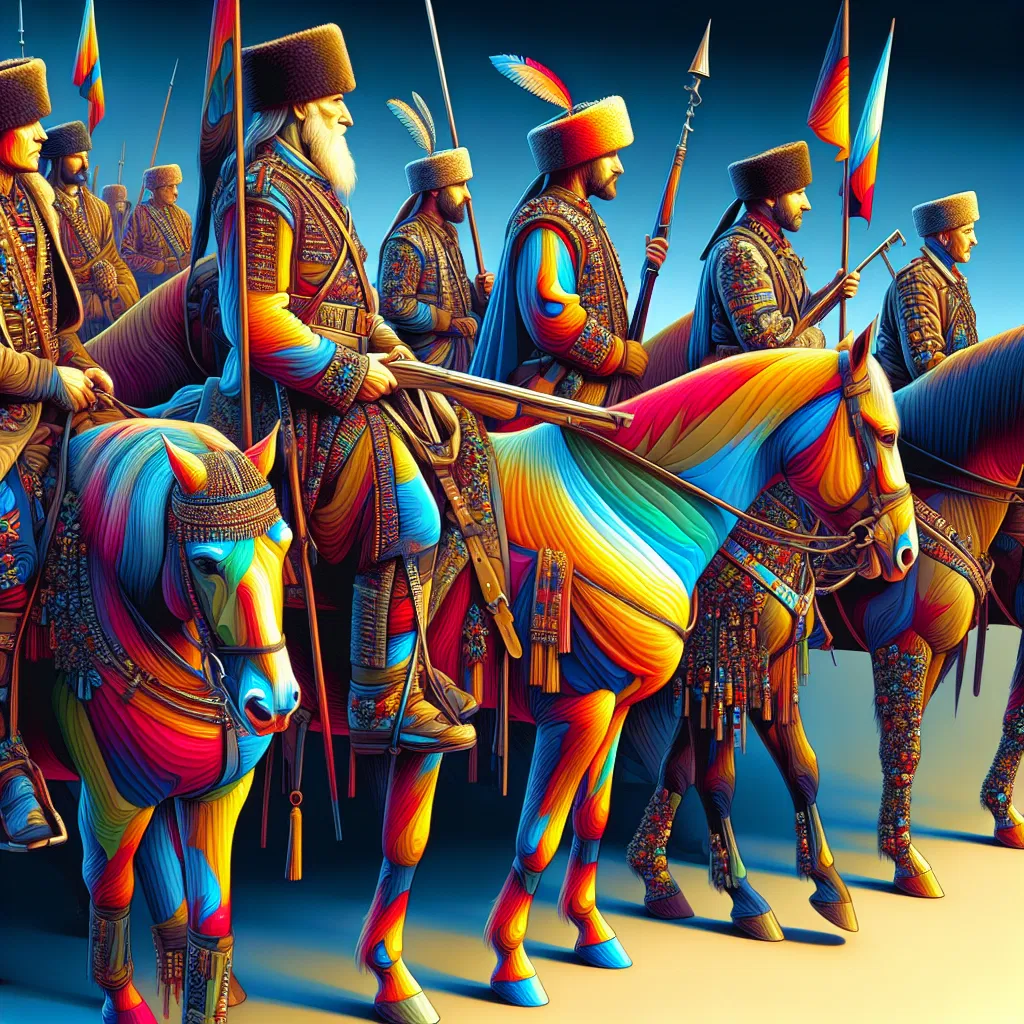

The Dance of Swords: Ukrainian Registered Cossacks
Picture a group of valiant warriors galloping across the windswept plains of Eastern Europe, their banners fluttering in the breeze—a sight both majestic and brimming with the energy of a proud heritage. Welcome to the intriguing world of the Ukrainian Registered Cossacks, a beacon of autonomy and bravery amidst the tumult of history.
Who, What, When, Where, and Why?
The Ukrainian Registered Cossacks, a phenomenon known for their military prowess and fight for autonomy, emerged primarily during the 16th and 17th centuries. These formidable warriors roamed the regions of modern-day Ukraine and were initially part of Poland’s military strategy in the ever-contested plains of Eastern Europe. But why were they called "registered"? Simply put, because they were officially documented as part of the military registers of the Polish-Lithuanian Commonwealth. Their contribution? Establishing a unique, semi-autonomous society characterized by democratic governance and a profound love of freedom—traits that remain influential to this day.
Let's Dive Into the History!
During the 16th century, as the Polish-Lithuanian Commonwealth battled to maintain its eastern frontiers, they faced a challenging mix of internal strife and external threats. It was against this backdrop that the Registered Cossacks emerged as influential players. Originally autonomous groups, these fighters from the steppes began to be incorporated into the Commonwealth’s military as ‘registered’ units—distinct and formidable forces meant to counter Tatar raids and other threats.
However, registering Cossacks proved to be a double-edged sword for the Commonwealth. While it provided skilled soldiers, it also sowed the seeds of resistance. Why? Because the Cossacks, despite their allegiance, deeply valued their independence and resented any attempt by the Commonwealth to limit their traditional freedoms or cultural practices.
An Eclectic Society
The Cossacks were not just about warfare. They built a unique society that was equal parts military camp, town, and democratic republic. Their communities were known as 'Sich', and they functioned nearly as independent city-states on the banks of the Dnieper River. Leadership was chosen democratically and any man, regardless of his origins, could rise through the ranks based on merit.
Their unique system of social organization, founded on principles of equality and community decision-making, was groundbreaking for its time. Imagine, centuries ago, a society where a common man could debate and even argue with their leader. This brave and innovative mix - call it the Cossack spirit - offers a fascinating glimpse into how societies can evolve under challenging conditions.
Culture and Camaraderie
Cossack life wasn't all about military campaigns and politics. These resilient people indelibly marked Eastern European culture with their vibrant customs. They were celebrated for their folklore, including the energetic, acrobatic dances known as ‘Hopak’, their music, and vividly colored attire.
Camaraderie and a shared sense of identity were the lifeblood of Cossack society. Festivals, music, and the exchange of tales around the campfire built a strong community spirit. It wasn’t just about survival—it was about thriving in their lifestyle, which was as vibrant as it was valiant.
A Legacy of Freedom
As time rolled on, the winds of change scattered the Cossack troops and altered their society. Yet, their legacy endured, especially during pivotal moments in Ukraine's journey towards statehood. The 1648 Khmelnytsky Uprising against Polish rule was a landmark event, fueled in part by the Cossack spirit and culminating in a stride towards Ukrainian independence.
Fast forward to modern times, the essence of the Cossacks has been interwoven into Ukraine’s nationalism, patriotism, and continued struggle for sovereignty. They remain a symbol of resistance and identity, serving as a testament to Ukraine's resilient and indomitable spirit in the face of adversity.
An Optimistic Gaze at Today
Today, the cultural echo of the Cossacks can still be felt in Ukraine and beyond. They have become synonymous with themes of freedom, resistance, and national identity. Groups across Ukraine proudly carry the Cossack legacy, whether through reenactments, cultural events, or participatory commemorations along the Dnieper.
In a world where the lessons of the past can illuminate the future, the story of the Ukrainian Registered Cossacks inspires us towards a future of unity and cultural celebration. It’s a reminder of how societies can be nurturing and democratic even in the face of daunting adversities.
Their enduring narrative is not just a historical footnote; it’s a celebration of humanity’s perpetual quest for autonomy and expression—a tale as vibrant and resilient as the lands from which it sprung.