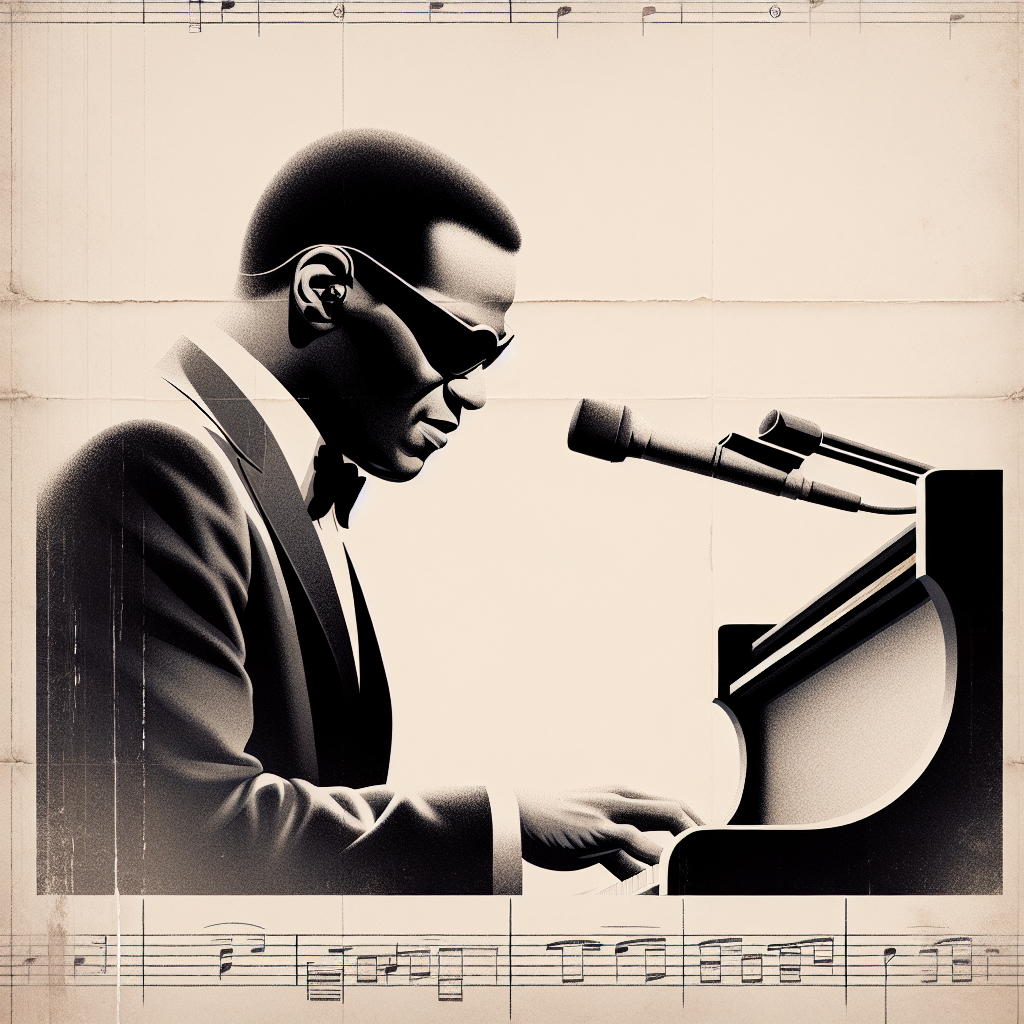

Ray Charles: A Musical Maestro Who Crafted the Soul of America
Did you know that a single man could encapsulate the essence of American music through just his fingertips and voice? This extraordinary feat was accomplished by none other than Ray Charles, a musical genius who transformed the music landscape in the 20th century and beyond. Born on September 23, 1930, in Albany, Georgia, Ray Charles Robinson didn't just play and sing; he made history. His journey from a small town to global stages embodies the power of talent merged with an unyielding spirit, showing us that music truly has no boundaries.
The Who and What: A Revolutionary in Every Sense
Ray Charles was a musician who refused to be pigeonholed. He effortlessly fused rhythm and blues, gospel, and blues into a style entirely his own, laying the groundwork for modern soul music. While blind from the age of seven, Charles possessed a vision that the world could see through his music. But who exactly was Ray Charles, and what made him an enduring figure not just in jazz or soul, but in music as a whole?
Starting off in the music world in the late 1940s, Ray Charles brought a unique sound that was both groundbreaking and controversial. His bold styles and electric performances captivated audiences worldwide. Charles’s innovation came from his ability to mix genres—styles that were typically kept apart—creating soulful, heart-stirring melodies that resonated with millions.
The When and Where: Transformative Years
During the 1950s and 1960s, Ray Charles hit his stride, leveraging the transformative power of cities like Los Angeles, New York, and Chicago to produce groundbreaking records. The world first took notice with the release of "What'd I Say" in 1959, which flawlessly blended gospel-like fervor with a pounding R&B rhythm. This was not just a song but a movement, signifying a turning point in how the world experienced music.
Charles’s LP "Modern Sounds in Country and Western Music" released in 1962 broke down racial barriers in music and society. This was a time when America was wrestling with its own societal divides, yet here was an African American artist crossing these very lines with ease and grace. Simply put, he helped mainstream America appreciate forms of music typically underrepresented.
The Why: Lasting Impact and Musical Brilliance
Why does Ray Charles continue to be celebrated? His ability to express raw human emotion through music touched the very fiber of those who listened. Songs like "Georgia on My Mind" and "Hit the Road Jack" are timeless classics that continue to transcend generations. Charles not only mastered delivering profound emotional depth but also catered to the appetite for catchy and rhythmic tunes.
His influence laid the foundation for many musicians who came after him, inspiring greats like Aretha Franklin, Stevie Wonder, and even modern artists like John Legend. Ray Charles’ sheer bravery in crossing musical and societal boundaries empowered countless musicians to challenge existing norms.
Scientific Sound Meets Soulful Interpretation
Beyond his artistic feat, let's peek into the realm of science; it might be intriguing to explore how the lack of one sensory input can sometimes heighten others. This is evident in Charles’s extraordinary musical acumen, allowing us to appreciate the wonders of the human brain. According to some scientific studies, individuals who are blind often display heightened senses of hearing, and with Charles, this was quite probably the case. Such is the profound beauty of human capability.
The optimism in Ray Charles’ music lies in its ability to speak to everyone, asking us to live authentically and connect deeply. His story is a testament to the resilience of the human spirit—one that continued to create light even in the darkest times.
Key Albums and Masterpieces
"What'd I Say" (1959): A quintessential album defining the rock ‘n’ roll era with its energetic mix of gospel and R&B sounds. It was an early game changer that illustrated Charles’s sound mastery.
"Modern Sounds in Country and Western Music" (1962): This album saw Ray break into uncharted territories, combining country, soul, jazz, and blues to create a universally appealing masterpiece.
"Genius + Soul = Jazz" (1961): This big band jazz album was not only a commercial success but also critical, showcasing Charles’s ability to slide between musical instruments effortlessly.
The Influence That Lives On
Today, Ray Charles remains a symbolic figure in the music world and popular culture, representing inclusivity and innovation. His music, saturated with emotional gravity and uplifting melodies, continues to inspire musicians and music lovers alike. Music has this unique ability to form connections across time and space, bridging people from different backgrounds, and Ray Charles exemplified this unity through his art.
As we admire Ray Charles’s contributions, let's remember him not only as a musician but as a beacon of human potential. With every note he played and every song he sang, Charles reminded us of our innate ability to touch, change, and unite. Here is to the pioneering genius that is Ray Charles, who taught us that the sweetest melodies come from the soul.