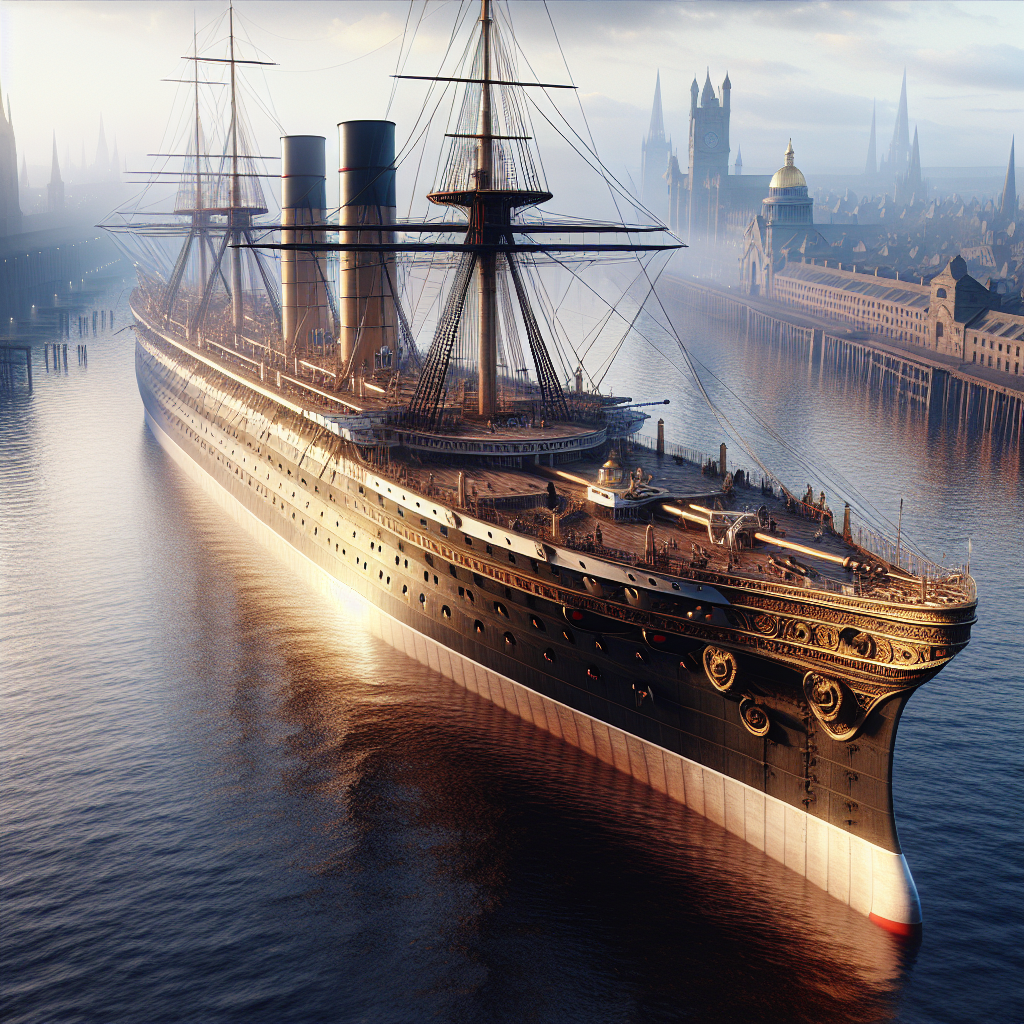

Imagine a ship that was both literal and metaphorical in its enormity – a dazzling feat of engineering that changed the face of maritime travel forever. Ladies and gentlemen, boys and girls, today we set sail on an enlightening voyage through history aboard the SS Great Britain, a colossal marvel designed by the brilliant Isambard Kingdom Brunel. Launched in the Cambrian brilliance of 1843 in Bristol, England, this vessel wasn’t just a ship; it was a statement of human ingenuity that would come to influence shipbuilding for centuries to come.
Who, What, When, Where, and Why
The SS Great Britain was born from the innovative mind of Isambard Kingdom Brunel, a visionary who dared to weave exceptional designs into the fabric of the Industrial Revolution. What Brunel created was not just another sea vessel but the first-ever iron-hulled passenger steamship powered by a screw propeller. This engineering marvel was launched in the bustling shipyards of Bristol in 1843 to address the growing demand for transatlantic voyage. It was designed to respond to the world's appetite for speed, connectivity, and progress, bringing the globe a tad bit closer.
The Birth of a Maritime Legend
In the 19th century, the great oceans were uncharted realms brimming with both opportunity and challenge. The SS Great Britain was a calculated response to such duality. It stood at a crossroads of tradition and innovation, combining the might of iron hull construction with the then-revolutionary concept of screw propulsion.
To put things in perspective, prior vessels had relied on paddle-wheel engines, which lacked efficiency and often struggled against the mighty ocean waves. Brunel's use of a screw propeller not only improved propulsion efficiency but also laid the bedrock for future naval innovations.
The Architecture of Ambition
What made the SS Great Britain extraordinary wasn't just her propulsion system but also her sheer size and capacity. She measured 322 feet in length and could carry over 700 passengers alongside 1,200 tons of cargo, an unfathomable feat for that era.
Her towering masts rose nearly 100 feet, adding to the grandeur of a ship that dwarfed many of its contemporaries. Made primarily of iron, the hull was stronger and more durable compared to wooden ships, making it less prone to warping and ultimately safer. In many ways, the SS Great Britain was a precursor to today's modern cruise liners, a testament to Brunel's foresight.
Charting New Waters
Launched amidst great fanfare, the SS Great Britain swiftly made her maiden voyage across the Atlantic from Liverpool to New York in 1845, a journey usually filled with peril yet now less daunting under her sturdy hull. This was more than a commercial venture as it cemented the ship's place in maritime lore. Her journeys extended beyond the Atlantic, making voyages to the growing lands of Australia carrying emigrants running toward new opportunities.
Yet like all voyages, not everything was smooth sailing. In 1846, a gravely miscalculated course resulted in the ship being grounded on the shoals of Dundrum Bay in Ireland. After several months and global fundraising efforts, she was rescued, repaired, and on her way across the high seas once more.
An Evolutionary Journey
Not one to simply swim with the tide, the SS Great Britain kept evolving. After being refloated, she was converted into a full-fledged passenger vessel on the Australia run. Her voyages witnessed a tapestry of colorful stories, from brave adventurers seeking gold in the Australian rush to war veterans returning home.
Later, in an unprecedented transformation, she became a cargo ship, hauling coal from Wales to San Francisco, influencing the trade routes upon which modern economies were built.
The Long Sleep and Rebirth
By the late 19th century, as technology marched forward, the SS Great Britain had already done her fair share of waving goodbyes to the world. She was scuttled in the Falkland Islands in 1886, where she lay dormant for decades as the world moved on.
Then came a modern renaissance! In 1970, the ship was rescued from her watery tomb and returned to Bristol for restoration. What followed was nothing short of a miracle facilitated by relentless human spirit and collaboration. She now rests in her original dry dock all meticulously restored and open to the world as a floating museum and a poignant reminder of a turning point in our evolution of technology.
Learning and Inspiration
When you stand aboard the SS Great Britain today, it's not hard to imagine the excitement and curiosity that fueled her conception. Equipped with interactive displays, insightful exhibitions, and the ship's painstakingly restored body, the museum offers a panoramic view of the incredible breakthroughs of our industrial ancestors.
Her legacy goes beyond a magnificent ship; the SS Great Britain is a compass guiding our forays into the undiscovered. She symbolizes hope, innovation, and the relentless drive of humanity to expand horizons – a celebration of our shared capacity to transform dreams into reality.
So next time you peer across a bustling harbor, remember the SS Great Britain, a testament to what we can achieve when we dare to aim for the extraordinary.