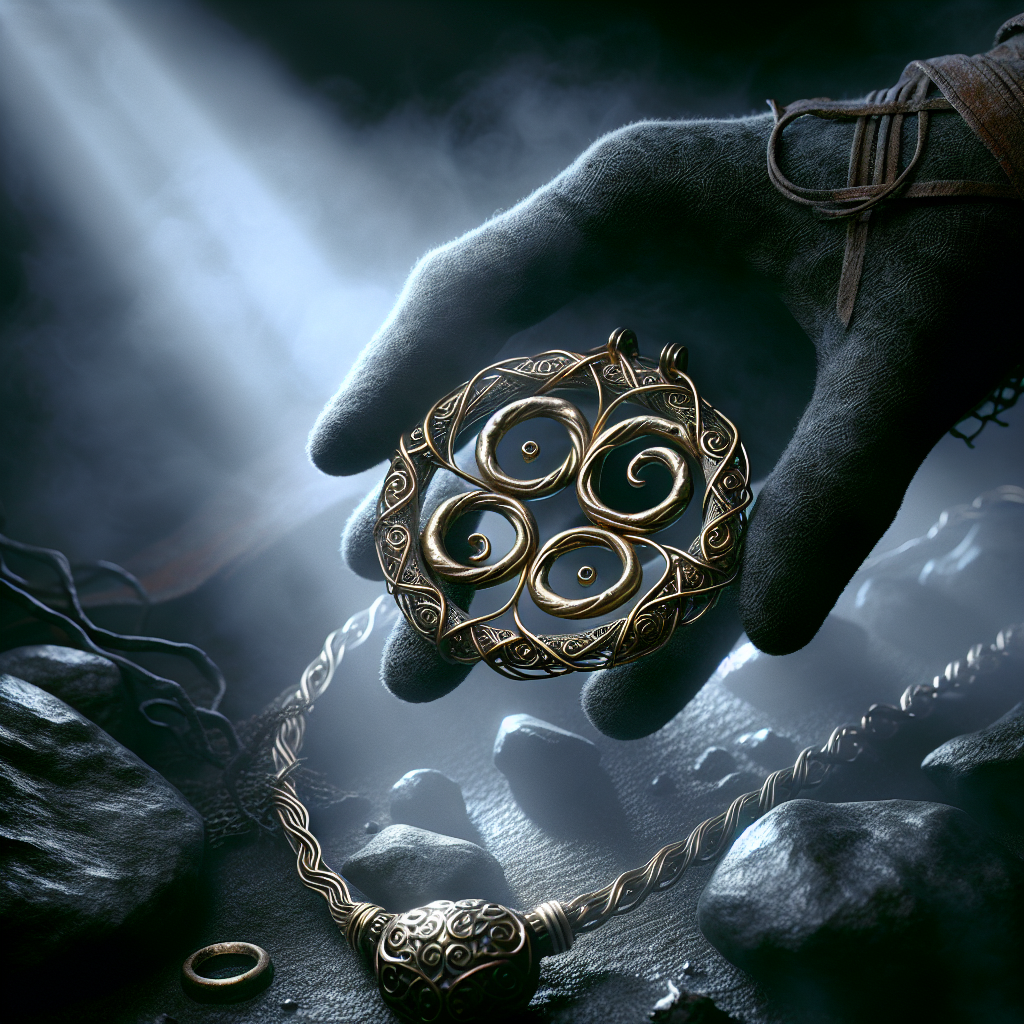

It’s not every day you come across a piece of jewelry that’s over 2,000 years old. Yet the Sedgeford Torc, discovered in the pleasantly unexpected landscape of Norfolk, England, does just that—bridging a gap between now and the Iron Age with just a twist of gold. Who would have thought that a field in Sedgeford, a bucolic corner of Britain, would yield such a spectacular jewel when an amateur metal detectorist unearthed it in 1965? It was a gleaming thread connecting past to present, casting its golden aura over years of history and sparking endless curiosity about the enigmatic people who crafted it.
But wait, what exactly is a torc? The word 'torc' is derived from the Latin 'torquis,' meaning 'to twist.' These are not ordinary necklaces but rather remarkable decorations made typically from gold or other metals, intended to drape majestically across the neck. Our fascination today stems from their craftsmanship—beautiful, yes, but also incredibly complex for their time. The mastery and skill the ancient Celts exhibited in their work speak volumes of their culture, their values, and their technological acumen.
The Sedgeford Torc stands out not just for its age or beauty, but for what it represents about the society that produced it. Crafted sometime between 200-50 BC, this particular torc is a reminder of the sophistication that marked the Celtic tribes of Iron Age Britain. Imagine a time when electricity, internet, and modern machinery were only figments of an unfathomable future’s imagination. And yet, the Celts managed striking achievements in metallurgy, a testament to their ingenuity and prowess.
Possessing a sophisticated twisted design typical of the era and area, this torc displays a level of technical proficiency that intrigues both archaeologists and historians alike. The torc hoops elegantly around the wearer’s neck, with the twists and turns forming patterns that suggest a deeper cultural symbolism perhaps tied to power or tribal identity. It's theorized that such items were used for ceremonial purposes or worn by individuals of high status, marking their importance in society.
The context of its discovery can't be overlooked—an amateur treasure hunter's dream turned historical jackpot when the Sedgeford Torc was uncovered. The thrill of unearthing such an object cannot be understated, not just for its immediate aesthetic value, but also for the questions it raises about the ancient peoples of Britain. What stories could this piece tell about trade, social hierarchy, and artistic endeavor during its time? Each spiral, each carefully executed twist of gold could hold insights into a bygone era far beyond our current academic grasp.
Now ensconced safely within the collection of the British Museum, the Sedgeford Torc continues to captivate thousands of visitors each year. People flock to see it, drawn by the beauty and mystery it embodies. It forms part of a larger narrative that links the island’s modern inhabitants to their diverse and vibrant predecessors.
Its significance also underlines the ingenuity of the human species. Despite the lack of technological advancements by today’s standards, the early Britons were no slackers; instead, they were remarkable innovators in their own right. Goldsmiths and artisans of the Iron Age showed resourcefulness and creativity that laid foundational stones for the technology we now often take for granted.
Most intriguingly, the allure of the Sedgeford Torc lies not just in its evident craftsmanship, but in how much it invites us to learn. Each detail challenges us to dive deeper into the social tapestries of history, beckoning both the expert scholar and the casual observer to understand more. It mingles the tangible reality of human achievement with the tantalizing shadow of unanswered questions about our ancestors' lives.
The discovery of such treasures makes one optimistic about the richness of history remaining yet to be uncovered, offering priceless windows into human evolution and culture. Holding a relic like the Sedgeford Torc is like clutching a piece of human curiosity incarnate, bridging the vast aisle of time between then and now. Unearthing mysteries like this encourages a continual quest for knowledge, rewarding humankind's endless inquiry about its own past.
Sedgeford Torc is not just a relic but a reminder of our shared cultural heritage. It calls upon us to appreciate the depths of history, and perhaps more importantly, reminds us of our perpetual journey of discovery, a journey that is optimistic and bound only by the limits of our imagination.