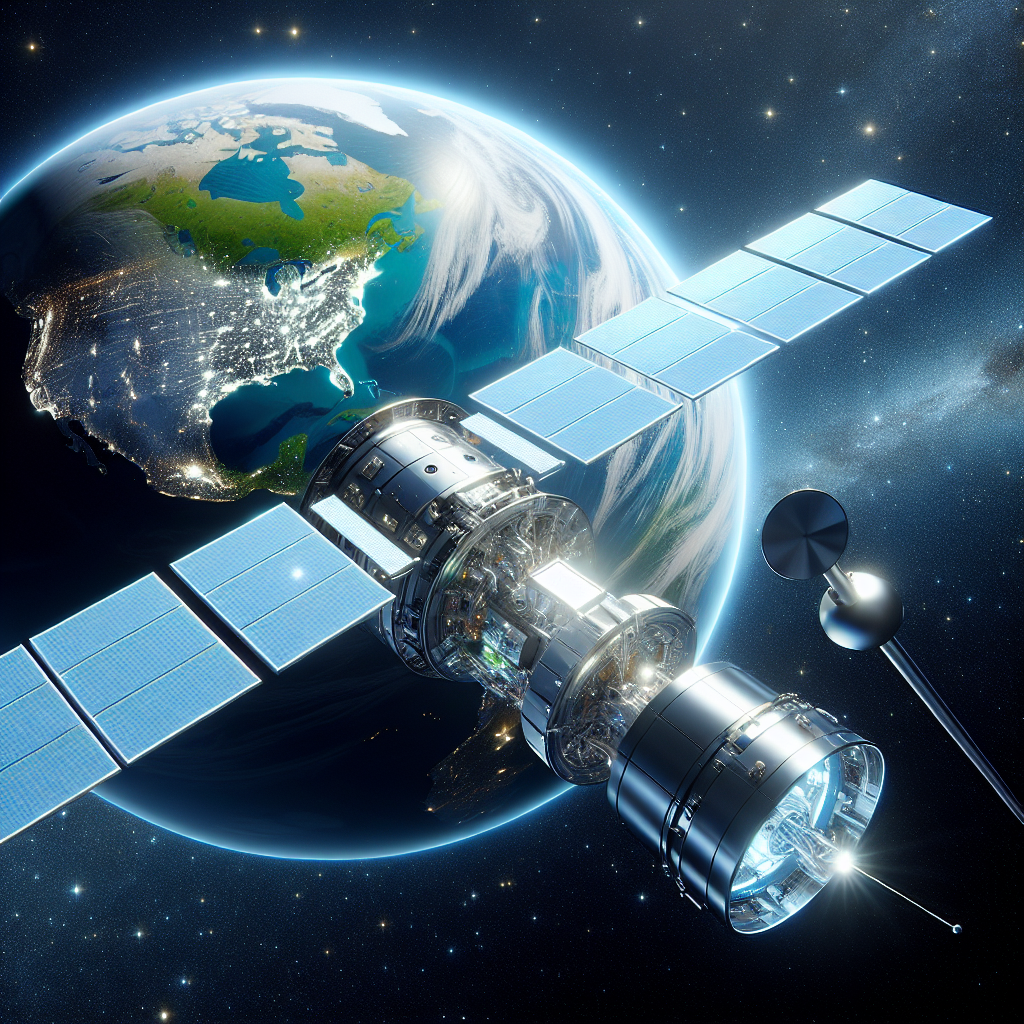

Hitching a Ride on a Satellite: The Future of Space Travel
Imagine catching a ride on a satellite as it zooms through the cosmos! This isn't just science fiction; it's a burgeoning reality in the world of space exploration. Satellite rides, also known as "rideshare missions," involve multiple payloads sharing a single launch vehicle to reach space. This innovative approach is being spearheaded by companies like SpaceX, Rocket Lab, and Arianespace, who are revolutionizing how we access space. The concept took off in the early 21st century, primarily in the United States and Europe, as a cost-effective solution to the high expenses associated with launching satellites. The "why" behind this trend is simple: by sharing the ride, companies can split the costs, making space more accessible to a wider range of organizations, from small startups to large governmental agencies.
The Mechanics of Satellite Rides
The mechanics of satellite rides are as fascinating as they are complex. Imagine a bus with multiple passengers, each with a different destination. Similarly, a rideshare mission involves a primary payload, often a large satellite, and several secondary payloads, which can be smaller satellites or scientific instruments. These payloads are carefully arranged within the launch vehicle, ensuring that each one can be deployed into its designated orbit. The launch vehicle, like SpaceX's Falcon 9 or Rocket Lab's Electron, is equipped with a dispenser system that releases the satellites at precise intervals and altitudes. This precision is crucial, as each satellite has a specific mission and requires a unique orbital path.
Benefits and Challenges
The benefits of satellite rides are numerous and exciting! They significantly reduce the cost of launching satellites, making space more accessible to smaller companies and research institutions. This democratization of space has led to a surge in innovation, with new technologies and applications being developed at an unprecedented pace. Moreover, rideshare missions increase the frequency of launches, allowing for more timely deployment of satellites and quicker advancements in space technology.
However, this approach is not without its challenges. Coordinating multiple payloads requires meticulous planning and communication between various stakeholders. Each satellite must be compatible with the launch vehicle and the other payloads, which can complicate the design and integration process. Additionally, the timing of the launch must accommodate all parties involved, which can lead to delays if one payload is not ready.
The Future of Satellite Rides
The future of satellite rides is as bright as a supernova! As technology advances, we can expect even more efficient and cost-effective rideshare missions. Companies are exploring new ways to optimize payload arrangements and improve dispenser systems, ensuring that each satellite reaches its intended orbit with pinpoint accuracy. Furthermore, the rise of mega-constellations, like SpaceX's Starlink, is driving demand for frequent and reliable rideshare opportunities.
In the coming years, satellite rides will likely become the norm rather than the exception, opening up new possibilities for scientific research, global communication, and even space tourism. As we continue to hitch rides on these celestial buses, the sky is no longer the limit—it's just the beginning!