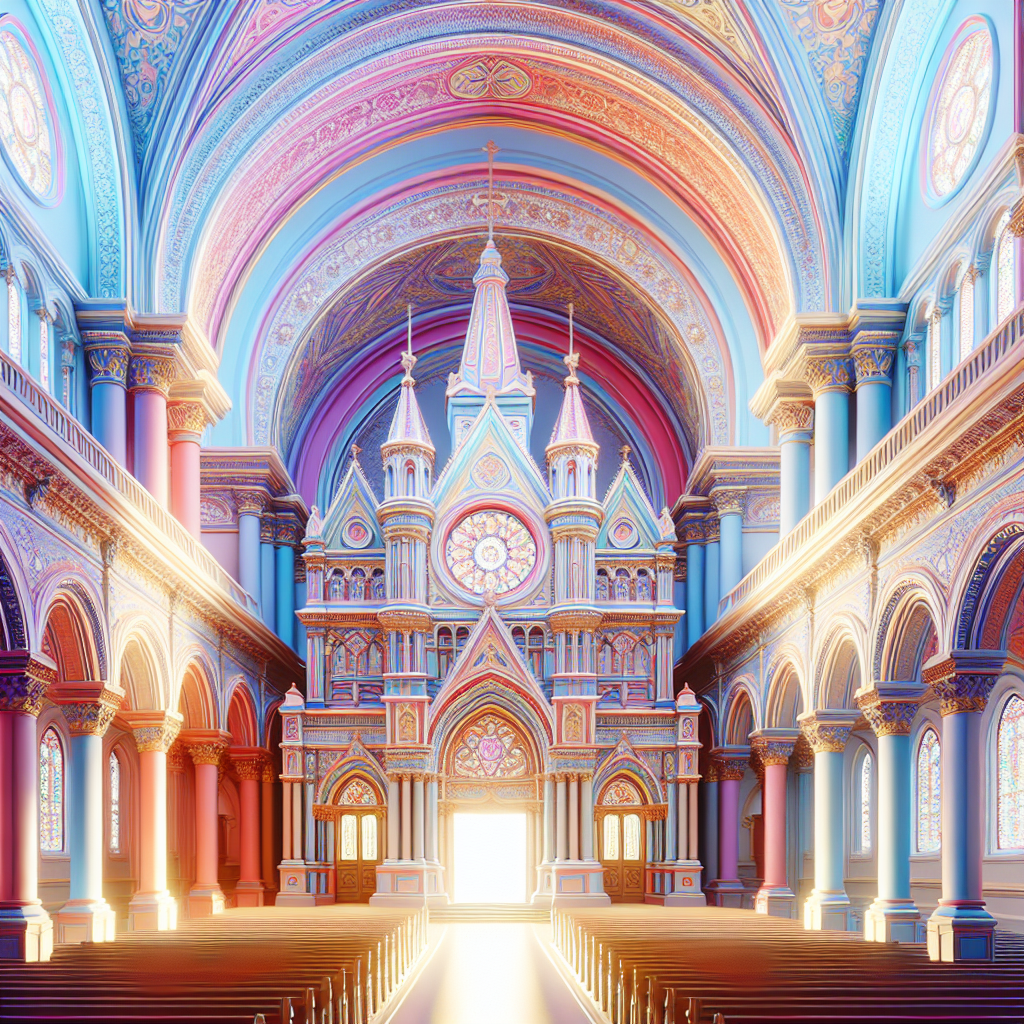

Unraveling the Enigma of Saint-Pierre-le-Jeune Protestant Church
Imagine walking into a space where time seemingly stands still, where every stone, fresco, and archway whispers tales from centuries past. Welcome to the Saint-Pierre-le-Jeune Protestant Church in Strasbourg, France—a living chronicle of history, culture, and human perseverance. Founded in the 7th century, rebuilt and expanded over the years, this church has roots tracing back to Roman occupation, then flowered through the Middle Ages and Renaissance, ultimately culminating in its declaration as a Protestant church in 1524. Today, it sits at the heart of Strasbourg, inviting curious minds to explore its fascinating past.
A Quest Through Time
Strasbourg's rich tapestry of history is captured within the walls of Saint-Pierre-le-Jeune. Originally established as a Catholic monastery in the early medieval period, its transition to a Protestant church marks a critical juncture in European religious history. With each architectural layer, you can unveil a part of this captivating story.
Upon entering, one is welcomed by a warm ambiance—partly due to the soft glow of light filtering through 14th-century stained-glass windows that depict biblical stories and local folklore. As your gaze travels upwards, intricate Gothic vaults, reaching towards the heavens, greet your eyes in an elaborate dance of light and shadow. These vaults are not just decorative, but feats of medieval engineering.
But hold on—what makes this church unique isn’t merely its transitional history or architectural marvels. It's an omnipresent juxtaposition of elements inside this ecclesiastical space that intrigues! There’s a Romanesque bell tower, mystical 13th-century frescoes anew with religious imagery faded under the gentle passage of time, and a rare wooden rood screen dating back to 1320, dividing the choir from the nave and one of the few remaining in France.
The Cultural Marker in Europe's History
Saint-Pierre-le-Jeune’s historical significance stretches beyond its four walls. During the Protestant Reformation, the church stood as a focal point for theological dialogue that rippled throughout Europe. It was a beacon for religious transformation, emblematic of Protestant ideals that encouraged reform and resilience against established norms.
This era of intense change nurtured a congregation driven by not only spiritual devotion but also a quest for knowledge—a sentiment that continues today. The church serves as a community hub, rich with activities that embellish the cultural landscape of modern Strasbourg. Regular concerts and exhibitions keep the tradition of sharing art, music, and wisdom alive.
Vibrant interaction between faith and culture is evident in the church's role as a UNESCO World Heritage site. Tourists and locals alike often find themselves wandering through its cloisters, each step resonating with echoes of profound past decisions, while simultaneously contemplating the present and future.
Architectural Wonders Await
The mosaic of art and architecture in Saint-Pierre-le-Jeune is nothing short of spectacular. The nave, constructed in the late Gothic style, offers a visual feast, and as you admire this, don't miss the Romanesque elements on its bell tower—an enduring legacy of its time as a cloister.
One curiosity is fresco cycles that despite their age, captivate with their haunting beauty. The vivid colors have understandably dimmed, but they remain evocative, illustrating biblical tales over centuries. The rood screen, showing off masterful work, stands proudly, an artistic bridge between eras, while its sculpted narratives speak volumes about the era's religious leanings.
Moreover, the partly preserved cloisters—once the contemplative gardens for monastic solitude—remain silent witnesses to the transformative power of time and faith. Imagine centuries of monks who walked these sacred halls, their whispered prayers echoing through time, caught between tranquility and reform.
Why it Matters Today
Even in the hustle and bustle of modern life, Saint-Pierre-le-Jeune Protestant Church remains a sanctuary for reflection and education. The church’s historical adventures reflect the indomitable human spirit and emphasize our innate desire to grow, learn, and innovate while staying connected to our roots.
In today's fast-paced world, where history is sometimes a mere footnote, places like Saint-Pierre-le-Jeune remind us of the richness that comes from preserving our heritage. It urges us to embrace our roles as stewards of culture and knowledge, ensuring that the lessons from the past remain stepping stones toward a better future.
Engaging with its history invites every visitor to become part of its ongoing narrative—breathing new life into art and architecture, keeping stories alive, and fostering an enduring dialogue bridging past, present, and future.
In taking this approach, the church doesn’t just stand as a monument isolated from the world outside. It's a dynamic participant, a space where understanding, innovation, and hope continue to echo through time.