

Image Source: Wikimedia Commons
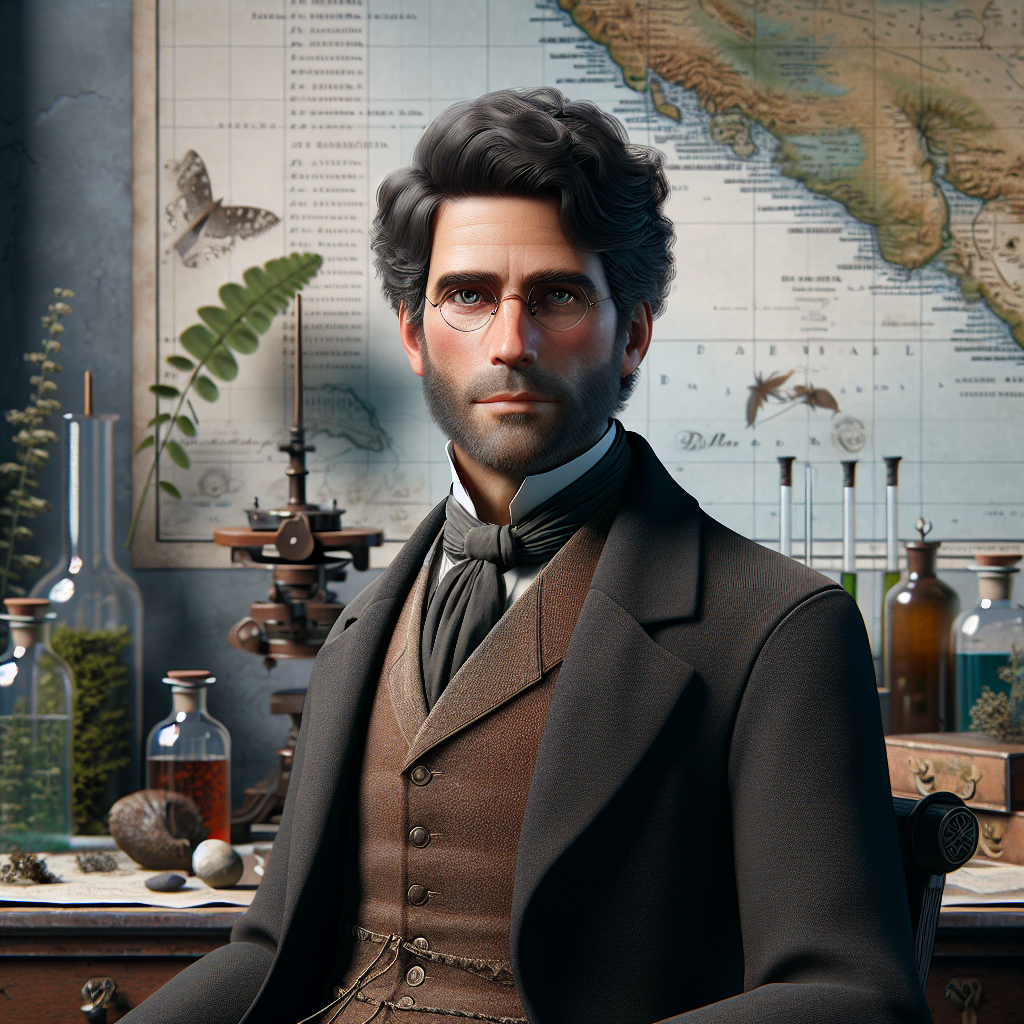
Imagine the enthusiasm of a young child marveling at the wonders of the world for the first time—that was the spirit that Sabin Berthelot embodied throughout his life, a man whose name gleams brightly in the annals of scientific exploration. Sabin Berthelot was a French naturalist and ethnologist born in 1794, whose adventurous spirit and intellectual curiosity drove him to the Canary Islands, where he made remarkable contributions to our understanding of the natural world.
The Life of a Pioneer
Sabin Berthelot was born in Marseille, a city as rich in culture and history as it is in breathtaking coastal views. This Mediterranean backdrop set the scene for a life punctuated by discovery and learning. Initially trained for the clergy, Berthelot discovered a different calling in the study of nature and peoples, a path his heart directed him toward passionately.
His insatiable curiosity took him to the Canary Islands in 1820. At a time when travel and communication were nothing like the instantaneous connections we enjoy today, this move represented a daring leap into the unknown. The Canary Islands, with their endemic species and distinct ecosystems, turned out to be a veritable treasure trove for someone as observant and dedicated as Berthelot.
A Fusion of Science and Society
While in the Canary Islands, Berthelot isn’t remembered just for his eyes fixed on the skies or the earth beneath, but also for understanding the intricate tapestry of the local culture. His interdisciplinary approach, blending natural sciences with ethnology, was far ahead of his time. Alongside Philip Barker Webb, an English botanist, he co-authored the monumental work "Histoire Naturelle des Iles Canaries," published between 1839 and 1850.
This colossal publication, consisting of several volumes, meticulously documented the flora, fauna, and geology of the Canary Islands. It's a book that still serves to inspire scientists and nature lovers alike! Berthelot was like the original ecosystem detective, piecing together the patterns of life with unyielding curiosity.
Celebrating Biodiversity
For Berthelot, the love of nature was not just in finding new species, but in celebrating them. His work was crucial in laying the foundation for environmental preservation before it even became a mainstream issue. Berthelot’s legacy includes the identification and cataloging of numerous plant and animal species, and some, like Berthelot's Pipit, are eponymously named in his honor.
His vibrant keenness to explore and learn has inspired countless others who walk in his footsteps. His recognition of the interconnectedness of flora, fauna, and human societies on the islands echoes our modern understanding of ecological and cultural sustainability.
Legacy and Influence
The layers of his contribution go beyond mere collections or descriptions. Through his eyes, the islands were like a living laboratory. Berthelot fostered relationships with the locals, understanding that no study of an ecosystem is complete without insights into its human inhabitants.
His partnership with Philip Barker Webb was more than just professional; it was a fusion of French and English cultural influences, bringing together perspectives that enriched their scientific work. Their publications were not only scientific texts but beautifully illustrated and accessible, bridging the gap between academia and the general public.
The Eternal Student of Nature
What makes Berthelot’s narrative even more inspiring is his eternal status as a student of nature. He continually sought to understand and never hesitated to ask questions, an essential lesson for all of us enthused about knowledge. His life illuminates the truth that every corner of the earth holds stories and secrets waiting for a curious mind to uncover.
Today, as we analyze climate change, biodiversity loss, and cultural preservation, Berthelot’s methods and perspectives remain extraordinarily relevant. His optimism, a reflection of his belief in science and humanity’s capacity for understanding, serves as a timeless beacon guiding us toward a more sustainably interconnected world.
Sabin Berthelot passed away in 1880, but his spirit is enshrined in the very fields and valleys he explored, his contributions immortalized in scientific literature and the joyful whispers of inspired discoveries that continue. His life shines like a guiding star, a reminder that our pursuit of knowledge is a never-ending adventure.
As we stand on the shoulders of giants like Sabin Berthelot, let us embrace our world with enthusiasm, armed with the knowledge that there is always more to learn, more to understand, and more to appreciate. Science is the open road, and Berthelot was one of its most joyful travelers.