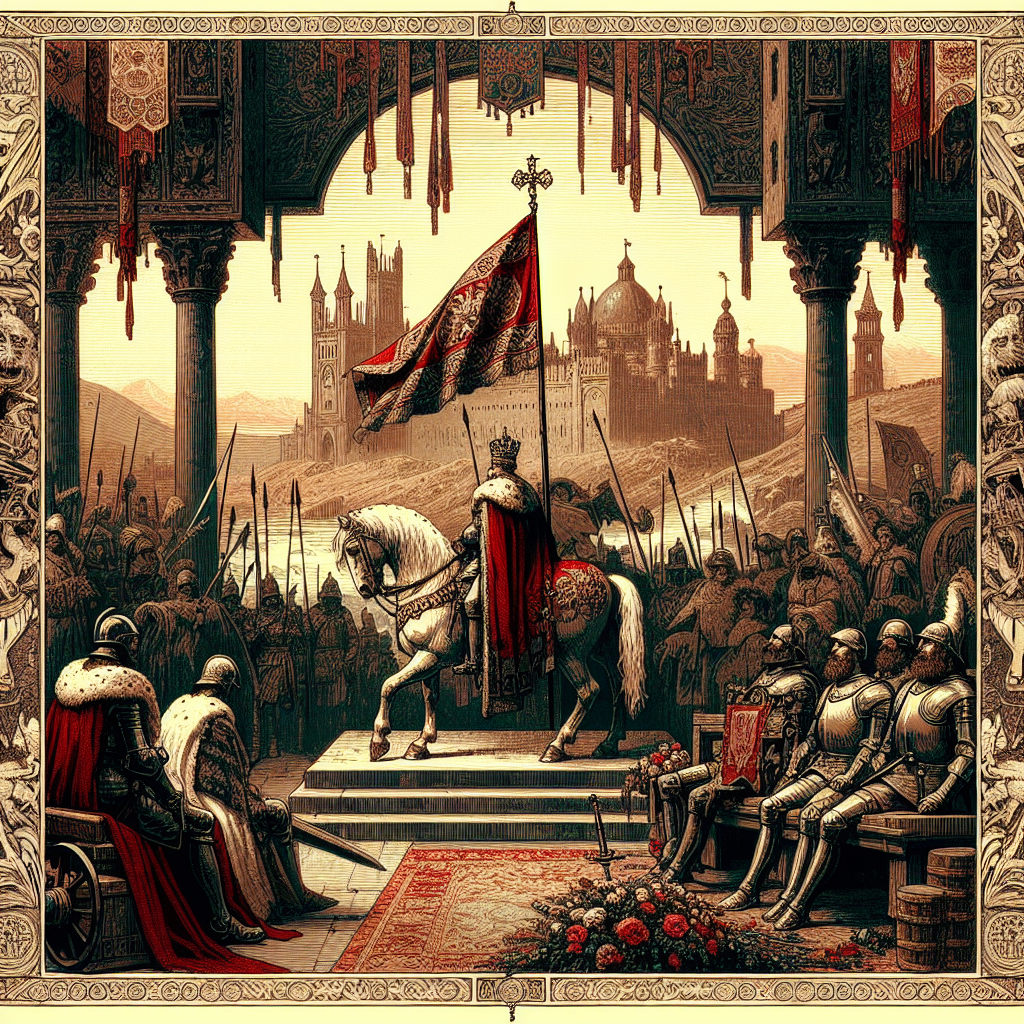

To picture the vibrant tapestry of Russian nobility is to embark on a journey through time, across magnificent landscapes and into the heart of a society defined by power, responsibility, and an unyielding spirit. The Russian nobility, most prominent from the 18th to the early 20th century, was a pivotal societal class that played a crucial role in shaping the history and culture of Russia. This esteemed stratum emerged as a distinct class across the vast Russian Empire, influencing everything from political governance to the cultural arts. But who were these nobles, and what exactly made them so integral to Russian society? Let's untangle this fascinating skein.
Nobility Defined: Who Were They?
The Russian nobility, known as the "dvoryanstvo," was comprised of a social class often granted titles and privileges by the Tsar, largely akin to peerages in Western Europe. Historically, these nobles had roots tracing back to service gentry and warrior classes who were rewarded by the Grand Duchies and Tsardoms with land and serfs in exchange for military or government service.
Their rise was significantly accelerated during the reign of Peter the Great in the late 17th and early 18th centuries. Peter the Great, ever the reformer, eagerly promoted the system of ranks known as the "Table of Ranks," which made it possible for some members of this class to ascend to nobility through state service rather than inheritance alone. This created a dynamic shift, merging meritocracy with hereditary privilege.
Societal Roles and Responsibilities
The responsibilities bestowed upon the nobility were not merely ceremonial. They were tasked with managing vast estates, representing the Tsar's authority in distant provinces, leading military endeavors, and contributing to policy-making. Interestingly, their titles, such as "prince" ("kniaz") and "count" ("graf"), denoted their stature and influence within the empire.
In the cultural sphere, the nobility acted as patrons of the arts, significantly fostering the growth of literature, music, and visual arts throughout the empire. Figures such as Leo Tolstoy and Alexander Pushkin were themselves scions of noble families, infusing Russian literature with cultural wisdom and delicate critiques of their own class.
The Gilded Era: 18th and 19th Centuries
During the 18th century, Russian nobility reached the zenith of their influence. The likes of Catherine the Great expanded upon Peter's reforms, drawing European enlightenment ideals into the heart of Russian governance and society. This was an era where French was spoken in the drawing rooms of illustrious estates, and European culture permeated courtly life.
The 19th century continued this transformation, with the nobility increasingly finding itself at the crossroads of traditional Russian values and new, liberal ideas. Many nobles embraced Western principles, advocating for reforms that included the emancipation of serfs in 1861 under Tsar Alexander II — an act that would send ripples throughout Russian society.
The Decline of the Nobility
The twilight of Russian nobility came during the late 19th and early 20th centuries. Political unrest, compounded by the socio-economic transformations and burgeoning revolutionary movements, began to erode their power. The Russian Revolution of 1917 served as the final blow, as the Bolsheviks overthrew the monarchy and dismantled the class structures that had sustained the nobility for centuries.
This dramatic overthrow wasn't just a political reconfiguration but also a cultural upheaval, erasing the centuries-old structures that some viewed as oppressive while others mourned their disappearance as an existential loss to Russian heritage.
Legacy and Impact
While the practical roles of the nobility may have vanished, their cultural and intellectual legacy continues to resonate. Russian art, literature, and political thought were indelibly shaped by these vibrant personalities. Many of the architectural jewels of modern Russia — the palaces and the estates that now draw countless tourists — stand as monuments to their erstwhile grandeur.
Additionally, the historical examination of the Russian nobility offers an inspiring reminder of the complex dance between power and responsibility, tradition and reform. In scientific terms, one might even liken the nobility to a complex system where each element interacts within a larger network, influencing the entire system's evolution.
An Optimistic View of Human Potential
The story of Russian nobility not only highlights the extraordinary potential of individuals to shape their world through creativity and governance but also serves as a humbling reminder of the transient nature of power. It encapsulates the rich, interwoven fabric of human endeavors — a testament to the infinite capacity to evolve, adapt, and leave behind impressions that echo through time.
In learning about the Russian nobility, we not only uncover a fascinating chapter in history but also encounter lessons about human resilience, adaptability, and the boundless quest for enlightenment. These insights are universal, transcending time and geopolitical boundaries, enriching our understanding of what it means to be truly noble in spirit.