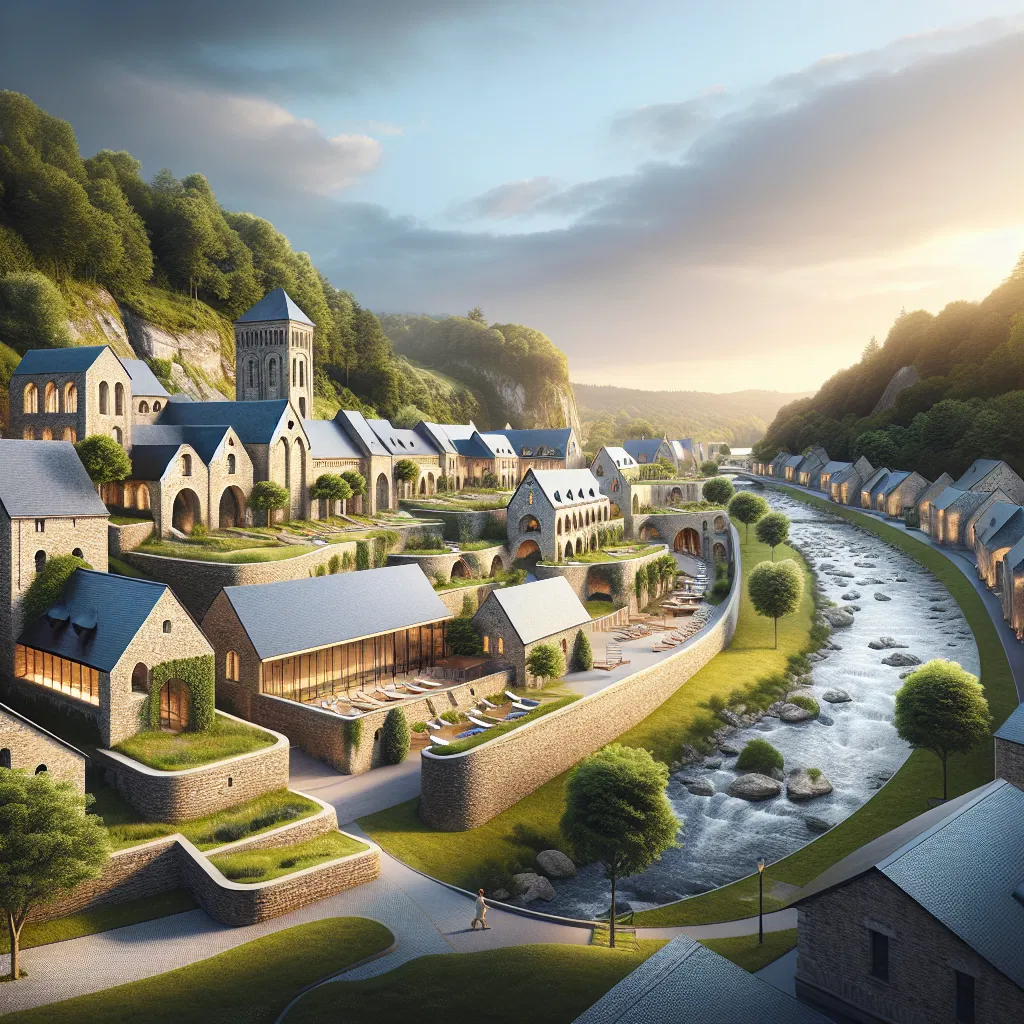

Rochonvillers: A Hidden Gem of History and Innovation
Nestled in the picturesque landscape of northeastern France, Rochonvillers is a small village with a big story to tell. This quaint locale, situated in the Moselle department of the Grand Est region, is not just a charming rural settlement but also a site of historical significance and modern intrigue. The village's history dates back to the early 20th century when it became a strategic military location. During the interwar period, specifically in the 1930s, Rochonvillers was chosen as the site for an underground fortification, part of the famous Maginot Line, a line of defensive fortifications built by France along its borders with Germany and Italy. This was a response to the devastating experiences of World War I, aiming to prevent future invasions.
The Maginot Line, named after French Minister of War André Maginot, was a marvel of military engineering, and Rochonvillers played a crucial role in this defensive strategy. The fortifications here were designed to withstand artillery bombardments and provide a secure base for French troops. Although the line ultimately failed to prevent the German invasion during World War II, the fortifications at Rochonvillers remain a testament to the ingenuity and determination of that era.
Today, Rochonvillers is a fascinating destination for history enthusiasts and curious travelers alike. The remnants of the Maginot Line can still be explored, offering a glimpse into the past and a chance to appreciate the engineering feats of the time. The village itself, with its serene environment and traditional French charm, provides a perfect backdrop for reflection and exploration.
In recent years, Rochonvillers has also become a symbol of innovation and adaptation. The village and its surroundings are part of a broader movement in the Grand Est region to embrace sustainable development and renewable energy. This includes initiatives to harness wind and solar power, reflecting a commitment to a greener future. Rochonvillers, with its blend of historical significance and forward-thinking initiatives, stands as a beacon of how communities can honor their past while looking towards a sustainable future.