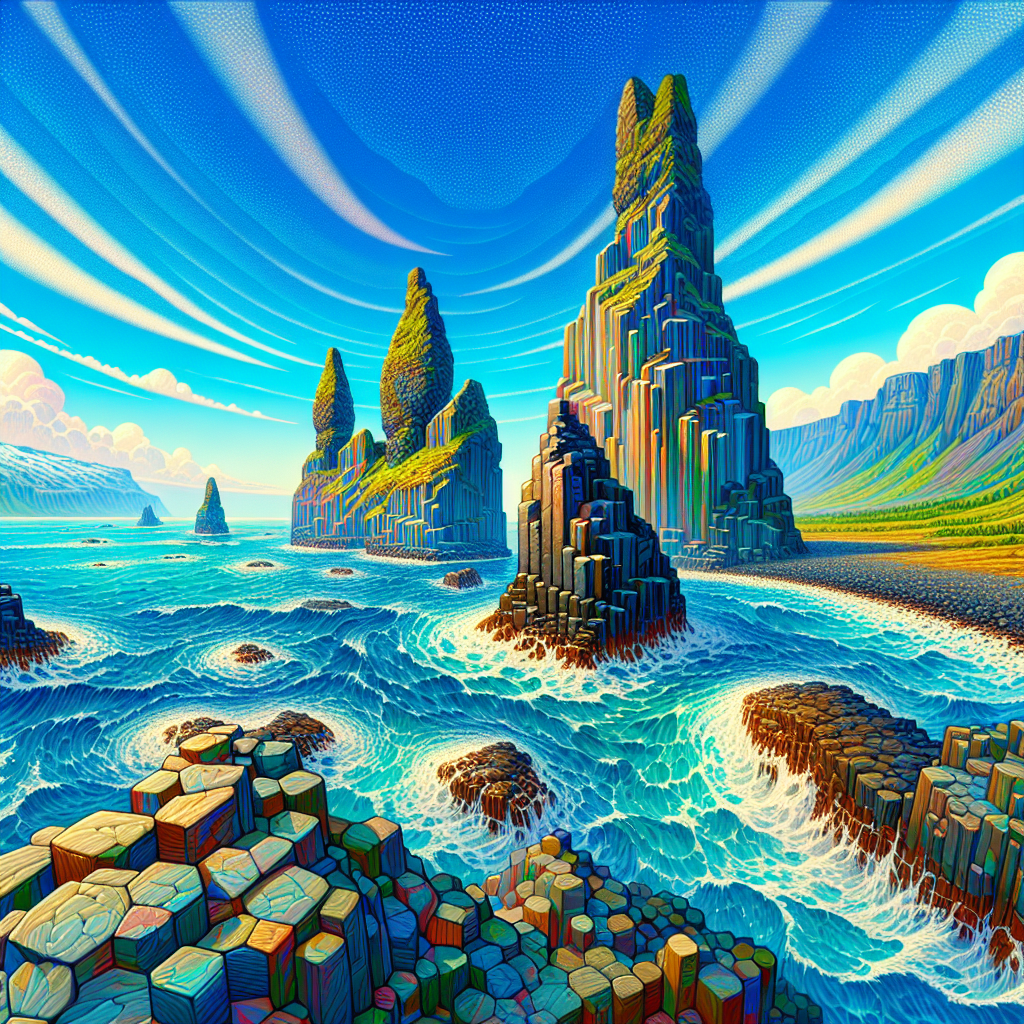

Have you ever imagined rocks telling a story, like ancient guardians whispering secrets of a land shaped by fire and ice? Welcome to Reynisdrangar, a captivating collection of towering basalt sea stacks standing proudly off the southern coast of Iceland near the village of Vík í Mýrdal. These unnatural-looking formations are steeped in local folklore, with legends suggesting they were trolls turned to stone by sunlight. But what really excites us is exploring the scientific marvel behind these geologically intriguing structures, formed some 14 million years ago.
The Geologic Origins of Reynisdrangar
To truly appreciate these monolithic wonders, let's rewind millions of years to the throes of volcanic activity that gave birth to Iceland itself. Iceland, perched ambitiously on the Mid-Atlantic Ridge, is a geotectonic hotspot, literally sitting astride two diverging tectonic plates. This dynamic setting fuels the island's volcanic activity, with Iceland primarily formed through repeated basalt lava flows.
Reynisdrangar is a prime example of columnar basalt formations, created when lava cools slowly and fractures into hexagonal columns. The process involves the slow cooling of molten lava after an eruption, leading it to contract and crack into orderly joints, similar to mud drying in the sun. The Reynisfjall mountain, adjacent to the sea stacks, is itself a product of such volcanic processes, subsequently eroded over time by the relentless forces of the North Atlantic.
Legends and Folklore Surrounding the Sea Stacks
While the scientific process is captivating in itself, local lore provides a colorful narrative, enriching the cultural fabric surrounding Reynisdrangar. According to Icelandic folklore, these sea stacks were once trolls attempting to drag a three-masted ship to shore. However, the cunning sunlight of dawn turned them to stone, forever trapping them in their spectral form.
Stories like these not only provide charming tales to tourists but also reflect the Icelanders' deep connection with their natural landscape—a relationship that's been central to cultural narratives for generations. Imagining these formations as midnight trolls invites a whimsical human connection to the raw, untamed power of nature.
Reynisdrangar's Place in Modern Science and Tourism
With the advent of modern science, Reynisdrangar attracts geologists and tourists alike, eager to witness and study these natural phenomena. The stacks comprise three primary spires, the most prominent of which reach approximately 66 meters (around 216 feet) in height. These rock formations, along with the black sand beaches of Reynisfjara, are among the most photographed places in Iceland, often depicted against the dramatic backdrop of sea, sky, and the occasional puffin.
Tourism plays a significant role in the local economy, primarily driven by visitors yearning to capture these colossal guardians against the Atlantic's fury. During summer months, visitors might also witness puffins nesting along the cliffs, adding a splash of life to the timeless, rocky seascape. The naturally iconic status of Reynisdrangar, against the ominous roar of crashing waves, promises a visceral encounter with Earth’s primal forces.
Conservation and Challenges
While Reynisdrangar stands indomitable and ageless, the surrounding environment faces a suite of contemporary challenges. Increased tourist traffic requires careful management to preserve the natural beauty and ecological balance. Environmental organizations and geological institutions advocate for sustainable tourism practices to mitigate erosion and habitat disturbance.
Iceland's ever-changing climate also presents challenges. With the effects of climate change escalating, coastal erosive processes could accelerate, potentially impacting the structure and stability of Reynisdrangar's surrounding areas. If nothing else, this serves as a stark reminder of our shared responsibility to protect such heritage from the pressures of modernity.
Science, Sustainability, and the Future of Reynisdrangar
What does the future hold for Reynisdrangar? This question often springs to mind standing under the overwhelming gaze of those towering obsidian forms, their stories captured in each facet of basalt. As guardians of ancient history, these formations underscore our interconnectedness with Earth. Reynisdrangar symbolizes more than geology; it epitomizes the dialogue between earth and humanity.
Through scientific understanding and sustainable tourism, we pave the path for future generations to marvel at nature’s artistry. Our challenge is to continue learning and nurturing our relationship with these natural wonders, ensuring Reynisdrangar remains a magnificent, everlasting geological concert awaiting discovery.
Whether it’s standing at the intersection of geology and folklore or marveling at the geological processes that fashioned such splendidly surreal seascapes, Reynisdrangar embodies the awe-inspiring ability of Earth to captivate the curious mind, one basalt pillar at a time.