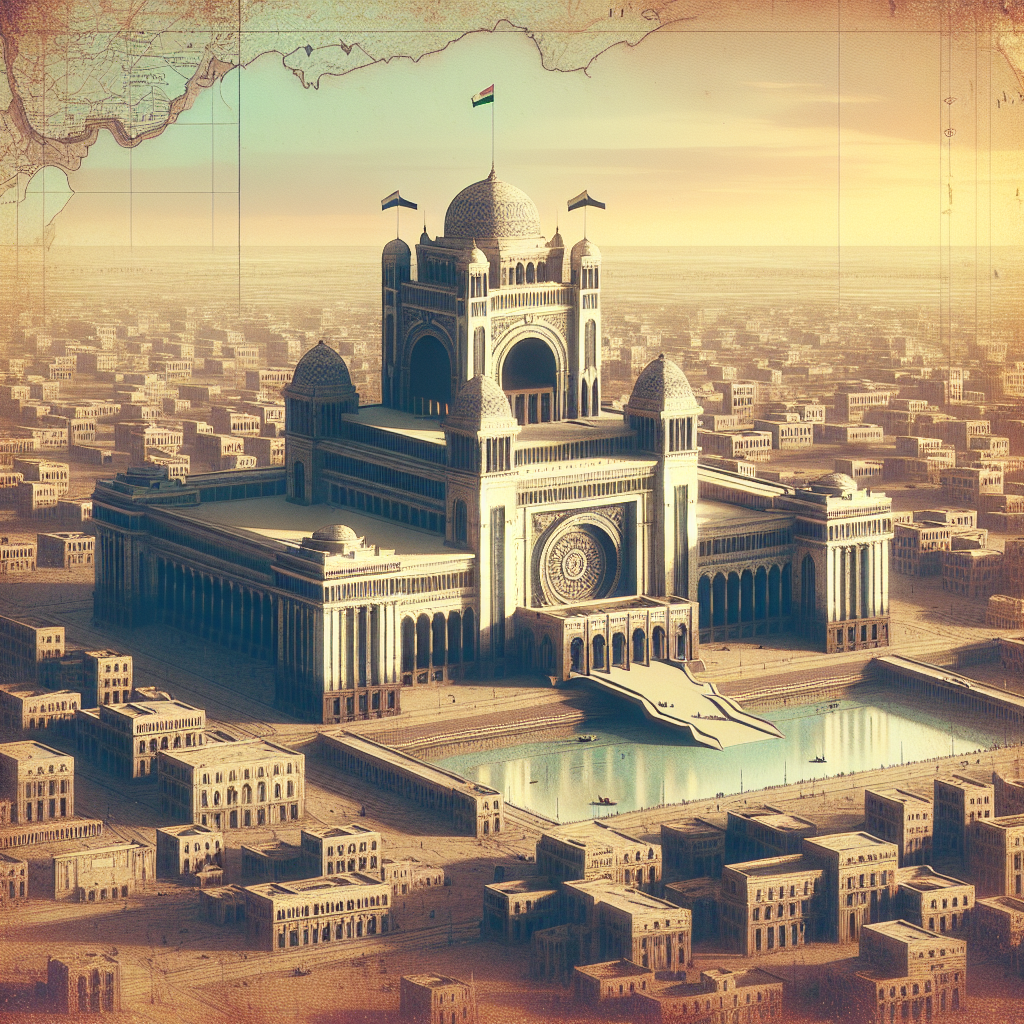

Often referred to as the beating heart of Sudan’s administrative and political life, the Republican Palace in Khartoum offers a fascinating journey through time alongside box seats to modern history's grand plays. As a principal residence for Sudan's head of state, it stands proudly along the Nile’s banks, a testament to the country’s rich history and promising future.
A Brief Historical Expedition
The Republican Palace, known locally as Qasr al-Jumhuri, was originally constructed in the early 19th century, around 1830, when Sudan was under Ottoman administration. Designed by the British initially as a governor-general’s residence, it reflects a unique fusion of European architecture blended with Ottoman influences.
Fast-forward to 1956, at the zenith of Sudan’s pursuit for independence, the palace not only transformed in name from the ‘Governor-General’s Palace’ to the ‘Republican Palace’ but also became an emblem of self-governance and national pride. Change is ever-present around its iconic white-washed walls, whispering tales from colonial shadows to sovereign aspirations.
Architectural Narrative
With its elegant arches, towering columns, and the graceful blend of Eastern and Western architectural elements, the Republican Palace is an architectural marvel. The entrance, with its sweeping curves and balustrades, greets visitors with grandeur and grace. The palace’s exterior is adorned with a subtle synthesis of neoclassical design, showcasing the aesthetic of British colonial power while respecting the local cultural essence.
Once inside, visitors encounter a trove of Sudanese history and culture with carefully curated artifacts and artworks. Picturesque gardens flanking the palace add to its serene landscape, providing a quiet reprieve for visiting dignitaries and residents alike.
Political Significance
The palace's pivotal role in Sudan’s political landscape cannot be overstated. It has been the backdrop for critical negotiations, political upheavals, peace treaties, and monumental declarations. It stands as an ever-watchful eye over Sudan's political evolution, from hosting presidents to greeting international delegates.
Strategically located in the nation’s capital, Khartoum, the Republican Palace is tethered closely to the heart of Sudan's governmental activities. Its meeting rooms and chambers have witnessed the contemplation of transformations and the binding of essential treaties which have scripted the chronicles of Sudanese governance.
Cultural Repository
But the palace is not just a seat of power; it also cradles a rich repository of cultural heritage. It houses a museum which offers insightful glimpses into Sudan’s multifaceted past. From antiquities to modern political memorabilia, the museum serves as a bridge, connecting generations and allowing visitors to understand and appreciate the complex tapestry of Sudanese history and identity.
The museum's exhibits are carefully curated to preserve and celebrate Sudan’s cultural diversity and historical narrative, making it an educational hub for locals and tourists alike. Every artifact, every document housed within its walls speaks stories of a resonant past, capable of teaching valuable lessons for the future.
An Optimistic Glance Into the Future
As Sudan forges ahead in its quest for stability and progress, the Republican Palace stands as a beacon of optimism and resilience. The potential for positive change looms large, with new government policies shaping the palace’s operations and interactions on the global stage. There is a palpable sense of hope surrounding Khartoum as it transforms into an epicenter of political discourse and cultural awakening.
The palace, much like Sudan itself, is at a crossroads, brimming with opportunities to embrace modernization while cherishing its historical significance. It reflects a broader trend of transformation across African nations seeking to balance tradition with progress.
How to Visit
For those mesmerized by its storied beauty, visiting the Republican Palace offers a delightful blend of discovery and enlightenment. While access is limited due to its official use, tours of the accompanying museum are available and can be arranged to further appreciate the nation’s journey through pivotal historical moments.
Those lucky enough to visit during annual cultural events might catch a public glimpse of this magnificent space, where historical consciousness meets cultural exuberance.
In Conclusion
The Republican Palace is more than an architectural wonder; it’s a symbol of Sudan's political journey, a custodian of culture, and a harbinger of change. Its story is intertwined with the soul of the Sudanese people, reflecting their aspirations, struggles, and successes.
As humanity progresses, locations like the Republican Palace remind us of the importance of understanding our past to guide the future, fostering optimism and connection in a world that continuously evolves.