
Ramón Valera: The Visionary Behind Filipino Fashion's Haute Couture Revolution
What happens when a single thread weaves together the complexities of tradition and modernity? You get a tapestry of unparalleled creativity embodied in the life and work of Ramón Valera. Born on August 31, 1912, in the bustling heart of San Miguel, Manila, Ramón Valera emerged not just as a revered fashion designer, but as an innovative icon who transformed Filipino fashion. His contributions were nothing short of revolutionary, as he reimagined and refined the terno, making it a symbol of Filipino identity and elegance. Through his visionary mind and dexterous hands, Valera played a pivotal role in bringing Filipino aesthetics to the global stage, and here's how.
The Who of Valera: A Creative Genius
To understand the man, imagine someone who could see beauty beyond the seams. Valera didn't just design clothes; he authored stories through textiles, writing a narrative of grace and national pride. Growing up in a family that encouraged creativity, he had an innate flair for the arts that set him apart. Without formal training, he catapulted himself into the high stakes world of fashion design, his inspiration deeply rooted in a love for traditional Filipino garments.
The What: A Legacy of Haute Couture
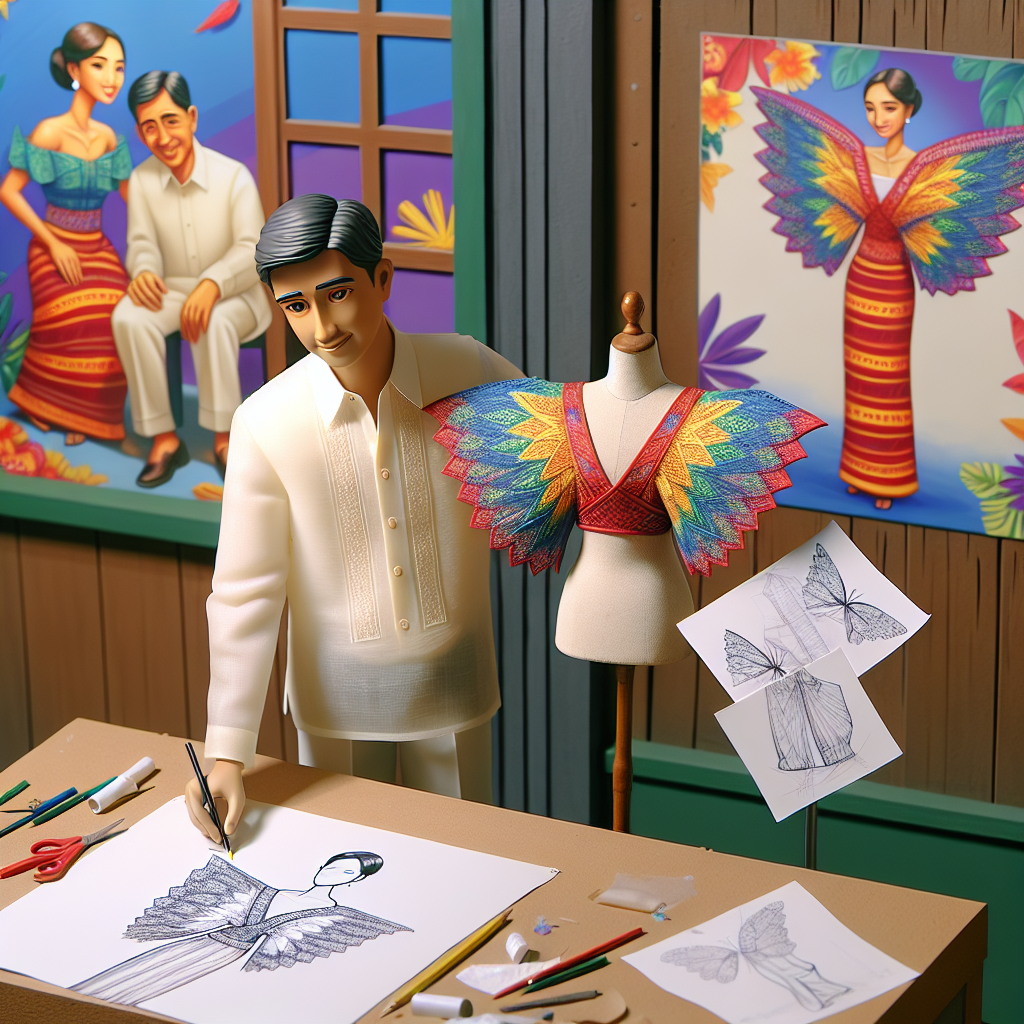
What made Valera a legend among designers was his penchant for innovation paired with respect for tradition. Particularly, he focused on the terno, a uniquely Filipino dress featuring butterfly sleeves. Before Valera's intervention, the terno comprised a separate blouse and skirt. He envisioned a single piece, seamlessly marrying the two. Using his skills, he added structure to the garment without compromising its intricate detailing, perfecting what would become an iconic symbol of Filipino elegance.
The When and Where: The Birthplace of Modern Filipino Fashion
Valera was most active during the 1940s through the 1980s, a crucial period in history that saw the world recovering from the effects of World War II. The Philippines was stepping into an era of independence, and its culture needed ambassadors. Valera's Manila studio became a bustling hub where creativity met cultural pride, luring clients from the upper echelons of Filipino society. In this environment, he crafted bespoke garments that adorned the likes of First Ladies, socialites, and even international dignitaries.
The Why: Valera's Enduring Legacy
Why did Ramón Valera become synonymous with excellence in Filipino culture? The reason lies in how he masterfully juxtaposed tradition with modernism. He didn't merely decorate garments; he captured the spirit of a nation in every stitch, presenting Philippine culture in a way that resonated strongly with the rest of the world. His flawless attention to detail, his imaginative flair, and his resilience in the face of global influences solidified his place in the pantheon of fashion greats.
The Scientific Approach to Fashion Design
Understanding Valera's genius through a scientific lens is both intriguing and enlightening. Designing the terno involved more than just visual aesthetics; it required engineering finesse. The perfect distribution of fabric weight, meticulous balance in hand-placed embellishments, and the structural integrity necessary to create those iconic butterfly sleeves all demanded a meticulous understanding of material science. Valera was an intuitive problem-solver, and his methodical approach ensured that each garment was not only a piece of art but also a testament to the laws of physics and material science.
Valera's Optimistic Impact on Humanity
Valera's work transcends fashion, touching on broader societal aspects—self-expression, identity, and cultural pride. He envisioned a Philippines where creativity isn’t just an individual expression but a collective march toward a more vibrant, innovative society. Valera believed in the goodness of blending the old with the new, proving that tradition and modernity need not be mutually exclusive. His optimistic outlook continues to inspire young designers who see fashion as a means to contribute to cultural discourse.
Keeping Valera's Vision Alive
In today's world, Valera’s philosophies breathe life into global fashion narratives his legacy proving invaluable. His methods have inspired designers everywhere to draw from their roots, creating pieces that exist as cultural vignettes amid ever-changing trends. While fashion continuously evolves, Valera's core principles—attention to detail, cultural reverence, and innovative fabrication—remain relevant, offering a scaffolding for diverse creativity.
Ramón Valera's Place in the Annals of Fashion
To truly grasp the wonder that was Ramón Valera, one must imagine standing in front of a masterpiece housed in a gallery of global fashion. His creations were more than just clothes; they were cultural affirmations, investments in a narrative that spoke volumes about Filipino identity. Valera did more than make dresses; he threaded together the spirit of a people, weaving into existence an enduring emblem of Philippine artistry and resilience.
Our fashion world today owes much to pioneers like Valera, whose daring blend of tradition and innovation paved new paths. His work reminds us that creative spirits can break boundaries, teaching us that tradition, when viewed with an eye toward the future, can form the warp and weft of something timeless, something beautiful. His legacy continues to echo in the hearts of those ready to spin their own threads in the tapestry of time.