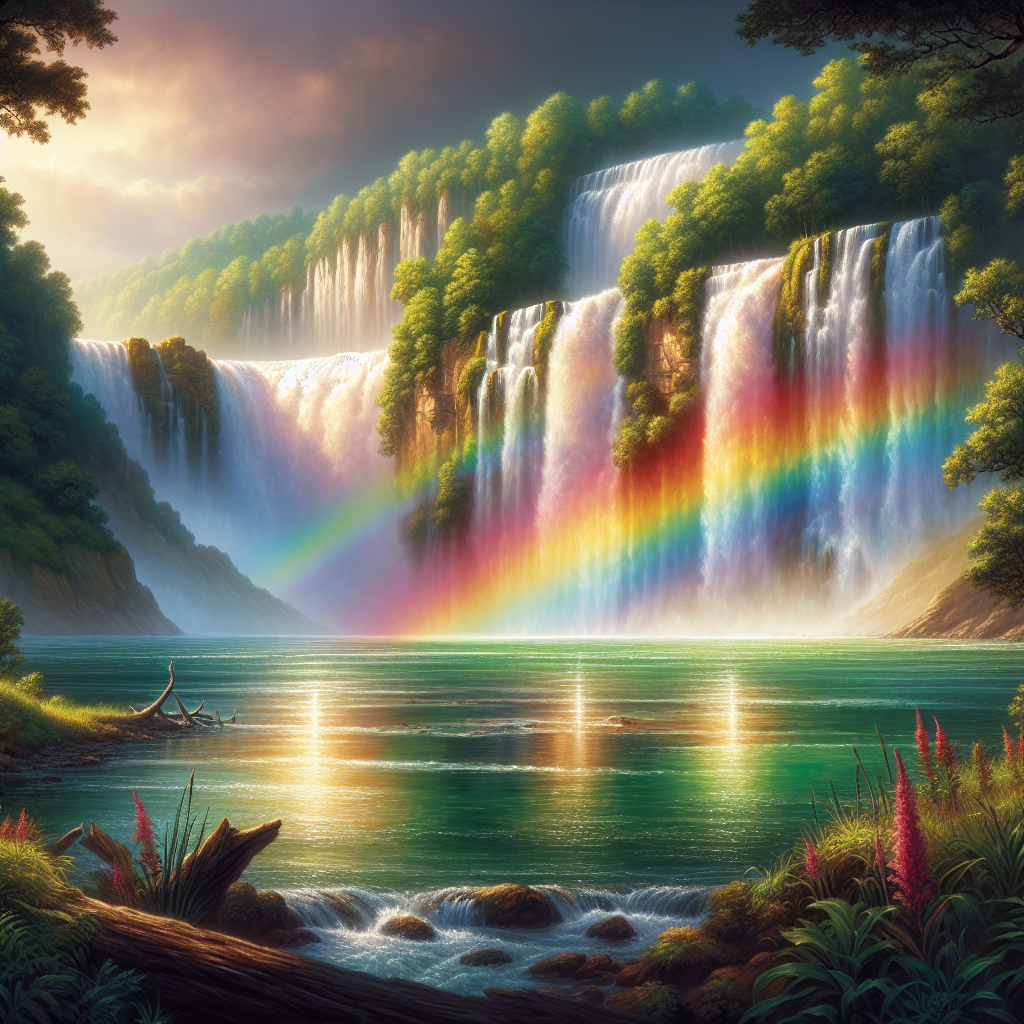

The Cascade of Color: Exploring Rainbow Falls on the Missouri River
Imagine a cascade of shimmering droplets descending with all the vibrancy of a true rainbow. Now, don't just imagine it—experience it at Rainbow Falls located on the mighty Missouri River! This awe-inspiring location, found in Great Falls, Montana, has captured the hearts and imaginations of countless adventurers, scientists, and families seeking a slice of natural beauty.
Rainbow Falls, a part of the series of five waterfalls along the Missouri River, is renowned for its stunning view and historical significance. The falls were first drawn to the attention of the outside world by none other than the famous explorers Lewis and Clark during their 1805 expedition. These explorers documented their journey as they traversed through this rugged landscape, marveling at the vastness of the lands and, of course, the hypnotic charm of Rainbow Falls.
A River's Story
Let’s break down this marvel scientifically. The falls are a result of natural processes spanning millions of years. The Missouri River, one of North America's great waterways, carved its path through rock layers over eons. This irresistible force of water sculpted geological features, giving us the dramatic landscapes we see today. Rainbow Falls itself drops about 40 feet, pouring over ancient sandstone that glistens brilliantly in sunlight, producing the namesake ‘rainbow’ effect.
Besides its aesthetic allure, Rainbow Falls has a story woven into the environmental and cultural fabric of America. The area around the falls is rich in wildlife and vegetation. Towering trees cradle diverse bird species, while the riverbanks are home to mammals like deer and beavers. The setting serves as both a natural sanctuary and a reminder of the ecosystems that have endured changes both gradual and sudden.
The Science of Rainbows
Why does a rainbow appear over Rainbow Falls? Scientifically speaking, when sunlight interacts with water droplets suspended in the atmosphere above the falls, refraction, dispersion, and internal reflection cause the light to separate into its constituent spectral colors—red, orange, yellow, green, blue, indigo, and violet. This natural prism phenomenon is not only scientifically fascinating but also serves as a powerful reminder of nature's capability to create moments of unparalleled beauty.
A Gateway to Exploration
The Missouri River and its falls, including Rainbow Falls, have historically served as navigational landmarks. From the Native American tribes who first inhabited these lands, to the bold pioneers heading westward during America’s expansion, these falls witnessed the ebb and flow of human history.
Today, the area is a hub for both tourism and environmental study. The city of Great Falls provides easy access to the falls and is an exuberant starting point for explorations. Parklands and trails offer opportunities for hiking, photography, and observing the flora and fauna in their natural setting.
Optimism and Conservation
In this era, where environmental preservation has taken center stage, Rainbow Falls exemplifies the importance of conservation. The falls and the surrounding areas are protected sites, ensuring that future generations can continue to experience their magic. Local initiatives focus on preserving the natural state of the falls while promoting responsible tourism. By balancing human exploration with sustainability, we can ensure that this natural wonder remains vibrant and awe-inspiring.
The Human Connection
Isn't it amazing how locations like Rainbow Falls can bring people together? With the constant rhythm of the cascading water sending its music echoing across the landscape, visitors find a sense of peace and unity with the world. Whether you're a scientist researching hydrology, a painter capturing the play of light and color, or a child on their first unforgettable road trip, Rainbow Falls holds a special place in many hearts.
Ultimately, the appeal of Rainbow Falls lies not just in its scientific wonders or its stunning appearance, but in how it connects us. It invites us to ponder the intricate dance between water, rock, and light, while also reflecting on our own roles within this vast ecosystem we call Earth. By visiting, appreciating, and preserving this natural gem, we tap into the wellspring of optimism and awe that feeds humanity's ceaseless desire to explore and learn.