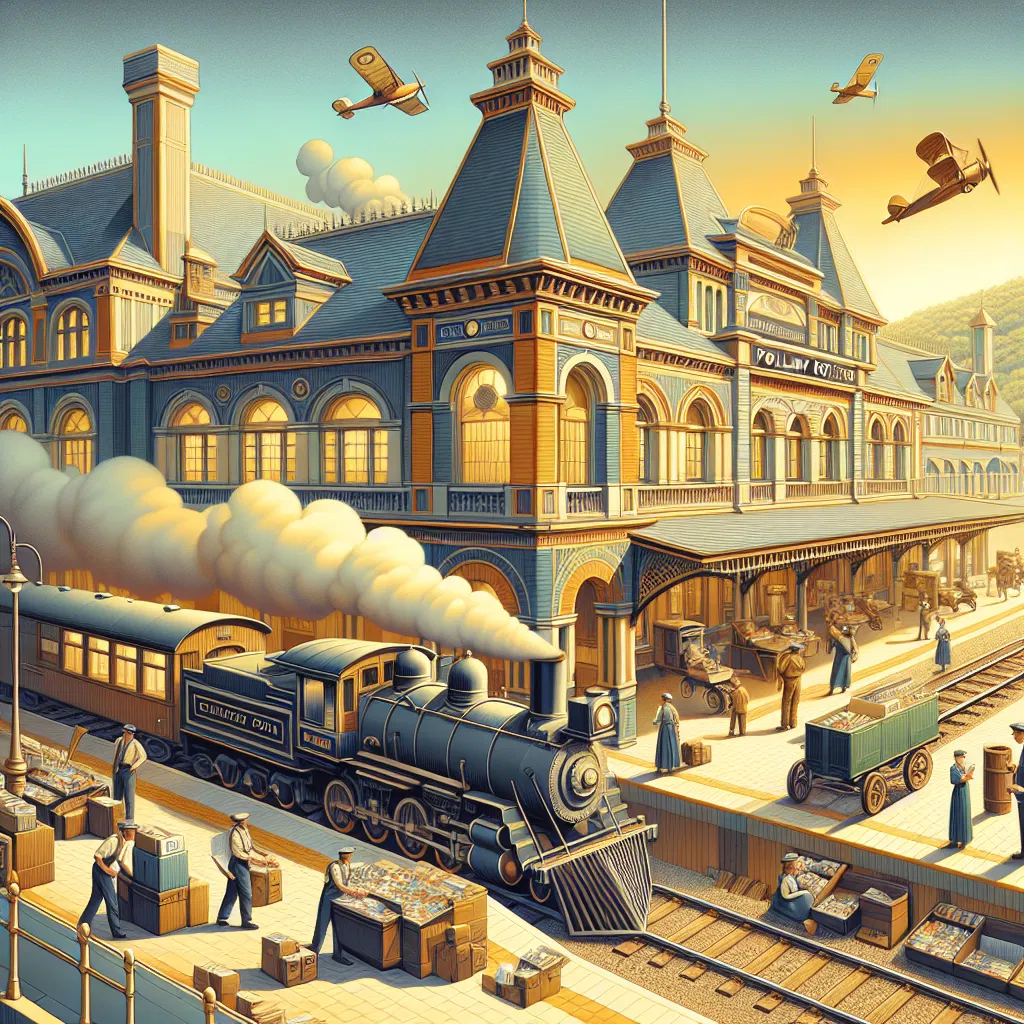

Riding the Rails: The Daring Saga of the Railway Post Office
Ah, the thrilling clatter of iron wheels hurtling down the tracks, carrying not just passengers but letters that linked towns and families across an entire continent—welcome aboard the Railway Post Office (RPO)! This marvel of 19th-century innovation transformed how mail was delivered, ensuring letters traveled with unprecedented speed and efficiency.
Who, What, When, Where, and Why?
The concept of the Railway Post Office sprang into action in the United States in the mid-19th century. The primary player in this audacious spirit of progress was the U.S. Postal Service, which, eager to beat the clock, embraced the iron horse, a newly burgeoning technology. On July 28, 1864, a Civil War-distracted society witnessed the launch of the inaugural RPO route between Chicago and Clinton, Iowa. As audacious as it sounds, the RPO did not simply transport mail from station to station. Instead, it embraced the meticulous and labor-intensive process of sorting mail directly on moving trains. Why take on such a daunting task? Simple: it drastically cut down delivery times and extended the postal reach into the budding frontier.
The Anatomy of the Beast: What Made RPOs Tick?
Hark back to a time when elegant locomotives shuttled compartments dedicated to processing mail. Imagine a postal worker sorting letters at full speed, balancing not just mail stacks but also the tumult of a bustling train. These intrepid postal clerks transformed mail cars into mobile offices, categorizing envelopes and packages according to regional routes, all while swiftly hurtling down steel tracks.
What made this possible was the unique design of the RPO car itself. Each was equipped with an array of pigeonholes lining the walls, out of which hung multiple bags to catch the sorted mail. Workers would rhythmically sort mail, slipping letters into corresponding slots like an expert card dealer. An overhead rack offered space for larger sacks and packages.
Crucially, there was also an exterior exchange arm that allowed postal clerks to perform the miraculous "mail on the fly"—a marvel where bags were hooked onto a pole and snagged from the train without it needing to stop, ensuring swift handoffs at intermediate depots.
The Uncharted Territories: Influencing The World
It's easy to think of the RPO as a U.S.-centric enterprise, but its ripples expanded far beyond American borders. Worldwide, RPOs, known more commonly as traveling post offices (TPOs) in other parts, became the veins of commerce and communication, paralleling similar strategies from Britain to India.
Many countries adopted this agile approach to postal delivery, highlighting its allure and effectiveness. Each railway route represented tiny victories in an era that yearned for speed and reliability.
Gone but Not Forgotten: The Sunset Years
Despite its success, the latter half of the 20th century marked the RPO's decline. By the late 1960s, changes in technology and transportation infrastructure, especially the rise of the highway system and air travel, offered more rapid delivery methods. Coupled with the advent of digital communication, these squashed the need for such intense mailroom operations aboard a train.
Yet, the spirit of the RPO remains vibrant. Rail lines once at the heart of this operation have become historical routes, with some train cars preserved in museums as evocative exhibits of a time when technology, community, and progress converged.
A Legacy in Steam and Steel
Reflecting on the Railway Post Office, we find a testament to human ingenuity and our innate desire to connect. These train cars were more than iron and rivets; they were expressions of an era eager to knit distant communities into a shared cultural fabric. There's a touch of magic in knowing how these quirky railroad compartments helped accelerate communication, catalyzing globalization through an impressive blend of grit and elegance.
While today's systems employ satellites circling the globe and emails traversing digital highways, the RPO stands as a laudable ancestor, reminding us of our continuous pursuit of bringing humanity closer. So, the next time you send an email or drop a postcard in the mail, take a moment to appreciate those iron workhorses that once linked us across mountains, rivers, and plains.