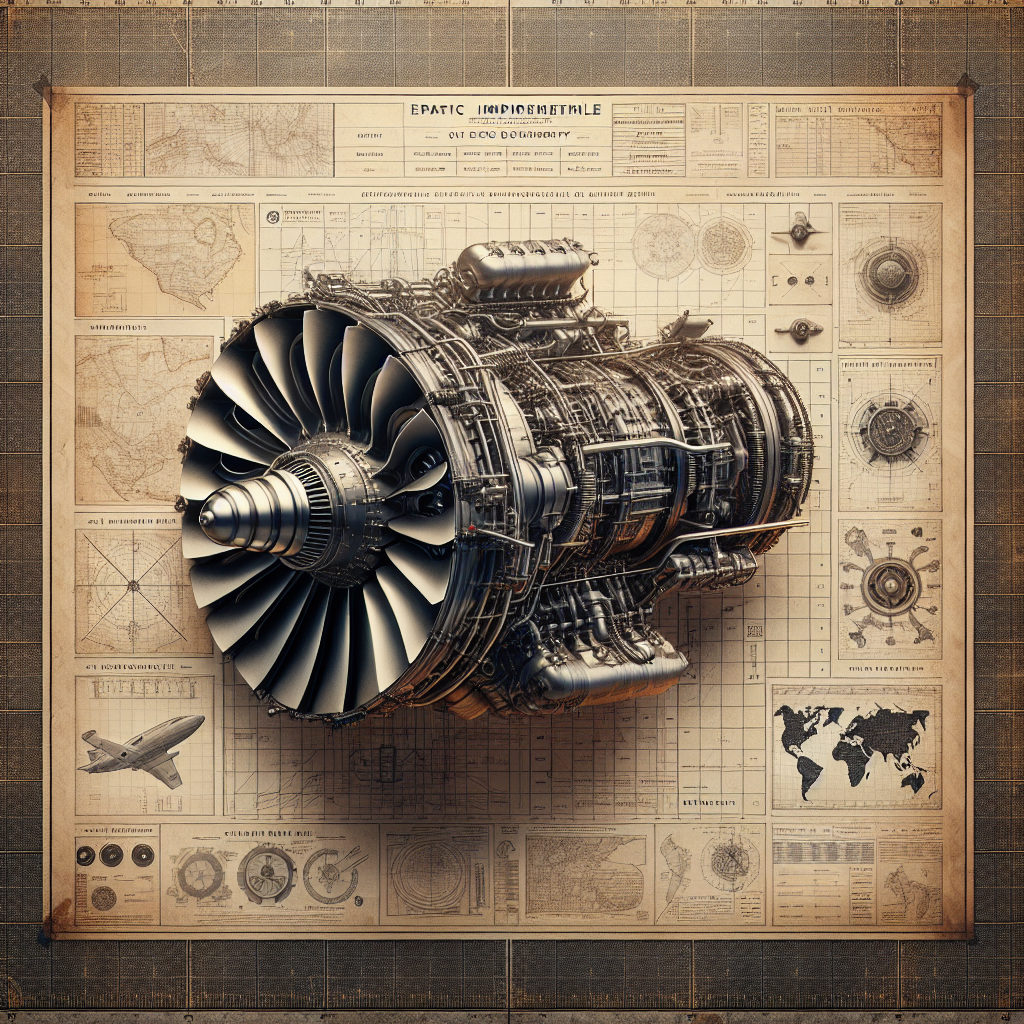

Flying High with the Pratt & Whitney R-2000
Imagine soaring through the skies with the raw power of more than 1,300 gallant steeds roaring behind you. Introduce yourself to the Pratt & Whitney R-2000 Twin Wasp, an impressive marvel of aeronautical engineering that revolutionized air travel and military aviation alike. It came to life during the early 1940s, during a time when the world was deeply engaged in both creativity and conflict. Developed in the United States by Pratt & Whitney, a leader in aerospace innovation, the R-2000 was a key player in the development of aircraft that served diverse roles—from commercial airliners to military planes. But why is this particular engine so celebrated, and what about its design made it such an exceptional piece of technology?
The Making of a Marvel
Let’s break apart the intricate engineering details that distinguish the R-2000. At its core, this engine is a twin-row, radial piston engine based on the earlier R-1830 Twin Wasp. With 14 cylinders arranged in two rows, this design optimizes airflow and combustion efficiency, packing a powerful punch for its relatively compact size. The R-2000 displaces 2,000 cubic inches, hence the name, and boasts enhancements over its predecessor, especially in reliability and fuel economy.
Imagine putting all of this in the context of its era. In the 1940s, precision-engineering like this was cutting-edge technology. The goal was to enhance aircraft performance while minimizing resource consumption. Every detail, from the air-cooling fins to the centrifugal supercharger, was carefully designed to optimize performance. The engine was rated at around 1,300 horsepower, a testament to its impressive might.
The Sky Was Not the Limit
Now, let’s look at where the R-2000 was deployed. This engine powered some of the most iconic aircraft of its time, which meant it had a significant impact on both commercial aviation and military operations. The most notable aircraft utilizing this powerplant include the Douglas DC-4 airliner and the C-54 Skymaster. The DC-4, for instance, conquered long distances with ease, transforming travel across continents. This allowed people and goods to move with unprecedented efficiency and speed. The military variant, C-54, was a workhorse during World War II, instrumental in military logistics across the globe.
Moreover, the R-2000 found a home in several other aircraft types, enabling them to achieve feats that were once the stuff of dreams. Whether it was supply runs over the vast stretches of the Pacific or transporting troops across Europe, the R-2000 proved its mettle time and again.
Evolution Driven by Innovation
To truly appreciate the R-2000, we must admire its role as a stepping stone in the story of aerospace propulsion. This engine laid the groundwork for future innovations, influencing the design and conception of subsequent powerplants. It is akin to the way early electric vehicles paved the road for today's cutting-edge Tesla models, showcasing how initial innovations lead to refined advancements.
The R-2000 was instrumental in pioneering developments that addressed critical challenges, like fuel efficiency and mechanical reliability. These lessons learned served as valuable data points for the design of future engines, which ultimately propelled humanity not just faster, but smarter into the airspace domains.
A Glimpse into Yesterday, Lessons for Tomorrow
The story of the Pratt & Whitney R-2000 Twin Wasp is hardly just about engineering and performance. It's a narrative of human ingenuity and the relentless pursuit of innovation, reminding us of a period when explorers took the skies and the world shrank under the weight of newfound connectivity. Its contributions echo into the present day, encouraging a deep appreciation for technological advancement that is rooted in understanding the past.
In our modern world, where the thirst for sustainable energy and efficient travel is paramount, looking back at shining stars like the R-2000 is perhaps more relevant than ever. For any aviation enthusiast or aspiring engineer, becoming familiar with such icons of air technology serves as both an education and an inspiration.
Looking to the Horizon
We now live in a time where the boundaries of possibility are expanding in unimaginable ways. The legacy of the Pratt & Whitney R-2000 Twin Wasp is timeless, a beacon of the era it defined and a promise of the endless frontier that lies ahead. Like a trusted guide, the R-2000 leads us to appreciate the small details that inevitably lead to big leaps.
By embracing and learning from innovations of the past, we set the stage for the future, one that holds the promise of flying even higher without bounds. It's an exciting ride, one fueled by curiosity and powered by the engines of human progress.