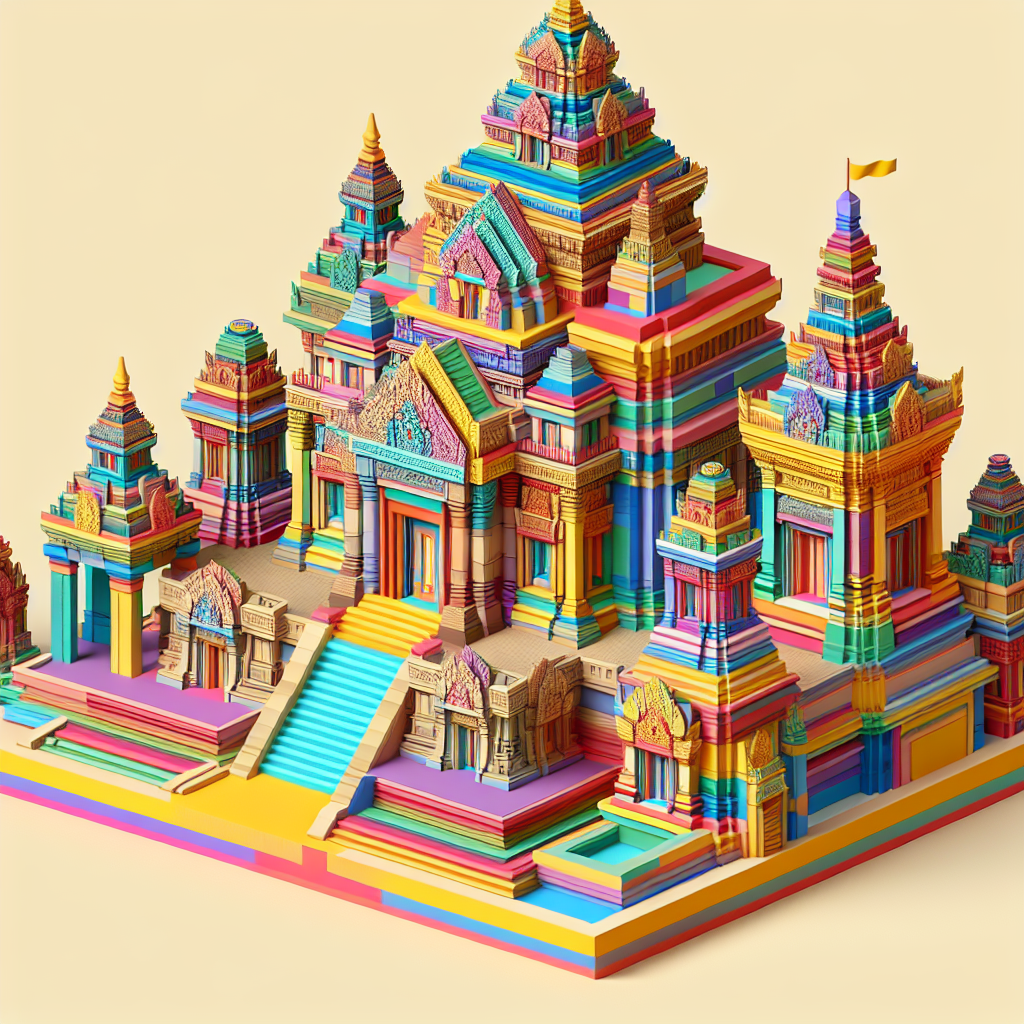

Prasat Ta Muen Thom: A Crossroads of History and Culture
Imagine standing at the edge of a temple that once thrived amid the whispers of the Cambodian highlands and the rolling hills of Thailand. That's precisely where you'll find Prasat Ta Muen Thom, a historical gem that straddles the border of two nations and transcends time. Built during the Angkorian period between the 10th and 12th centuries—under Emperor Jayavarman VII's reign—this ancient Khmer complex resonates with tales of history, humanity, and architectural brilliance.
Unveiling the Past: Who, What, When, Where, and Why?
Prasat Ta Muen Thom is an archaeological site that speaks volumes about the Khmer Empire's cultural expanse. Located in the lush wilderness along the modern Thai-Cambodian border, this temple complex isn't just geographically significant—it's a symbolic portrayal of an era when artistry and spirituality were at their peak. But why was it built here? It's believed that Prasat Ta Muen Thom served as both a place of worship and a sanctuary for pilgrims traveling the ancient highway connecting Angkor to its western territories.
Architectural Brilliance: A Marvel of Khmer Craftsmanship
Prasat Ta Muen Thom is a testament to the architectural prowess of the Khmer civilization. At its core lies a central tower (prang), surrounded by a series of smaller buildings and galleries. These structures are adorned with intricate bas-reliefs and carvings that depict scenes from daily life, celestial beings, and Hindu deities such as Shiva and Vishnu. The design reflects the quintessential Khmer architecture, characterized by its brick and laterite construction bound by tenon joints and rare use of mortar.
Mystical Tales and Historical Insights
This temple isn't merely a static structure; it's a narrative carved in stone. The greater story woven into its walls and lintels covers themes ranging from royal exploits to ancient cosmology. Often, these artworks acted as didactic tools, imparting stories and moral lessons to the UNESCO-world travelers of their time.
Nature's Embrace: Prasat Ta Muen Thom's Enduring Significance
One can't help but marvel at how nature and human creation blend harmoniously at Prasat Ta Muen Thom. Surrounding forests whisper the passage of centuries, providing lush greenery that paints a proverbial picture frame around the temple structures. Remarkably, the biodiversity here adds to the site's allure, making it fertile ground for observation in ecology as well as archaeology.
The Scientific Perspective: Understanding Prasat Ta Muen Thom Today
Modern-day archaeologists and conservationists are puzzled and excited about the ongoing revelations at the site. Every artifact discovered unveils more about a civilization that was technologically advanced and spiritually rich. Scientific methods such as ground-penetrating radar and 3D reconstruction models are now being employed to map out areas of archaeological interest, safeguarding this marvel's legacy for future generations.
A Cultural Tapestry: The Intersection of Two Nations
Prasat Ta Muen Thom is a symbol of unity, a confluence where Cambodian and Thai cultural heritage converges. Its shared custodianship between the two nations is a poignant reminder of how history can be a bridge rather than a wall, threading stories and traditions across borders.
Preserving a Legacy: The Human Contribution
Today, preserving Prasat Ta Muen Thom isn't solely the responsibility of historians and archaeologists. It requires global citizenry—people who understand the importance of safeguarding humanity's landmarks. Efforts are made to restore and maintain the temple complex meticulously, ensuring that its walls stand strong against the trials of time.