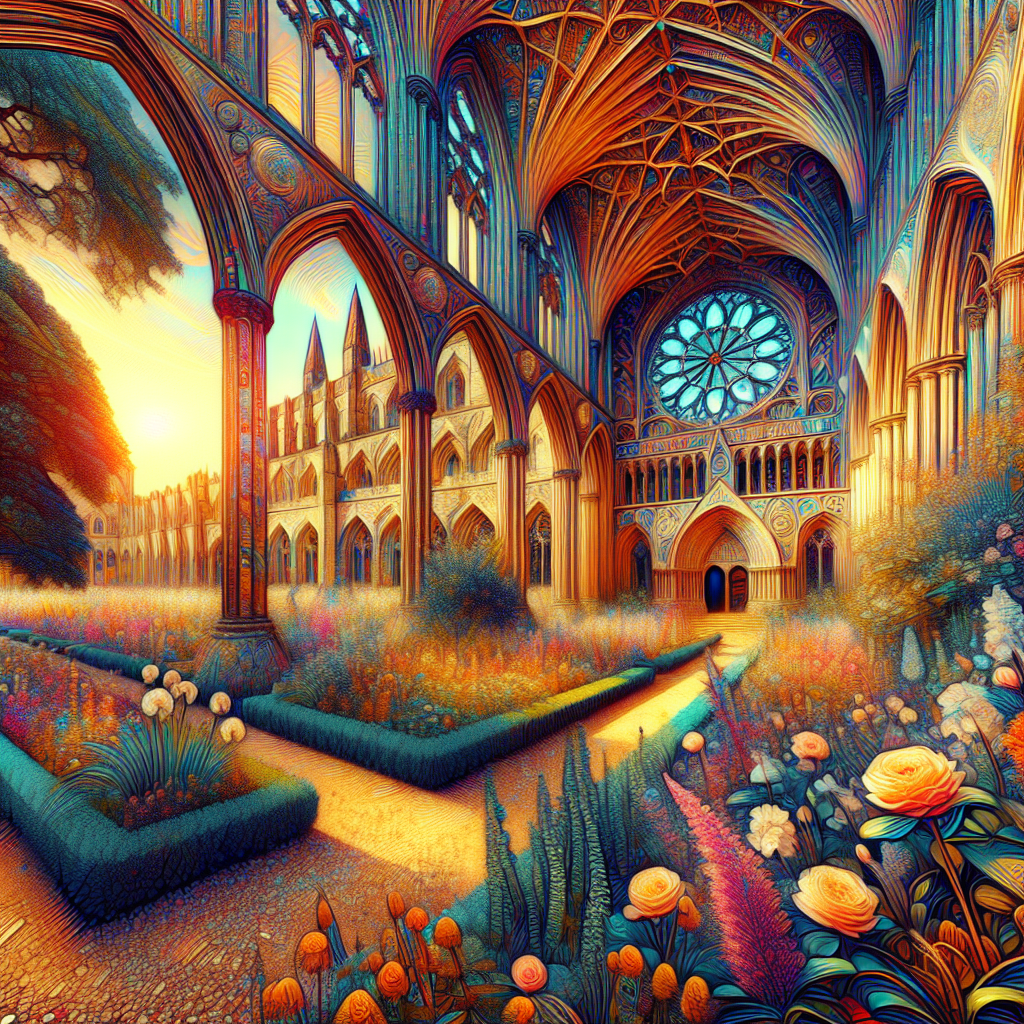

Polsloe Priory: Unraveling the Mysteries of Exeter's Hidden Gem
Have you ever stumbled upon a piece of history that was both a surprise and a delight, like finding a hidden treasure in your backyard? Welcome to Polsloe Priory, a charming yet often overlooked relic nestled in Exeter, Devon, in the south-west of England. Established in the 12th century by the Bishop of Exeter, William Warelwast, Polsloe Priory served as a Benedictine nunnery and remains a testament to the fascinating tapestry of English medieval monastic life. Today, it stands not just as a historical monument but as a symbol of perseverance through the ages, despite the rigors of time and the threat of obscurity.
The Origins of Polsloe Priory: A Step Back in Time
Around 1159, Polsloe Priory was founded, dedicated to Saint Katherine. Its location was strategically chosen just a mile outside the bustling city of Exeter, allowing it to maintain a quiet and contemplative environment while still being accessible to the vibrant community it served. The establishment of a priory specifically for nuns was a significant development at a time when opportunities for women in religious life were limited. It enriched the community by providing spiritual guidance, education, and charity.
Architectural Insights: A Testament to Medieval Craftsmanship
Although much of the original structure has been lost to time, the remnants of Polsloe Priory still speak volumes. The oldest surviving part, the 13th-century church with its charming Romanesque and early Gothic elements, gives us a peek into the architectural styles and construction techniques of the time. The most striking feature today is the Norman arch, a beautifully crafted piece that stands proudly amid the ruins. This arch is not only a reminder of the aesthetic sensibilities of the period but also a nod to the skill of medieval masons.
The Priory's Role and Influence
Polsloe Priory played a vital role in the community, beyond its religious functions. With the nuns engaged in activities such as copying manuscripts, educating girls, and providing care for the poor, the priory contributed significantly to the local economy and cultural life. The nuns' involvement in such diverse activities illustrated the ways women could exert influence within a constrained socio-religious framework.
Moreover, the priory was an integral part of the complex web of medieval spirituality and politics. It maintained connections with other religious institutions, exchanged knowledge, and was part of the larger ecclesiastical dialogue of the time. This interconnectedness highlights the dynamic nature of monastic life and its impact on broader society.
The Reformation and Beyond: Changes and Challenges
The Reformation in the 16th century brought upheaval to many monastic institutions across England, and Polsloe Priory was no exception. Under King Henry VIII's orders, the Dissolution of the Monasteries led to the closure and repurposing of many religious houses, including Polsloe Priory in 1539. Its lands were seized, and what was once a vibrant community became merely a shadow of its former self.
However, rather than disappearing into obscurity, Polsloe Priory transformed. It reemerged in various forms over the centuries, serving as a farm, estate, and even housing during World War II. Each phase of its transformation adds a layer to the storytelling tapestry of survival and adaptation.
Rediscovering Polsloe Priory Today
Today, Polsloe Priory is managed by English Heritage and stands as a symbol of historical continuity and the preservation of cultural memory. Visitors can wander among the ruins and imagine the lives of the nuns who once walked these grounds. Seeing the craftsmanship of the builders and contemplating the lives influenced by the priory fosters a unique connection between the past and present.
Excitingly, ongoing archaeological discoveries around the priory continue to enrich our understanding. Each unearthed artifact tells a piece of the story, contributing to our knowledge of medieval life, religious practices, and the resilience of such establishments.
Embracing Our Historical Heritage
In a world where the new often overshadows the old, Polsloe Priory invites us to slow down and appreciate the richness of history. It demonstrates how places, seemingly dormant, are alive with stories waiting to be told. By protecting Polsloe Priory, we safeguard these narratives, ensuring they are accessible and meaningful for generations to come.
It is places like Polsloe Priory that remind us of the human capacity for endurance, learning, and adaptation. The priory stands as an optimistic symbol of cultural heritage, celebrating the achievements of those who came before us while providing precious insights for those yet to come.