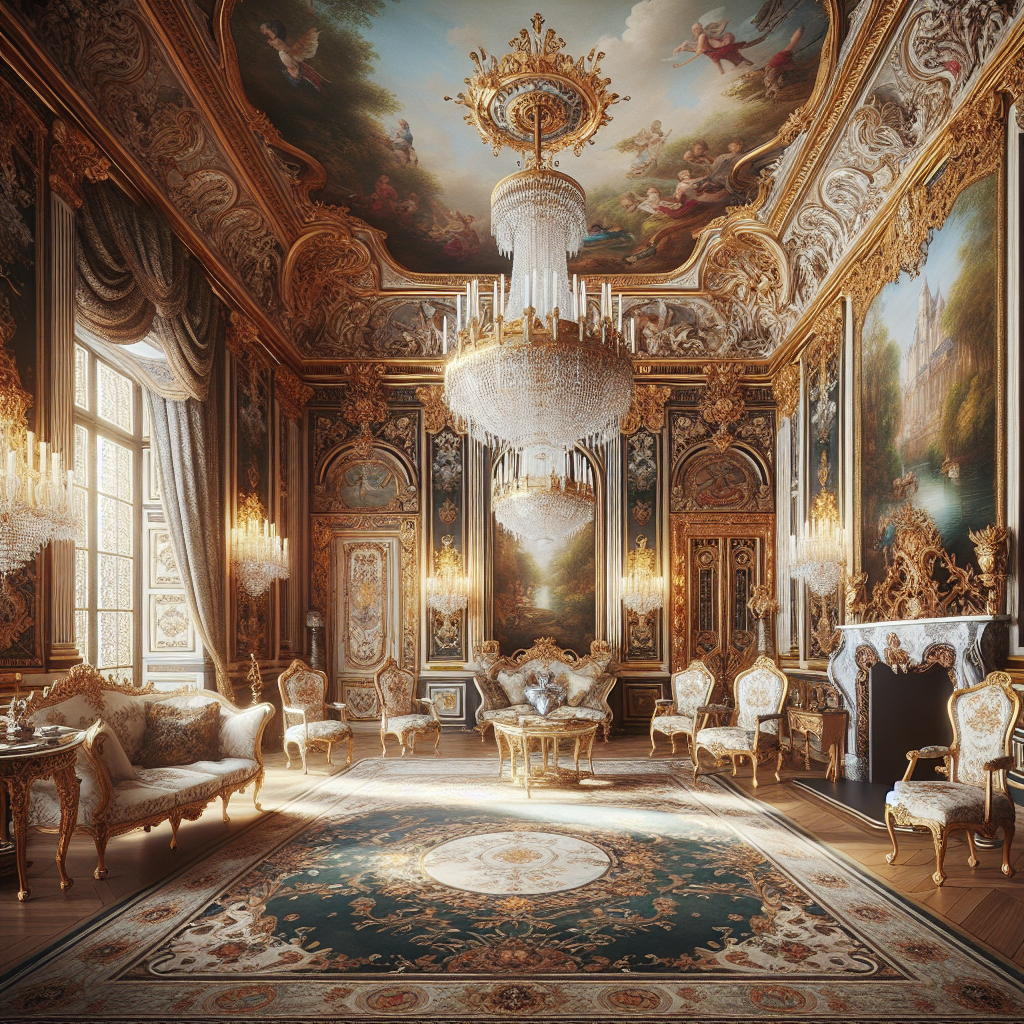

The Petit Appartement du Roi: A Window into Royal Life
Have you ever wondered what it would be like to step through a portal into the sophisticated world of French royalty? The Petit Appartement du Roi might just be as close as you'll get! Nestled within the grandeur of the Palace of Versailles, this series of rooms served as the private sanctum for some of history's most illustrious monarchs, from Louis XIV to Louis XVI. Built during the late 17th century and expanding into the 18th century, these chambers are located in one of the most enthralling corners of architectural history—where French opulence meets intimate, everyday life.
A Brief Historical Overview
The "Petit Appartement du Roi" translates to "The King's Private Apartments," a set of rooms where French monarchs could retreat from the public eye and engage in everyday activities away from the protocols of court life. Developed incrementally over decades, primarily during the reign of Louis XV, this apartment gave kings the freedom to involve themselves in more personal and political tasks without the eyes of the entire court.
The Petit Appartement du Roi was a space reserved for informal meetings and private endeavors like scientific pursuits—a true juxtaposition to the opulent public halls of the Palace. The idea itself was revolutionary at the time, reflecting a transformation in the way monarchy defined its own space. Here, we can observe the interplay between state and solitude, which highlights the complex lifestyle of these iconic rulers.
The Architectural Layout
The Petit Appartement is ingeniously designed to reflect both luxury and practicality. Featuring an antechamber, dining room, library, and private study rooms, it was a masterpiece crafted to accommodate the unique preferences and everyday requirements of its royal occupants.
Your journey through the apartment begins at the “Antechamber of the Bull's Eye,” aptly named for its large bull's-eye window. This room served as a prelude to the private domains, where favored courtiers would await an audience with the king. From there, you would proceed to a series of intricately ornate rooms that include the Cabinet of Moves, the Games Room, and Louis XV's Laboratory–a room that attests to the king's scientific curiosity and passion for conducting chemical and physical experiments.
One of the unique aspects is that it was often refitted to accommodate changing tastes and requirements, illustrating the evolving lifestyles of the monarchs who resided there. Over the years, its layout underwent multiple transformations, reflecting the shift from the heavily formal Louis XIV style to the more relaxed Rococo elegance heralded by Louis XV.
The Aesthetic Marvel
A feast for the senses, the decor within the Petit Appartement du Roi showcases the crown jewel elements of Rococo elegance. It combines exquisite paneling, gilded fixtures, and subdued color palettes to create an atmosphere of understated sophistication. Artists like François Boucher and Charles Le Brun contributed masterpieces that lined its walls, making the rooms a gallery of astounding artistic brilliance.
Especially fascinating is the way furniture was organized—not just for aesthetic allure but optimizing functional use. A clockmaker's cabinet, specially crafted by the royal clockmaker Pierre Gouthière, allowed Louis XVI to indulge his passion for horology. The furniture choices illustrate the practicality interwoven with artistic flair, offering us glimpses of how royalty lived, both lavishly and methodically.
The Royal Lifestyle: A Peek into Daily Life
Living in such a space must have been akin to walking through a living tapestry of history, science, and art. Louis XVI, for example, used the rooms for scientific experiments, reflecting his interests in the Enlightenment sciences. His great fascination with biology and chemistry found an outlet in the quiet solitude of these chambers.
Moreover, the apartment provided the kings with direct hidden access to other parts of the palace. This allowed them to slip into meetings or engage in secret political dealings, reinforcing their control in a discreet yet impactful way.
Though the French Revolution radically changed the political landscape, it cannot erase the testimony of these rooms—a space where monarchs balanced kingly duties with their personal inclinations.
Why Visit the Petit Appartement du Roi?
Today, the Petit Appartement du Roi serves as a time capsule of historical intrigue. A visit here is not just a tour; it’s an educational voyage through centuries of architectural, political, and cultural evolution. Within these walls, you witness not only the grandeur of royalty but also the vulnerability and reformation that characterized the age.
Observing these rooms allows us to bridge the past with the present, providing a fresh perspective on the intertwining of public roles and private lives. There's something inherently soothing and humanizing in acknowledging that even at the apex of power, monarchs sought a space for quietude, reflection, and personal pursuits.
To walk the halls of the Petit Appartement du Roi is to step through the threshold of time—immersing yourself in the stories, plight, and passions of those who once held the highest seat in France.
Final Thoughts:
The Petit Appartement du Roi beautifully encapsulates a unique blend of history, art, and humanity. For enthusiasts of architecture and history alike, these rooms offer a lens into the personal lives of French monarchy—introducing us to their world not just as rulers but as people fascinated by science, reverence, and personal solace.
Whether you're a history aficionado or a curious traveler looking to broaden your horizon, the Petit Appartement du Roi offers an intriguing story waiting to be uncovered in every ornate carving and gilded cornice of its majestic layout.