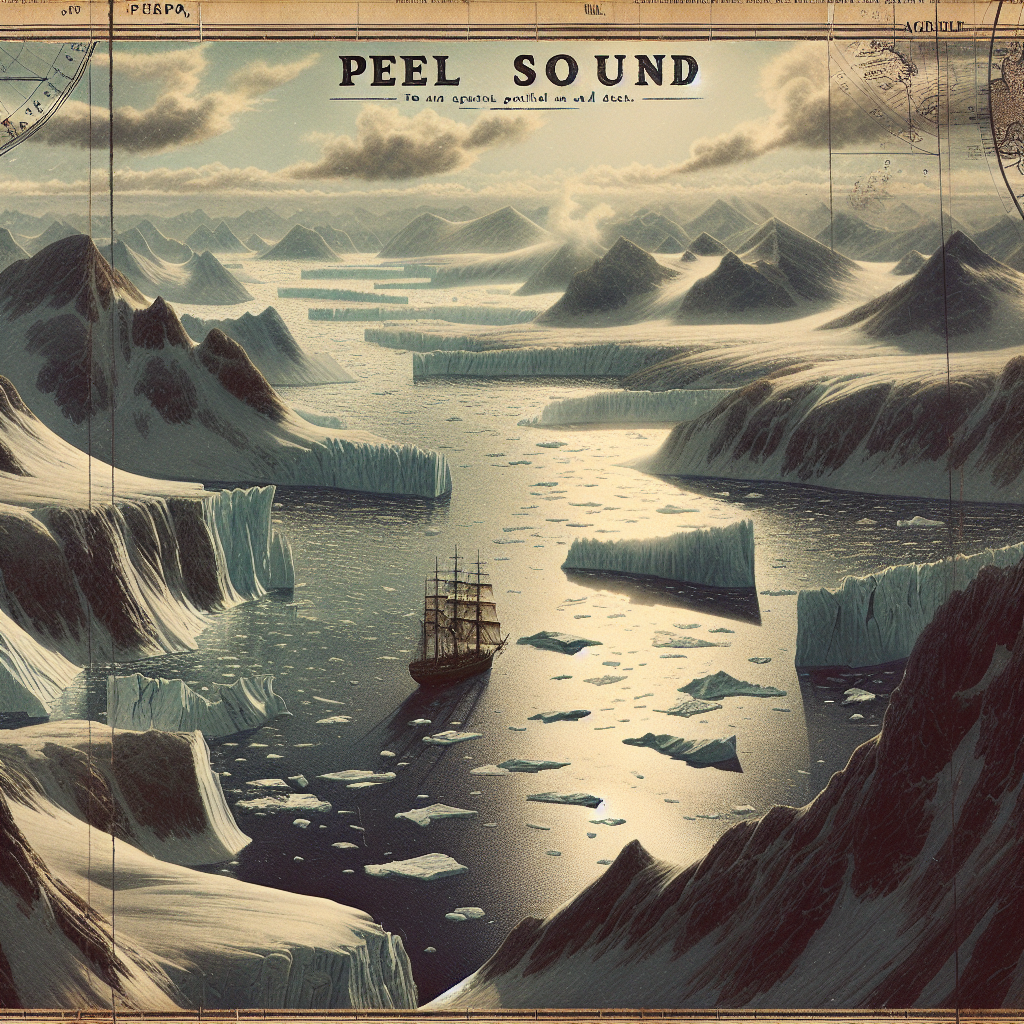

Enter the Gateway of Awe: Peel Sound!
Imagine a world where powerful glacial walls echo tales of exploration alongside the silent whisper of Arctic winds. Welcome to Peel Sound! Peel Sound is a critically important Arctic waterway nestled between Somerset Island and Prince of Wales Island in the Canadian Arctic. Discovered by the renowned British explorer Sir John Ross in the early 19th century, this channel has a storied past intertwined with exploration and scientific study. Peel Sound offers insights into our planet's climate and marine ecosystems, making it an exciting focus for researchers and those passionate about Earth's polar regions.
The Intriguing Geography of Peel Sound
To truly appreciate Peel Sound, let's explore its geography. Peel Sound is part of the larger Canadian Arctic Archipelago. It extends from the Franklin Strait in the south to Barrow Strait in the north, acting as a narrow but significant corridor for marine life and sea ice movement. Its waters are bordered by rugged coastlines and rich biodiversity, setting a fascinating stage for scientific adventures and stunning natural vistas.
The strategic location of Peel Sound means that it's a pivotal part of the Northwest Passage – a once-elusive maritime route that inspired and challenged explorers for centuries. Today, as climate change reduces sea ice coverage, the routes' accessibility has increased, raising both new opportunities and challenges for navigation and environmental stewardship.
A Storied History of Exploration
Peel Sound has been a silent witness to some of the most legendary explorations. The sound was first charted by Sir John Ross during his quest for the Northwest Passage in 1819. However, it was John Franklin's ill-fated expedition in the mid-1800s that engrained it into the annals of Arctic exploration history. Franklin's ships, HMS Erebus and Terror, became trapped in the icy grip of Peel Sound, leading to one of exploration's greatest mysteries – the disappearance of Franklin's crew. These historic voyages highlight Peel Sound's challenging conditions and timeless allure.
Fast forward to today, explorers and researchers continue to navigate these waters, now armed with advanced technology and a better understanding of Arctic conditions. These modern efforts help unearth the secrets of Peel Sound, building upon the legacies of past adventurers.
Marine Life and Biodiversity
Peel Sound isn't just a passage of water; it's a vibrant ecosystem teeming with life. The waters are home to a range of Arctic species, including seals, polar bears, narwhals, and bowhead whales. These animals have adapted to the harsh polar environment, showcasing nature's unyielding resilience and adaptability.
The seabed of Peel Sound holds secrets just waiting to be discovered. This underwater world hosts a myriad of aquatic life forms, each playing a vital role in the Arctic food web. As researchers continue their work, it's exciting to imagine what future revelations about marine biodiversity might arise from Peel Sound's mysterious depths.
The Climate Odyssey
The Arctic, including Peel Sound, plays a profound role in the Earth's climate system. The area acts as an indicator of climate changes, offering clues about the broader impacts of global warming on fragile polar landscapes. Observing the dynamics of sea ice in Peel Sound provides critical information about seasonal changes, ice thickness, and distribution - data that is invaluable for understanding global climate patterns.
As global temperatures rise, Peel Sound experiences longer ice-free periods, impacting not only the ecosystems but also human activities such as shipping and local community livelihoods. Efforts to monitor, understand, and address these changes highlight the urgent need for sustainable practices and policies that protect this natural treasure.
Why Peel Sound Inspires Optimism
Amidst the daunting challenges faced by the Arctic, Peel Sound symbolizes both hope and possibility. It acts as a natural laboratory, where scientists collaborate to unravel climatic mysteries and seek solutions to global ecological challenges. Through international cooperation and technological innovation, solutions are being developed that will help preserve the Arctic for future generations.
Engaging with the wonders of Peel Sound enriches our knowledge and inspires actions that benefit both local communities and the global populace. The spirit of exploration and discovery continues today, acting as a beacon of optimism for humanity's ability to learn and adapt.
In Summary
Peel Sound is not merely an Arctic waterway; it's a gateway to profound scientific discovery and exploration. Its unique geography, rich biodiversity, historical significance, and critical role in understanding climate dynamics make it a focal point for learning. As we engage with its wonders, Peel Sound teaches us about resilience, adaptation, and the interconnectedness of our planet's systems. Embracing this knowledge fuels hope for a future where humanity lives sustainably, in harmony with the natural world.