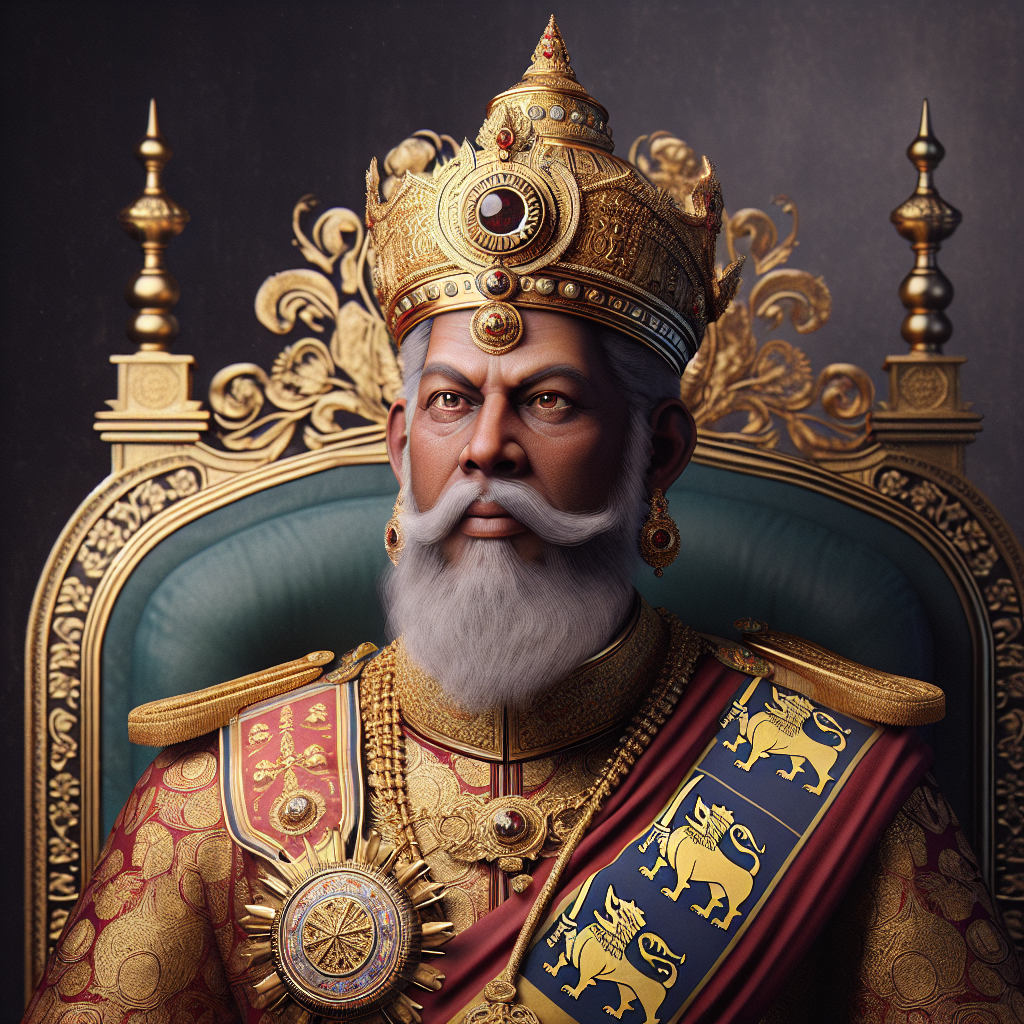

A Visionary King from Dambadeniya
Imagine wielding power not just to conquer, but to craft a flourishing tapestry of literature and culture. Such was the realm of Parakramabahu II, who ruled the kingdom of Dambadeniya, located in present-day Sri Lanka, from 1234 to 1269 AD. His reign is a fascinating blend of war, poetry, and purposeful governance, within a kingdom nestled in the heart of South Asia. His story isn't just a chronological walk down a royal path but an illuminating journey into the mind of a king whose rule brought cultural renaissance and formidable stability.
A Jewel in Sri Lanka's History
Parakramabahu II, often referred to as "Kalikala Sahitya Sarvagna Panditha" due to his literary prowess, is hailed as a key figure in Sri Lanka's cultural renaissance. Born to King Vijayabahu III, he inherited a throne fraught with political turmoil but rose to power by combining military might with diplomatic acumen. Parakramabahu II's reign was marked by his ambitious literary endeavors, leading to a significant cultural revitalization that expressed itself through language, art, and architecture.
Literature and Language: Flourishing Under His Rule
One of the most remarkable aspects of Parakramabahu II's reign was the emphasis on literature, particularly the Sinhala language. It was during his time that the "Kausilumina" was composed, a seminal piece of Sinhalese literature that remains an enduring testament to his era. His personal involvement in literary activities set the tone for an era that saw the creation of numerous significant literary works.
Parakramabahu's rise to prominence as a poet-king mirrored a broader movement toward the use of local languages in literature throughout Asia during the medieval period. This shift not only democratized literature, allowing it to reach a broader audience, but also solidified cultural identity within the kingdom.
Economic Reforms: A Visionary Approach
Aside from fostering a cultural golden age, Parakramabahu II was also astute in economic reform. Understanding the importance of stability and prosperity for his subjects, he introduced measures designed to enhance agriculture and fortify trade routes. By maintaining a robust navy, he ensured that trade across the Indian Ocean, particularly with South East Asia, thrived, securing his kingdom's economic prosperity. These advancements under his leadership set an impressive precedent for governance during his period.
Clever Diplomacy and Warfare
Parakramabahu II's reign underscores the intelligent balancing act between diplomacy and warfare. Though he is celebrated for his peaceful inclinations, he wasn't averse to warfare when necessary. He successfully repelled several invasions and quelled internal dissent, using a blend of strategic marriages and alliances. His military strategies demonstrated not only his strength but also his prudent understanding of power dynamics and defense.
Architectural Legacy: Building a Nation
Facilitating infrastructural development, Parakramabahu II embarked on extensive building projects that demonstrated both the architectural and engineering prowess of his time. His architectural patronage embellished the kingdom with magnificent structures, from temples to fortifications, many of which influenced subsequent Sinhala architecture. These edifices are still admired today as they endure through centuries, telling tales of a kingdom that once thrived under a remarkably foresighted ruler.
The Enlightened Monarch
Parakramabahu II was not just a ruler; he was the spirit of an era that fervently believed in the power of education and the enduring impact one could have through fostering art and culture. His reign is a shining beacon of how leadership that embraces both the sword and the pen can leave a legacy that transcends centuries. By blending scientific approaches in governance with humanistic endeavors, his leadership lessons remain relevant, inspiring leaders today.
Enduring Influence on Culture and Governance
The influence of Parakramabahu II’s rule extended beyond his lifetime. His reign marked a pivotal moment in the history of Sri Lanka, setting a blueprint for the integration of cultural pursuits within the framework of statecraft. His ability to merge diverse aspects of governance with cultural enrichment serves as a model of enlightened leadership that continues to evoke admiration.
Ultimately, Parakramabahu II's legacy is not just about his contributions to the empire's political and cultural landscape; it's about how he embodies the fusion of visionary leadership with a commitment to elevating human progress. In learning about his life and times, we are reminded of the incredible capacity humanity has to learn, grow, and contribute to the flourishing tapestry of history.