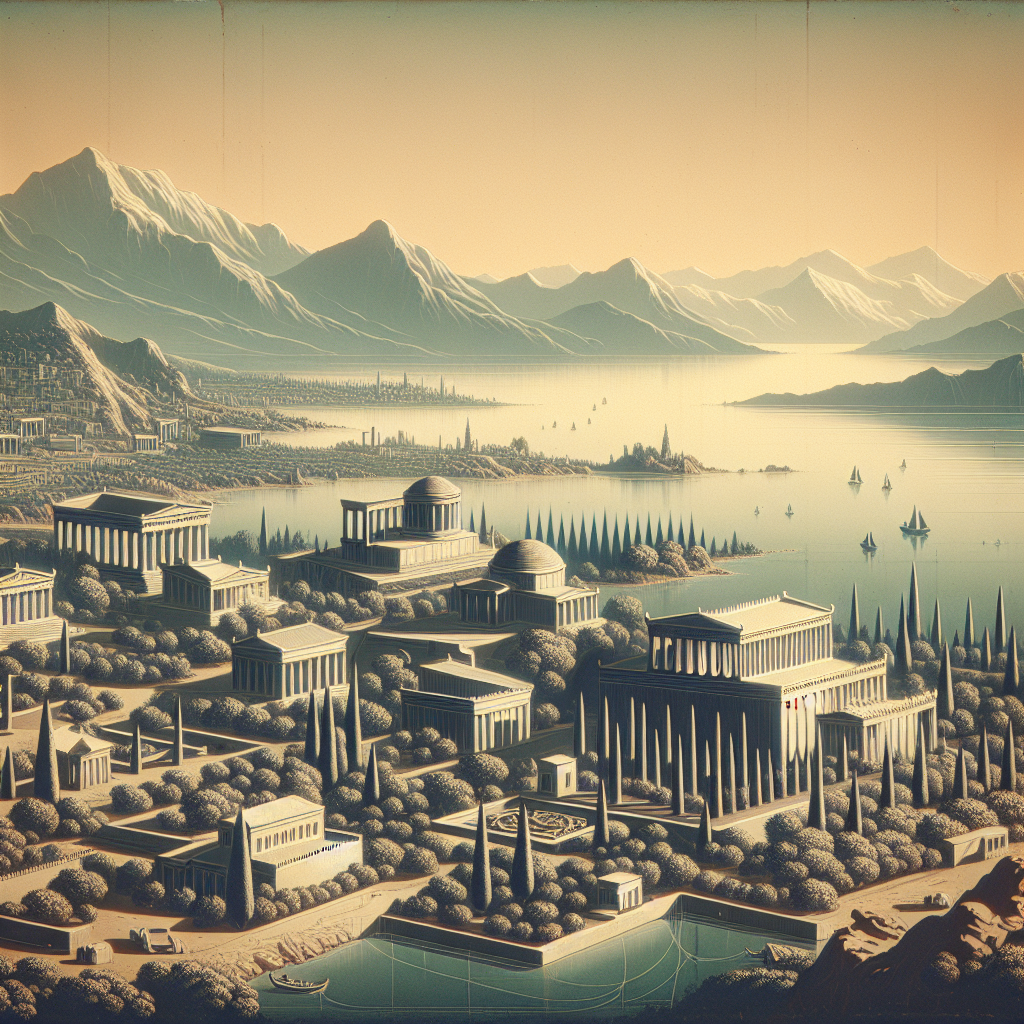

An Odyssey of Discovery: Ancient Greece Unveiled
In the bustling world of the ancient Mediterranean, a land of sunlit shores and rugged landscapes stood as a cradle of ideas, exploration, and passion. Welcome to ancient Greece! This fascinating era spanned from the mysterious Bronze Age civilizations around 3000 BC until Rome annexed the Greek world in 146 BC. Greece was located in southeastern Europe, and its terrain, rich in jagged mountains and glistening seas, inspired a unique culture that cherished learning and inquiry, influencing the world in profound ways.
Charting the Course of Time: Greek Timeline
Understanding Greece's history is akin to traversing a maze of myths interwoven with monumental real-world events:
Mycenaean Civilization (1600–1100 BC): Known as a time of warriors, this era is immortalized by epic tales like Iliad and Odyssey, painting vivid pictures of heroes like Achilles. Here, sophisticated palatial societies thrived, leaving us Linear B, the earliest Greek writing system.
Dark Ages (1100–750 BC): A period veiled in obscurity saw a collapse in major settlements but preserved oral traditions, quietly setting the stage for a resurgence.
Archaic Period (750–480 BC): A renaissance of city-states, or "poleis," like Athens and Sparta began to flourish. This era witnessed the birth of democracy in tiny, bustling Athens, innovating a participatory form of government still cherished today.
Classical Period (480–323 BC): The zenith of Greek culture, marked by philosophy, drama, and the profound leadership of figures like Pericles and the philosophical insights of Socrates, Plato, and Aristotle.
Hellenistic Period (323–31 BC): Following the campaigns of Alexander the Great, Greek culture expanded across continents, from Egypt to the fringes of India, leaving a legacy of cultural fusion and learning.
Who Were the Greeks?
The Greeks weren't a monolithic group but rather a mosaic of peoples speaking the Greek language across the region. Fierce independence coupled with a shared sense of cultural identity manifested in various city-states, each with its own governance and societal customs.
Athens: Renowned for its cradle of democracy, intellectual pursuits thrived here alongside monumental architecture like the enduring Parthenon.
Sparta: This militaristic society defined itself through rigidity and discipline, producing formidable warriors trained from youth.
Thebes: Often overshadowed by its neighbors, it played crucial roles in military innovations and conflicts, like the Sacred Band.
Culture and Achievements
The cultural fabric of ancient Greece was diverse and vibrant, interwoven with themes of heroism, reason, and unparalleled intellectual pursuits. Here is a snapshot of their extraordinary contributions:
Philosophy: Greek thinkers dared to ask fundamental questions about existence and morality. Stars like Socrates cultivated the method of dialectics; Plato envisioned ideal societies, and Aristotle explored countless subjects, laying groundwork for modern sciences.
Science and Mathematics: Greek endeavors in these fields held the seeds for modern disciplines. Pythagoras pondered numbers, Hippocrates laid the foundation for medicine, Archimedes illustrated physics with everyday marvels, and Eratosthenes calculated Earth's circumference with remarkable precision.
Literature and Drama: Through celebrated poets and playwrights, like Homer, Aeschylus, Sophocles, and Euripides, Greek dramas explored complex emotions and ethical dilemmas, breaching cultural barriers and surviving millennia.
Art and Architecture: Greek fascination with beauty and balance reverberates through sculptural mastery and architectural brilliance. The Temple of Zeus and impressive theaters embody an aesthetic pursuit harmonized with function, inspiring countless successors.
The Unseen Threads: Greece’s Lasting Influence
Why does ancient Greece resonate so deeply with modern humanity? Simply put, Greece sculpted frameworks of thought and governance that anchor contemporary societies. The foundational stones of democracy, philosophy, arts, and sciences eagerly borrowed and adapted across cultures owe much of their genesis to Greek innovation.
Socrates' method of inquiry resonates in modern educational settings; the Parthenon's symmetry informs architects worldwide. The Olympic Games fuel today's global sporting spirit, while Greek myths breathe life into literature, art, and cinema—catalysts uniting diverse human experiences across history's expanse.
Conclusion: A Living Legacy
Greek civilization wasn't merely a moment in the past; it was a spark igniting progress and curiosity across ages and boundaries. We, the inheritors of this radiant legacy, relish a celestial tapestry woven through dialogues questioning the cosmos, moral codes, and the mysteries of human existence.
Every person diving into the universe of ancient Greece can draw inspiration—not just from its towering achievements but from its undying quest to understand and better the human condition. Isn't it remarkable to think that even today, after thousands of years, Greece continues to speak to that curious, indomitable spirit residing within us all?