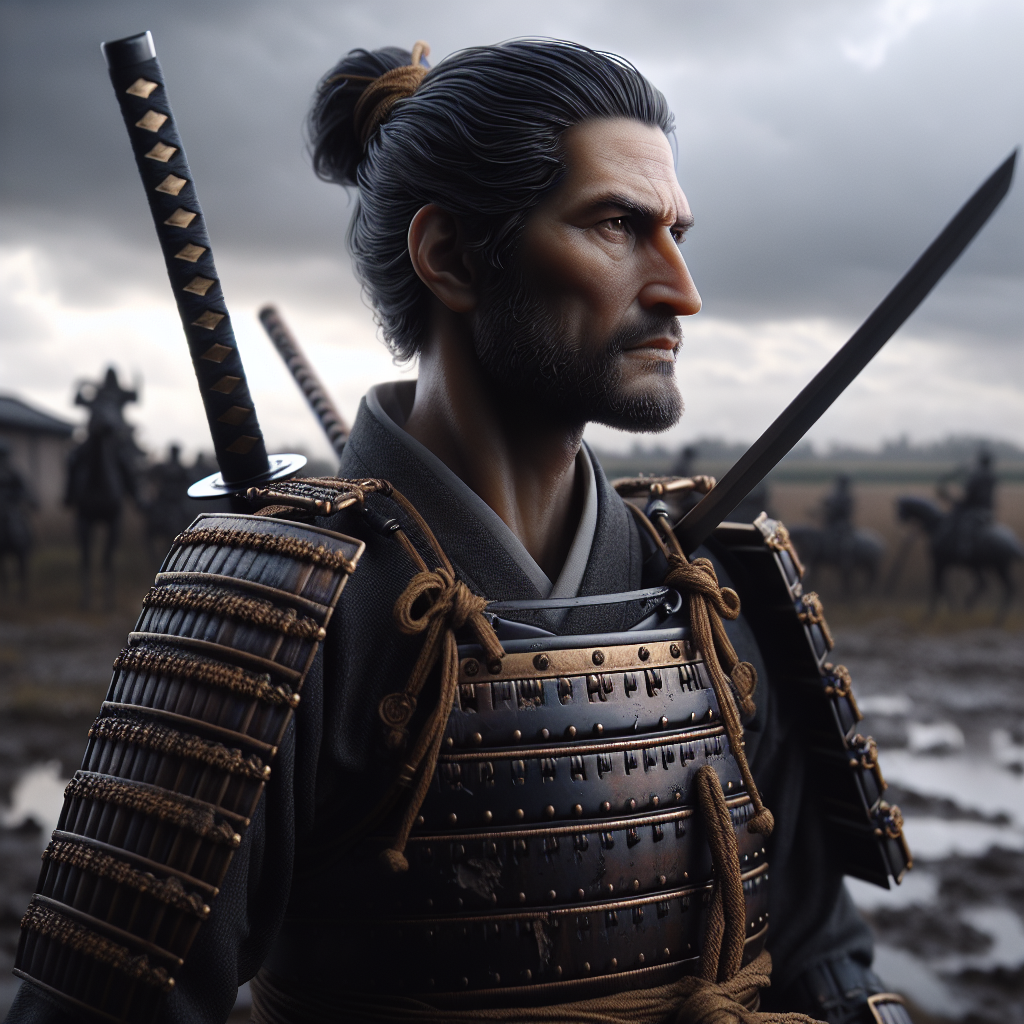

Who would have thought that the legacy of a 16th-century samurai could be so fascinatingly complex, filled with tales of loyalty, tradition, and neurological mystery? Meet Ōtani Yoshitsugu, a remarkable figure who played a pivotal role in Japanese history during the tumultuous late Sengoku period in the 1500s. A close ally of the famed Toyotomi Hideyoshi, Yoshitsugu's story takes us through intriguing corridors of strategy, disease, and humanity's enduring spirit. Most notably, Yoshitsugu is known for his involvement in the Battle of Sekigahara, a decisive encounter fought in the heart of Japan, a clash not defined by mere weapons, but by wit, loyalty, and honor.
In examining Yoshitsugu's journey as a samurai, we fathom a world where honor was the currency of life. Born in 1558, Yoshitsugu initially served the Tsutsui clan but rose to prominence under the patronage of the influential Toyotomi Hideyoshi. He proved himself a skilled warrior and tactician, assisting Hideyoshi in consolidations that would shape the Japanese landscape during the late 16th century. His loyalty to Hideyoshi was legendary, standing by his lord in many critical campaigns, which in turn made him an invaluable asset.
Yoshitsugu’s story is also one of personal struggle, as he battled a debilitating condition known as Hansen's Disease, or leprosy. In an era when medical understanding was limited, such a diagnosis was not just a physical challenge, but a societal one, as leprosy was stigmatized and often misunderstood. Yet, Yoshitsugu’s resolve and indomitable spirit are what truly shine through history’s mists. Despite his ailment, he continued to serve loyally, displaying a courage and dedication that speak volumes about human resilience.
The height of Yoshitsugu's legacy is perhaps most vividly captured at the Battle of Sekigahara in 1600. As one of the commanding generals on the Western Army's side, he found himself juxtaposed against the rising force of Tokugawa Ieyasu. This battle was more than a physical contest; it was a fight for the future ideological path of Japan. Yoshitsugu, despite his illness, committed to battle with unrelenting fervor. It was his deep friendship with another samurai, Ishida Mitsunari, that steered his tactical choices, further reinforcing themes of loyalty and brotherhood.
Unbeknownst to Yoshitsugu and Mitsunari, however, some units within their ranks were governors for betrayal. This fragmentation within the Western Army contributed to its demise. Nonetheless, Yoshitsugu's actions on the field were marked by a strategic acumen that few could rival. His units held firm even in the face of personal adversity—a testament to his leadership.
But what truly cemented Yoshitsugu’s name in the annals was his endearing final act. Aware of impending defeat and unwilling to burden his troops with the handling of his condition as a captive, Yoshitsugu committed ritual suicide, or seppuku. Such acts were the ultimate form of loyalty and honor in samurai culture, profound symbols of one’s life in tune with personal beliefs and societal roles.
Yoshitsugu's life offers a remarkable narrative that questions conventional perceptions of disability, leadership, and integrity. It emphasizes that even amidst impediments, the choices we make can illuminate paths of loyalty and honor for generations to come. His story continues to echo within Japanese culture, preserved in folklore, literature, and dramatizations as an inspirational tale of unwavering fidelity.
Today, Yoshitsugu’s legacy invites us to ponder the timeless human capacity to transcend obstacles. In a world advancing at a scientific and technological pace unimaginable to the samurai, the fundamental themes of his life hold relevance: the call to uphold values of devotion and kinship in our own pursuits. What can we, in our modern societies, learn from such a living narrative? Perhaps it is that the core of strength often lies beyond physical prowess; it resides in an empowered mind and an unyielding spirit.
In conclusion, Yoshitsugu’s unwavering dedication and resilience in the face of both external battles and internal struggles offer a majestic chronicle of human potential. Through studying figures like Yoshitsugu, we celebrate the enduring spirit of humanity that remains potent across time and space.