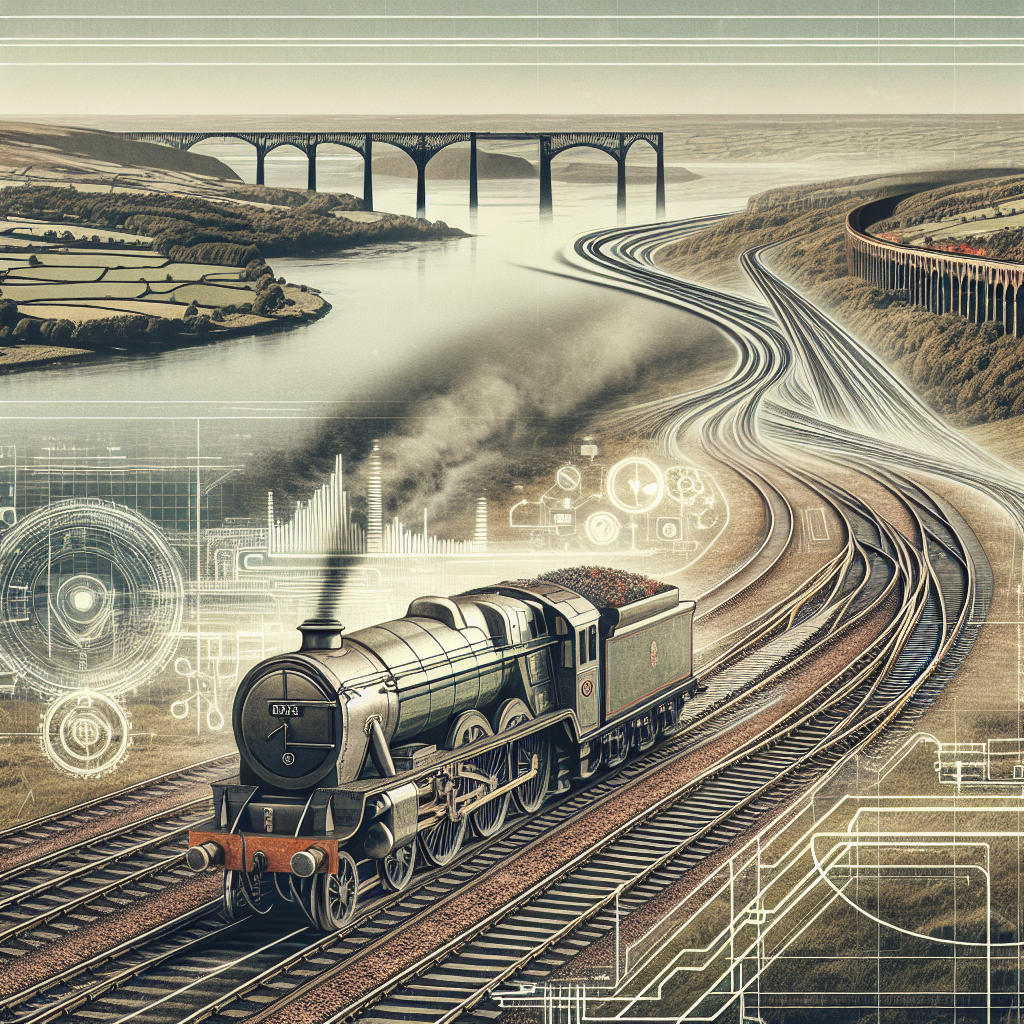

All Aboard the North Eastern Railway!
In the astonishing world of Victorian Britain, where steam power and industrial revolutions were the de facto superheroes, the North Eastern Railway (NER) made its remarkable entrance! Established in 1854 in the lavishly ambitious United Kingdom, the NER was not just a mere transportation line; it was a formidable force driving social and economic revolution. Nestled predominantly in the North East of England, this railway company not only interconnected regions but also fostered a new era of connectivity, bridging the bustling Newcastle with the historic city of York and even beyond. But why, you may wonder, is this railway company even relevant today?
Historical Significance and Infrastructure
If you’re not yet tickled by the train tracks, let’s journey back to the mid-19th century—a time when the land was buzzing with steam engines and majestic railroads. The North Eastern Railway was birthed through a merger of several small railway companies in 1854. This amalgamation was driven by the necessity to efficiently manage and expand the rail network in the bustling industrial heart of Northern England.
By the end of the 19th century, the NER possessed an expansive network of more than 1,500 miles of track, making it the fourth largest railway company in the land. Through savvy expansion and astute acquisitions, the NER not only transported coal and industrial goods but also ferried passengers to burgeoning new job markets, educational opportunities, and leisure destinations. Just imagine the excitement of Victorian travelers as they zipped across landscapes previously separated by daunting distances!
Economic and Social Impact
You might think railways are simply about getting from point A to B, but the NER was more like a magic carpet of economic transformation. During a period of rapid industrial expansion, the NER was vital in facilitating trade and connecting major ports to inland markets. The coal industry, crucial to Victorian England, thrived due to this rail infrastructure, enabling the cost-effective movement of this ‘black gold’ to where it was most needed.
Beyond commerce, the very presence of the NER stimulated urban growth and the proliferation of jobs directly tied to the railway and its auxiliary services. Cities grew around these railway hubs, with people flocking to gain employment as engineers, train conductors, and station staff. The NER helped propel not just an economy, but a whole society into the future!
The Innovation Train: Technology and Design
Hold onto your hats as we explore some pioneering advancements that the NER championed! The NER was at the vanguard of adopting cutting-edge technology and innovative designs. In terms of technology, it was among the first to employ electric signaling systems, enhancing safety across its sprawling network.
Architecturally, the stations and bridges of the NER were masterpieces, blending Victorian elegance with functional prowess. Modern design enthusiasts frequently muse over the striking architecture of the York railway station, an elegant testimony to the creativity and ambition of this epoch. The NER embraced modernism by investing in new materials and engineering methods, proving that the future wasn't some distant fantasy, but a thrilling reality!
The Legacy Continues: From NER to LNER
Fast forward to 1923, and the NER had a metamorphosis of its own. It became part of the London and North Eastern Railway (LNER) during the turbulent era known as the ‘Grouping,’ where most British railway companies were consolidated into four massive entities by the government. Yet, the legacy of the NER endures, etched into the routes still operated by modern successors like LNER, maintained with the historical finesse and romantic charm of their ancestors.
But why do we still care about a railway company over a century old? Quite simply, the skeleton of the NER's network forms part of the backbone of the current rail system in northeastern England, proving that its influence transcends time. The legacy is an enduring testament to human ingenuity and our relentless pursuit to connect lives and improve societies.
A Beacon of Progress
As we step off this nostalgic train ride, we find ourselves richer in understanding. The North Eastern Railway isn’t just railway tracks vanishing into the horizon; it’s a monumental story of daring dreams that built bridges—metaphorically and literally. It's a tale of how technology meets society, catalyzing progress, and fostering interconnectedness. It's a narrative that showcases how we, as humans, can shape the invisible threads binding communities across distances.
So next time you hear the distant whistle of a train or feel the rumble of its engines, remember that it's not just transporting people or goods—it's carrying a history laden with victories, innovations, and dreams as vast and expansive as time itself.