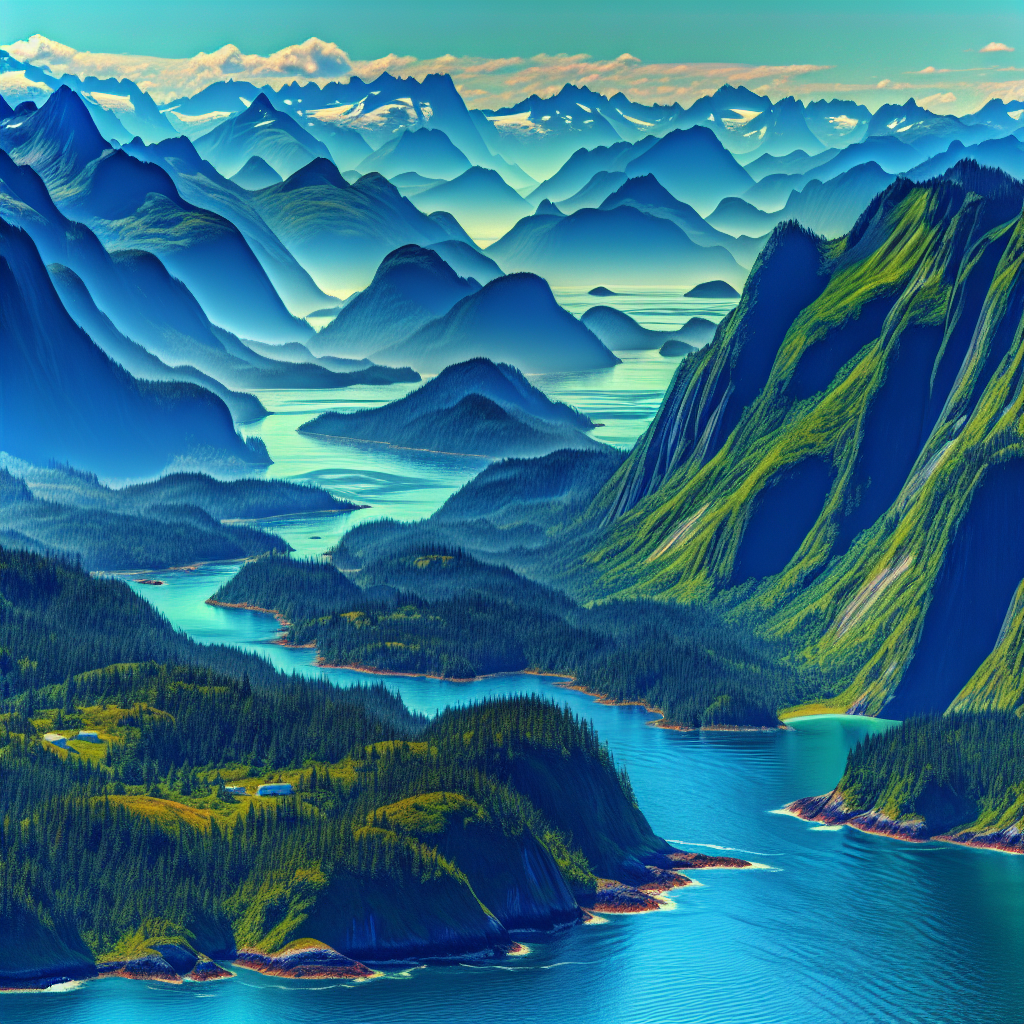

The Mystique of North America's Pacific Fjordland: A Journey into Nature's Grand Design
It’s not every day you get to unravel the splendor of nature that seems to borrow its drama from an epic fantasy novel. Let us embark on an exhilarating adventure to the North American Pacific Fjordland, where geological wonders narrate stories that span millennia and untouched ecosystems thrive in their primal beauty.
Who, What, When, Where, and Why?
Picture a young, enthusiastic biologist named Ella venturing into a land sculpted by the gentle yet persistent hand of glaciers. She stands amidst the Pacific Fjordland, an expanse stretching proudly along North America's west coast, embracing parts of Alaska, British Columbia, and beyond. This awe-inspiring landscape of sheer cliffs and hidden marine passages isn't a mere snapshot in time but a vibrant tableau constantly reshaped through eons. But why does this region captivate scientists and nature lovers alike? It’s not just breathtaking vistas; this is a living laboratory providing invaluable insights into Earth’s climatic past and present.
Unveiling the Secrets Behind the Fjords
To truly appreciate the North American Pacific Fjordland, it helps to understand the fundamental forces that created these majestic landscapes. Fjords are long, narrow inlets flanked by steep cliffs, formed by the immense power of glacier movements during the last Ice Age. As glaciers pushed through the terrain, their tremendous weight and slow, grinding motion carved out deep valleys, which would later flood with seawater when the ice retreated approximately 10,000 years ago.
The fjords are often undermined by intricate networks of rivers and streams that continue to carve and reshape these landscapes. Scientists like Ella study these locations not only to decode the past but also to predict environmental changes in the future. These dramatic landforms can inform us about glacier melting patterns, sea level rise, and climate shifts.
Wilderness and Wildlife: A Paradise Like No Other
The Pacific Fjordland is a cornucopia of biodiversity. Its lush rainforests teem with plant and animal life, representing ecosystems that have remained largely uninterrupted for centuries. The resiliency and adaptability of life here are profound. From the colossal grizzly bears that roam the dense woodlands hunting for salmon, to the orcas gliding effortlessly through the icy waters below, wildlife abounds.
The region is also a crucial habitat for bald eagles and other birds of prey. Observing these creatures in their natural environment can be an exhilarating and humbling experience. Scientists gain vital data on food webs, migration patterns, and the impact of ecological changes, contributing to global conservation efforts.
Indigenous Wisdom: Learning from the Original Stewards
The indigenous peoples of this region, such as the Tlingit, Haida, and Coast Salish, have lived and thrived in the Pacific Fjordland for thousands of years. Their rich cultures and intimate relationships with the land offer us insights and wisdom often overlooked by modern science. For communities deeply connected to this rugged landscape, nature is both mentor and family.
These communities exemplify sustainable living practices and have crafted stories, myths, and oral traditions that express a reverence for the environment. Listening to and incorporating indigenous knowledge can enhance our understanding of the Fjordland and inform conservation strategies that honor both natural heritage and cultural identity.
The Significance of Conservation
Today, the North American Pacific Fjordland faces growing challenges from climate change and human activity. Protecting the ecological integrity of this region is paramount, not only for preserving its intrinsic beauty and biodiversity but also for maintaining its role as a natural carbon sink. Forests and waterways here efficiently capture carbon dioxide, mitigating the effects of global warming.
Efforts to conserve these regions involve robust scientific research, public awareness campaigns, and cross-border collaborations. Pioneering projects involve creating comprehensive databases that track flora and fauna, documenting changes, and monitoring human impact.
An Invitation to Future Generations
One cannot help but feel a sense of optimism about the collaborative efforts to safeguard this extraordinary land for future generations. There is much to learn from the resilient ecosystems of the Pacific Fjordland. Encouraging responsible tourism and fostering educational programs can galvanize the next generation of environmental stewards.
As Ella and other passionate explorers carry the torch forward, may they inspire you and me to better appreciate and protect our planet’s natural wonders. Welcoming fresh ideas and innovative solutions grounded in scientific inquiry offers promise and possibility in tackling environmental challenges. The North American Pacific Fjordland is not just a corner of wilderness to visit but a vibrant symphony of life, a natural treasure that beckons us to learn more, participate actively, and care deeply.
In this magnificent meeting place of land and sea, where time seems to stand gloriously still, layers of Earth's history unfold, encouraging wonder, respect, and action. Let us greet the future with optimistic resolve, ensuring that the splendor of the Fjords remains an eternal legacy for humanity.