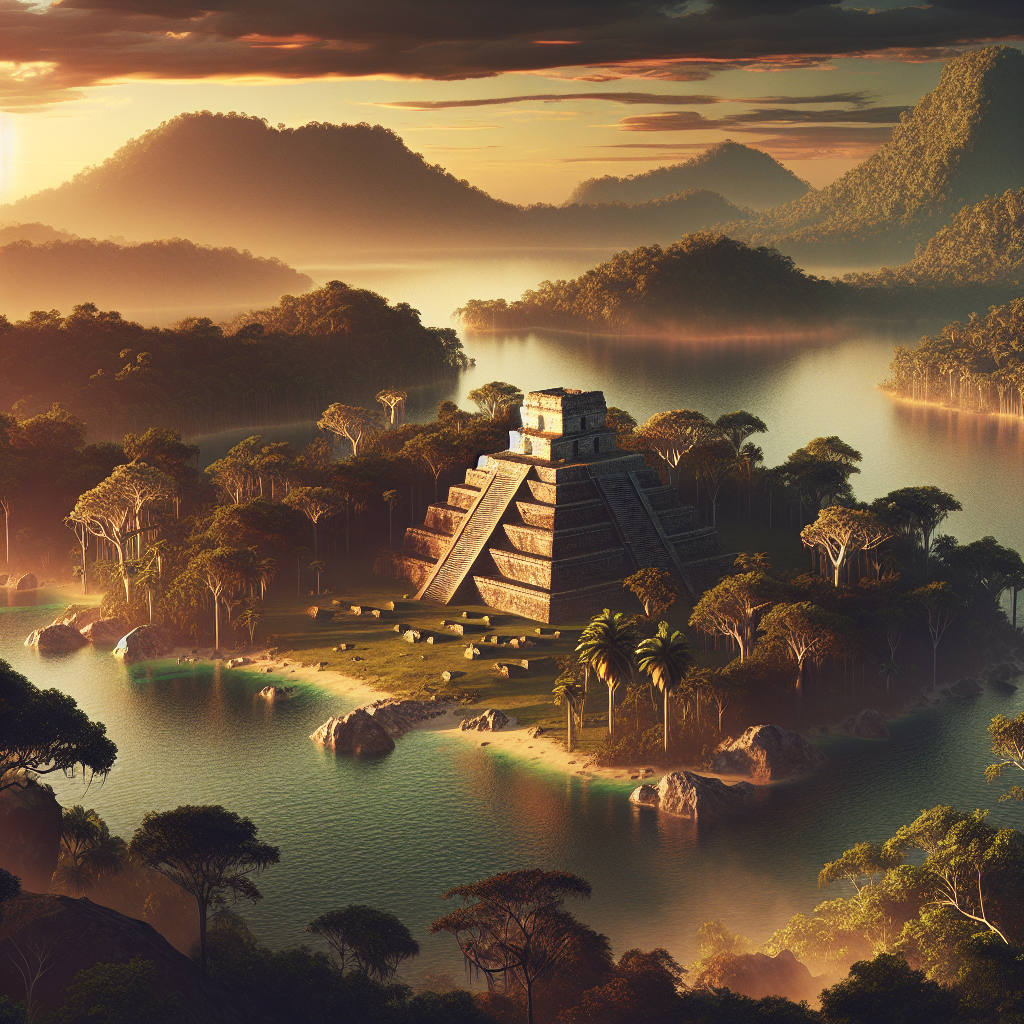

The Enigmatic Island of Nojpetén: A Glimpse into the Last Maya Stronghold
Imagine an island that was once the bustling heart of a civilization, a place where the echoes of ancient rituals and the whispers of history still linger. This is Nojpetén, the last stronghold of the Maya civilization, located in present-day Guatemala. Nojpetén, also known as Tayasal, was the capital of the Itza Maya kingdom and the final Maya city to fall to Spanish conquistadors in 1697. Situated on Lake Petén Itzá, this island city was a vibrant hub of culture and resistance, where the Itza people held out against European colonization for nearly two centuries longer than their mainland counterparts. The story of Nojpetén is a fascinating chapter in the history of the Maya, showcasing their resilience and the rich tapestry of their cultural heritage.
The Itza Maya, who inhabited Nojpetén, were a remarkable people known for their sophisticated society, advanced knowledge of astronomy, and impressive architectural achievements. The island city was a thriving center of trade and religion, with temples and palaces that stood as testaments to their ingenuity. The Itza managed to maintain their independence and way of life long after other Maya cities had succumbed to Spanish rule, thanks in part to their strategic location and the natural defenses provided by the surrounding lake.
The fall of Nojpetén in 1697 marked the end of an era, as Spanish forces led by Martín de Ursúa launched a final assault on the island. The conquest was driven by the Spanish desire to expand their empire and convert indigenous populations to Christianity. Despite the Itza's valiant efforts to defend their homeland, the superior weaponry and tactics of the Spanish ultimately led to the city's capture. The fall of Nojpetén was not just a military defeat but also a significant cultural loss, as many of the Itza's sacred texts and artifacts were destroyed or lost in the aftermath.
Today, the legacy of Nojpetén lives on through archaeological studies and the oral traditions of the Maya descendants. The island, now part of the modern city of Flores, continues to be a site of historical and cultural significance. Researchers and historians are piecing together the story of Nojpetén, uncovering the secrets of its past and celebrating the enduring spirit of the Maya people. The tale of Nojpetén is a reminder of the resilience of human cultures and the importance of preserving our shared history for future generations.