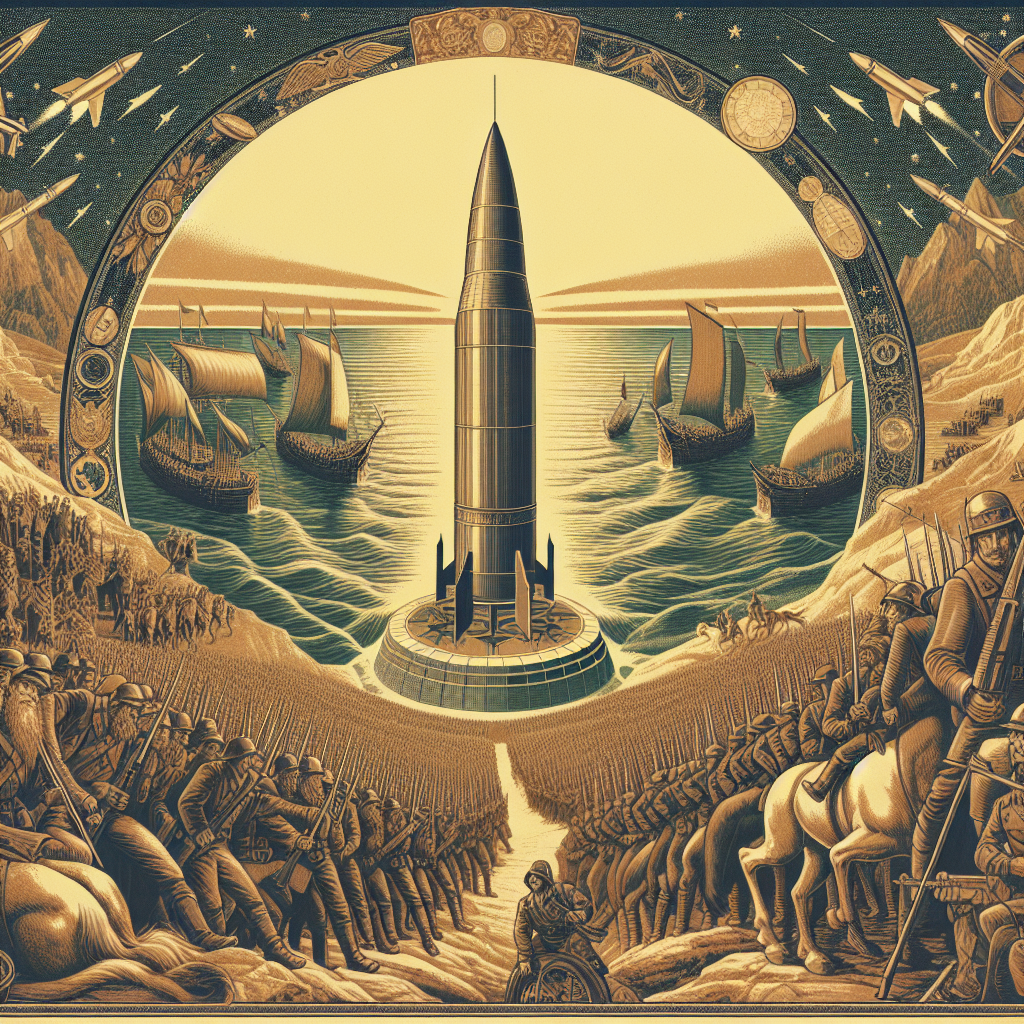

Missile Gap: A Peek into Cold War Tensions
The sky was not the limit—it was the battlefield! During the late 1950s and early 1960s, a period of exceptional tension known as the Cold War, the so-called "Missile Gap" became a central topic in the United States. This perceived difference in missile technology and stockpile between the U.S. and the Soviet Union put both leaders and citizens on edge. The who, what, when, where, and why of the Missile Gap are crucial to decoding this dramatic episode of history, where fear and strategy intertwined to shape geopolitical dynamics.
What Was the Missile Gap?
At its core, the Missile Gap was a belief that the Soviet Union had surpassed the United States in the quantity and quality of missiles, specifically intercontinental ballistic missiles (ICBMs). This notion sent shockwaves across political, military, and civilian communities, leading many to advocate for ramped-up American defense spending and technological advancement. In reality, this gap was predominantly a perception, fueled by exaggerated estimates and misinformation, rather than actual Soviet supremacy.
Origins of the Missile Gap
The concept of the Missile Gap was heavily influenced by intelligence assessments and political discourse in the late 1950s. Following World War II, the race to gain missile superiority quickly intensified. Notably, the successful launch of Sputnik by the Soviet Union in 1957 heightened American fears. If the Soviets could launch a satellite into space, it seemed plausible they could also send nuclear warheads across continents from their launch pads.
In the United States, politicians, military officials, and even leading scientists contributed to the dialogue surrounding a presumed missile inferiority. The concern was further amplified by leaders like President Eisenhower and his successor, President Kennedy, both of whom grappled with varied levels of intelligence and political pressure.
The Intelligence Behind the Gap
Intelligence played a pivotal role in both creating and later debunking the Missile Gap perception. U.S. reconnaissance efforts like the U-2 spy planes and later satellite imagery provided critical insights. One major breakthrough was the discovery that the Soviet missile stockpile was much smaller than feared. These developments were not immediately made public, as much due to the sensitive nature of intelligence as to the political leverage that fear provided.
Interestingly, the missile gap existed more significantly on paper and in speeches than in reality. By the early 1960s, President Kennedy had realized that the United States actually held a significant advantage in nuclear capabilities. Nonetheless, during his administration, Kennedy used the idea of a Missile Gap effectively as a political tool—a catalyst to amplify defense spending and technological investment.
Outlook and Outcome
The practical outcome was a strategic rebalancing of U.S. military policy. Despite initial fears, the revelation that the U.S. was not at a strategic disadvantage helped to stabilize defense strategies moving forward. Nevertheless, the perceived Missile Gap did serve to galvanize scientific and technological advancements. The investments in missile technology and defense systems propelled innovations that stretched beyond military strategy, contributing significantly to the space race and technological advancement more broadly.
One fascinating fact is that this period of heightened defense buildup and scientific push laid foundational blocks for future collaborations and peacekeeping technology—a positive end for a concern rooted in fear.
Lessons from History
The Missile Gap teaches us invaluable lessons about perception versus reality. As history has shown, nations can become embroiled in costly and potentially destabilizing arms races based on perceptions of strategic disadvantage. It crops up the wisdom of critical assessment and comprehensive intelligence before forming policy in international relations.
Likewise, this episode renewed focus on transparency, communication, and collaboration in global politics. Time and again, our shared history proves that science and understanding can illuminate paths through periods of mystery and fear into arenas of progress and peace.
Envisioning the Future
Our exploration of the Missile Gap reveals its significance not just as a chapter in Cold War history but as a persistent reminder of how we grapple with fear and uncertainty. Today, as we continue to face challenges like cyber warfare, artificial intelligence, and other emerging technologies, the Missile Gap stands as an allegory reminding us to pursue knowledge with vigor, to invest in innovation, and to balance ambition with wisdom.
In the grand journey of humanity, understanding the intricacies, missteps, and lessons of our past arms us with hope and optimism for the challenges of tomorrow. And just like that sky-high battlefield of missiles, we remain inspired to reach new heights with courage and clarity.