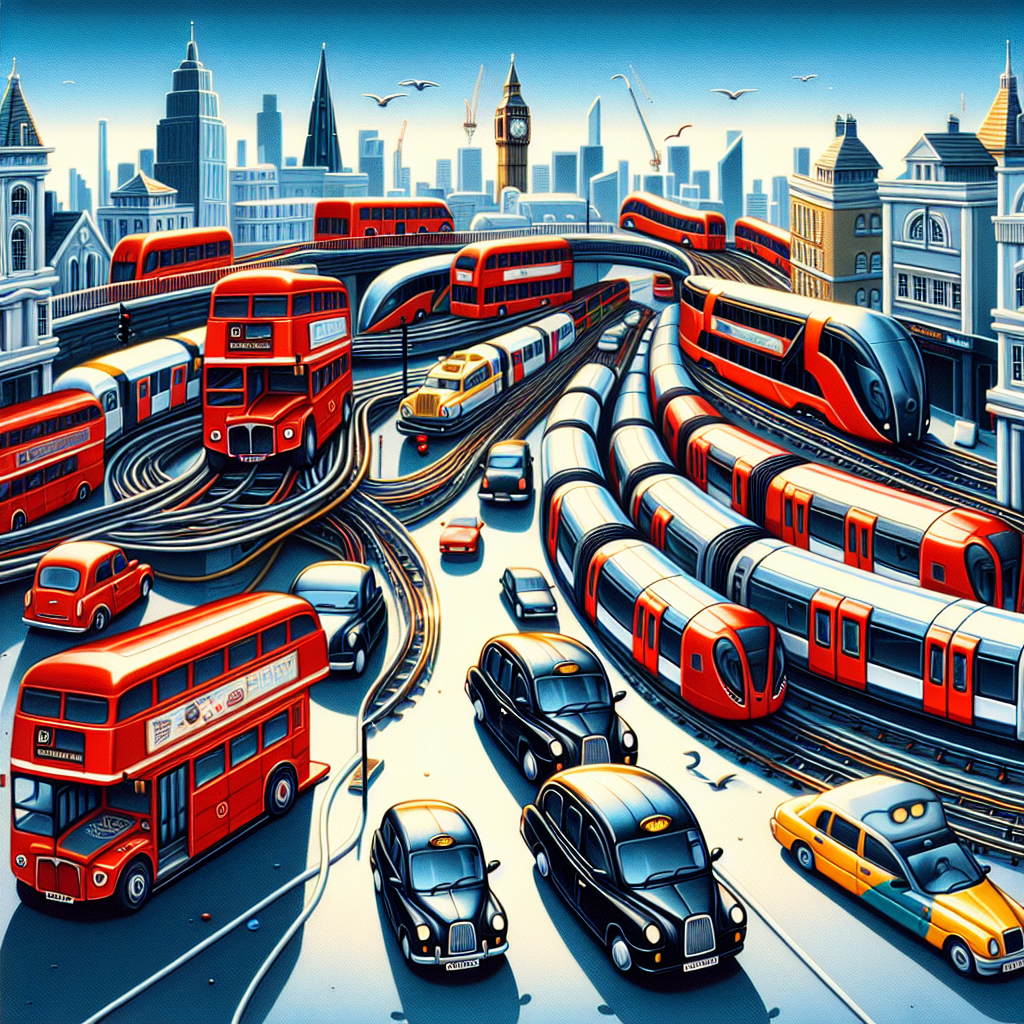

When you think of a bustling metropolis mastering the art of moving millions, London springs to mind with its maze of buses, tubes, and trains, climaxing in a symphony of organized chaos known as London Transport. London Transport, now under the umbrella of Transport for London (TfL), is a well-oiled machine designed to whisk around the capital of the United Kingdom with stunning efficiency. It began its journey as a brand in the 1930s, intended to encapsulate a unified identity for the city's intricate network of public transport services. But what makes it so iconic, and how did it become the heartbeat of London's commuter culture?
The story of London Transport starts with a simple yet ambitious vision. It was created to unify and coordinate the various modes of transport across London. This meant assembling the Underground, buses, trams, and more under a single, cohesive brand. And what a transformation it has been! Today, London Transport is more than just functional; it's historic. It includes pioneering architectural design, illustrated maps, and an unmistakable logo that has lodged itself into the global imagination.
The Evolution of the London Transport Brand
Embarking on our journey through time, London Transport started its transformation in 1933 when the London Passenger Transport Board (LPTB) took the reins. A key player in this evolution was Frank Pick, who envisioned a transportation system that celebrated art, engineering, and forward-thinking public service. His blueprint wasn't just about efficiency but aesthetics and identity too, which were somewhat revolutionary ideas during that era.
London Transport is synonymous with its iconic Tube map, first designed by Harry Beck in 1931. This non-geographically accurate, yet incredibly user-friendly diagram changed the way cities mapped underground rail networks worldwide. Before Beck, maps were topographically messy and complicated. Beck’s map was a triumph of simplicity and clarity, still used and celebrated today.
A Kaleidoscope of Colors and Designs
The bold red roundel, the equally iconic double-decker red buses, and the distinctive moquette seating fabric with its vibrant hues have become symbols of London. They made the London Transport brand not just functional but visual and experiential. Each aspect of design was thought out meticulously, considering visual familiarity and ease of recognition for passengers coming from all over the world.
From the sleek curves of the Routemaster bus to the rhythmic sway of the Tube carriages, London Transport meticulously planned the aesthetics with both creativity and pragmatism. Even the typography used in all signage systems follows a standardized typeface designed to enhance legibility while maintaining an unmistakable identity.
London's Lifeline: Today and Tomorrow
Every day, millions of passengers use London Transport's services, which span more than just the Tube and buses. Trams glide through Croydon, bikes await riders at docking stations around the city, and river services traverse the Thames. The extensive system contributes enormously to London’s economy, facilitating commerce, tourism, and daily commuting with seamless precision. The constant hum of trains and buses moving around the clock keeps the city pulsating with life.
Looking to the future, London Transport continues to innovate. TfL is staunchly pursuing sustainable and accessible travel for all, adopting hybrid buses and electric trains, alongside implementing step-free access across more stations. Plans are continuously afoot, focusing on sustainability and technological advancement, ensuring London stays at the forefront of global transport systems.
Learning from the Past
History whispers through the tunnels and echoes on platforms, and London Transport embraces this rich heritage because it informs future developments. By learning from early inefficiencies and turning them into global trademarks of excellence, TfL exemplifies ingenuity in public transport.
The engagement and investment in technology and innovation echo societal shifts. Contactless payments, Oyster cards, and the real-time data available to commuters through apps and platforms epitomize how this transport network adapts to the 21st century’s demands.
Community and Culture
Transport is never just about mobility; it is the linchpin of communities, connecting people, activities, and opportunities. In London, it’s intertwined with cultural identity, celebrating public spaces where art exhibitions in stations and historical sites, like the preserved heritage railway stock, are practically embedded in everyday travel.
London Transport has also navigated the challenges of its responsibility to the community with programs focused on inclusivity, helping those with disabilities and offering resources for routes that cross lines drawn by London’s history of diversity and opportunity.
Conclusion: A Testament to Human Ingenuity
Indeed, London Transport is a tribute to the possibility of inventiveness in humanity. Its evolution from a fragmented system into an organized transport powerhouse illustrates how much-effective coordination and a touch of creativity can achieve when people come together for a common goal. London Transport isn't simply infrastructure; it’s a testament to human ingenuity—a chronicle that combines history, culture, art, and technology to carry forward the spirit of a city.
It's not just about getting from point A to B; it’s about celebrating the journey itself. So next time you find yourself gripping that cool metallic pole on the London Underground or gazing at London's skyline from a double-decker, remember you're not just part of London's rhythm—you're part of the heartbeat itself.