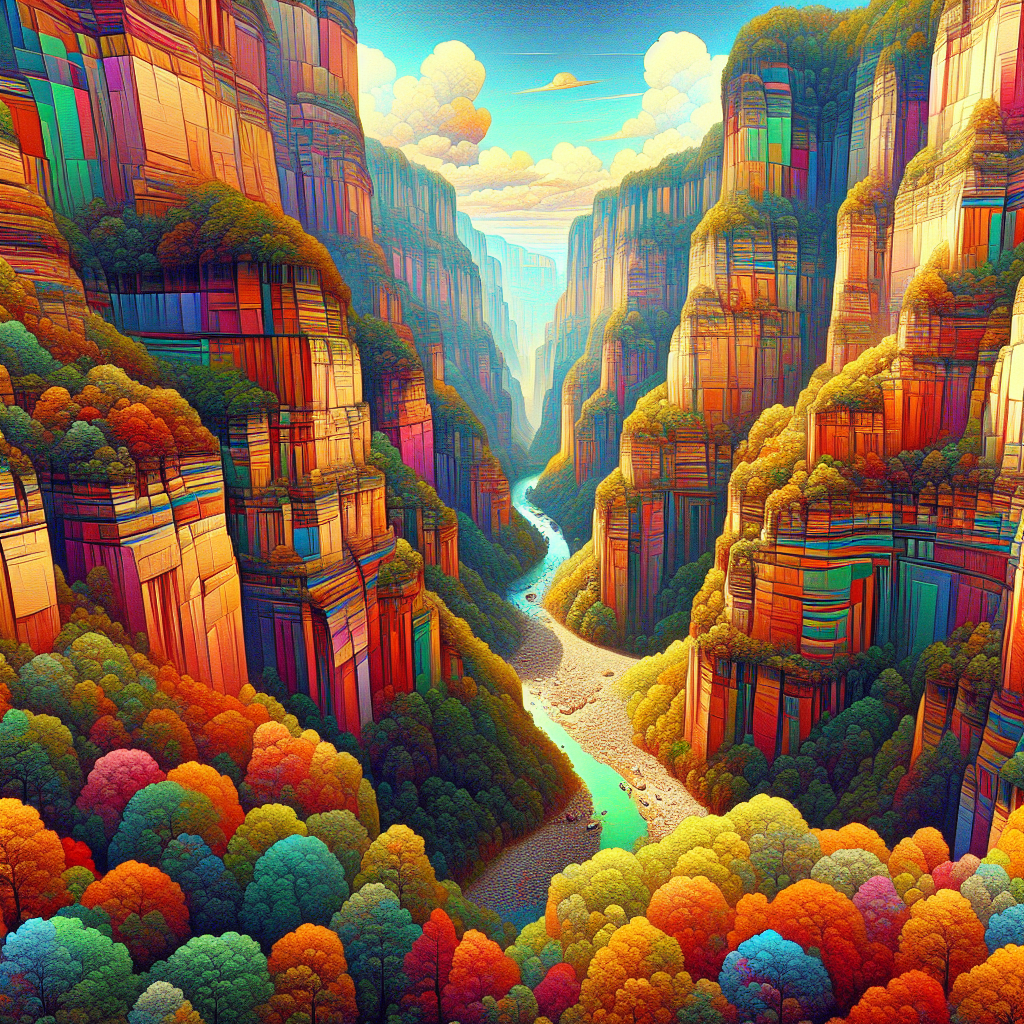

What is the Little Grand Canyon?
Did you ever think Mother Nature could create something as grand as the Grand Canyon, but on a smaller scale and closer to home for many? Welcome to the mesmerizing beauty of the Little Grand Canyon! These enchanting formations, located in Shawnee National Forest, southern Illinois, will convince you that size isn't everything when it comes to nature's marvelous wonders. Unlike its gigantic namesake in Arizona, the Little Grand Canyon offers a more intimate glimpse into the geological forces that have shaped our planet over millennia.
For those who love both the big adventures and the quiet moments in nature, a visit to the Little Grand Canyon becomes a unique opportunity to witness the result of relentless erosion, sediment deposition, and tectonic uplift that started tens of millions of years ago.
Where Is It Located?
Nestled within the expansive Shawnee National Forest in Illinois, the Little Grand Canyon covers an area that can be easily explored on foot. The Little Grand Canyon Trail takes you through the heart of this natural treasure—think lush greenery, stunning rock formations, and cascading waterfalls that make it a peaceful spot for hikers and nature enthusiasts. The geographical location, combining the Mississippi and Ohio River ecosystems, contributes to a rich diversity of flora and fauna, making every step a learning experience.
The Science Behind the Spectacle
It's captivating to witness the magical artistry of nature through geological time. The Little Grand Canyon has evolved as a result of water's persistent, sculpting work. Over thousands of years, water from seasonal rains carved deep through the limestone and sandstone, gradually exposing a breathtaking sequence of cliffs, bluffs, and box canyons.
As layers of rock were continuously exposed and eroded, the process also revealed fossils and ancient remnants that paint a picture of environments long gone. This is a true paradise for geologists, who can study the stratification to understand the Earth's history and the climate changes that have occurred over the ages.
Flora and Fauna: The Living Classroom
Walking through the Little Grand Canyon isn't just about the rocks; it’s an immersive educational experience laden with lessons on biodiversity. Due to its unique ecological niche, the area is home to various plant species, from towering oaks to delicate wildflowers. Spring and fall are especially magical times, when the landscape bursts with colorful blossoms or becomes painted with autumnal hues.
Wildlife is abundant, with each season bringing its own spectacle. Bird watchers might spot anything from wild turkeys to majestic red-tailed hawks gliding gracefully above. The area is also habitat to various reptiles and amphibians, adding another layer of intrigue to your hike.
Opportunities for Hiking and Exploration
The Little Grand Canyon Trail offers a challenging but rewarding loop for hikers, approximately 3.6 miles in length. With inclines that range from moderate to steep, it presents an exciting way to engage with the geology and ecology of the area. As you ascend and descend, you'll be greeted by stunning panoramic views and close-ups of the rocky walls brushing against Tree Spirits, an enticing blend of nature and folk mythology.
Trail markers guide you through switchbacks and down paths originally made by early settlers, following creek beds and natural stone staircases. If you're attentive, you'll also discover small caves and unique rock shelters that spark the imagination of everyone from archaeologists to adventurers.
Why Visit the Little Grand Canyon?
Why shouldn't you? It's a place that offers serenity away from the bustling noise of urban life while catapulting you into the past with every step. For students of geology, biology, and environmental science, it’s practically a living textbook. For casual visitors, it's a rich source of inspiration.
But beyond scientific allure and individual curiosity, a visit here connects us all to a broader narrative. These types of geologic landscapes are proof of Earth's dynamic processes and our planet's ability to host diverse life forms. The Little Grand Canyon becomes more than a destination; it’s a reminder of the fragile beauty of natural wonders and our role as stewards of the Earth.
Visit Responsibly
And yet, even the most exhilarating natural sites require stewardship. Revered for its beauty and significance, the Little Grand Canyon is sensitive to human impact. Always follow the Leave No Trace principles to ensure this spot can be adored by future generations.
So pack your hiking boots, grab your water bottle, and let your curiosity lead the way to the Little Grand Canyon, where each cragged surface and each rustling leaf inspires awe and encourages a profound love for the Earth and its ancient story.