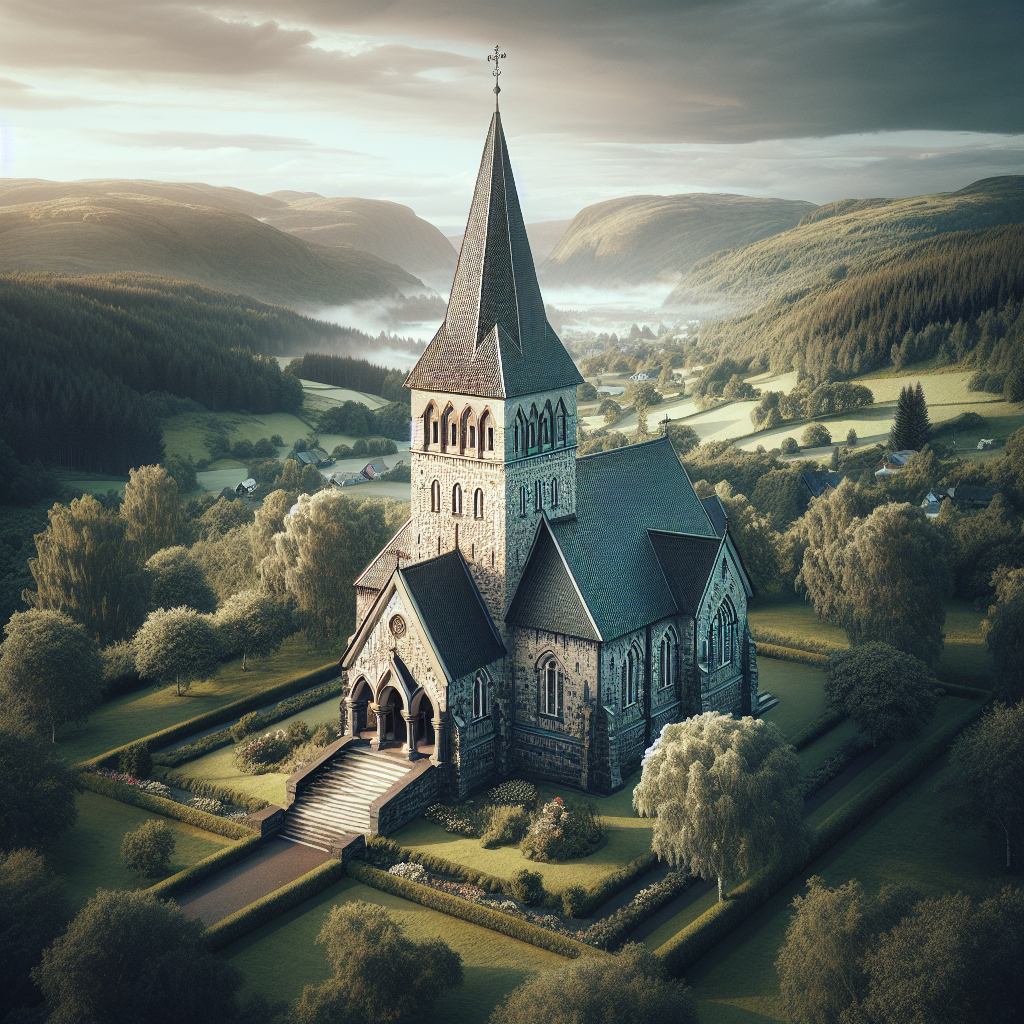

A Revered Gem in Southern Norway
Let's time-travel to the scenic landscapes of Southern Norway, where the picturesque Kvinesdal Church stands majestically against a backdrop of rolling hills and serene waters. Built in the mid-19th century, specifically in 1837, this architectural marvel isn't just a religious locale—it's a testament to enduring traditions and an emblem of communal unity. Situated in Kvinesdal, a charming municipality in Agder County, the church continues to be a hub of spiritual life and cultural heritage in the locale.
The Enchanting Architecture
Imagine stepping into a world where history whispers through the stone arches and wooden pews. Kvinesdal Church was designed by the prominent Norwegian architect, Hans Linstow, who also famously contributed to the design of the Royal Palace in Oslo. It's crafted predominantly from wood, a common building material of the time, known for lending warmth and resilience to the church's interiors. The simplicity yet functionality of its Neo-Gothic design captures not just the eye but the soul, reminding us of an era where construction was as much about its inhabitants' spirituality as it was about aesthetics.
A Nexus of Historical Events
Through its nearly two centuries of existence, Kvinesdal Church has silently witnessed countless historical and cultural transformations. Did you know the church has been a steadfast venue for the celebration of national events? Everything from traditional Norwegian weddings to community gatherings has unfurled under its ancient roof. Such events have sculpted the church's identity as more than just a place of worship—it's a living museum of community life and Norwegian culture.
Scientific Insights into Historical Architecture
Understanding such historical architecture is akin to decoding an ancient manuscript. While the church's history can be mesmerising, we must consider the science behind its structural integrity too. The climate in Norway presents unique challenges—intense winters and humid summers mean that the wooden structures must withstand immense fluctuations in temperature and humidity. Ingenious construction techniques from the 19th century equipped Kvinesdal Church to elegantly withstand these elements, showcasing early examples of sustainable building practices.
Kvinesdal's Rich Cultural Mosaic
The church doesn’t just illuminate the town in a literal sense during services. Kvinesdal Church is a part of the rich tapestry of Southern Norway’s cultural mosaic. Each Sunday service, festival, and holiday gathering reflects a blend of time-honored tradition and contemporary practice. With every choir hymn sung and every Christmas candlelit, Kvinesdal Church allows us to appreciate the spirit of a community tightly knit together through shared faith and shared history.
Bridging the Past with the Future
Fast-forward to the modern era, and Kvinesdal Church remains a vibrant part of local life, seamlessly adapting to meet new generations' needs. It’s fascinating to consider how modern technology may enhance or adapt these historical buildings' purposes, potentially integrating digital media into services or using technology for preservation efforts. Could you imagine augmented reality tours revealing unseen aspects of this cherished structure?
A Warm Invitation
At its heart, Kvinesdal Church extends an open invitation, offering a space for peace, reflection, and continuity. Whether you are an architect intrigued by design, a historian thrilled by the layers of history, or someone exploring human stories through community, this church is a beacon of inspiration. It represents unity—a sacred assembly point where hearts meet in the sanctuary of history and shared purpose.
By engaging with historical landmarks such as Kvinesdal Church, we are not only preserving the past but also nurturing the threads that weave a brighter future, buoyed by community spirit and scientific understanding. Let's celebrate this architectural gem as a testament to humanity’s enduring pursuit of beauty, resilience, and connection.