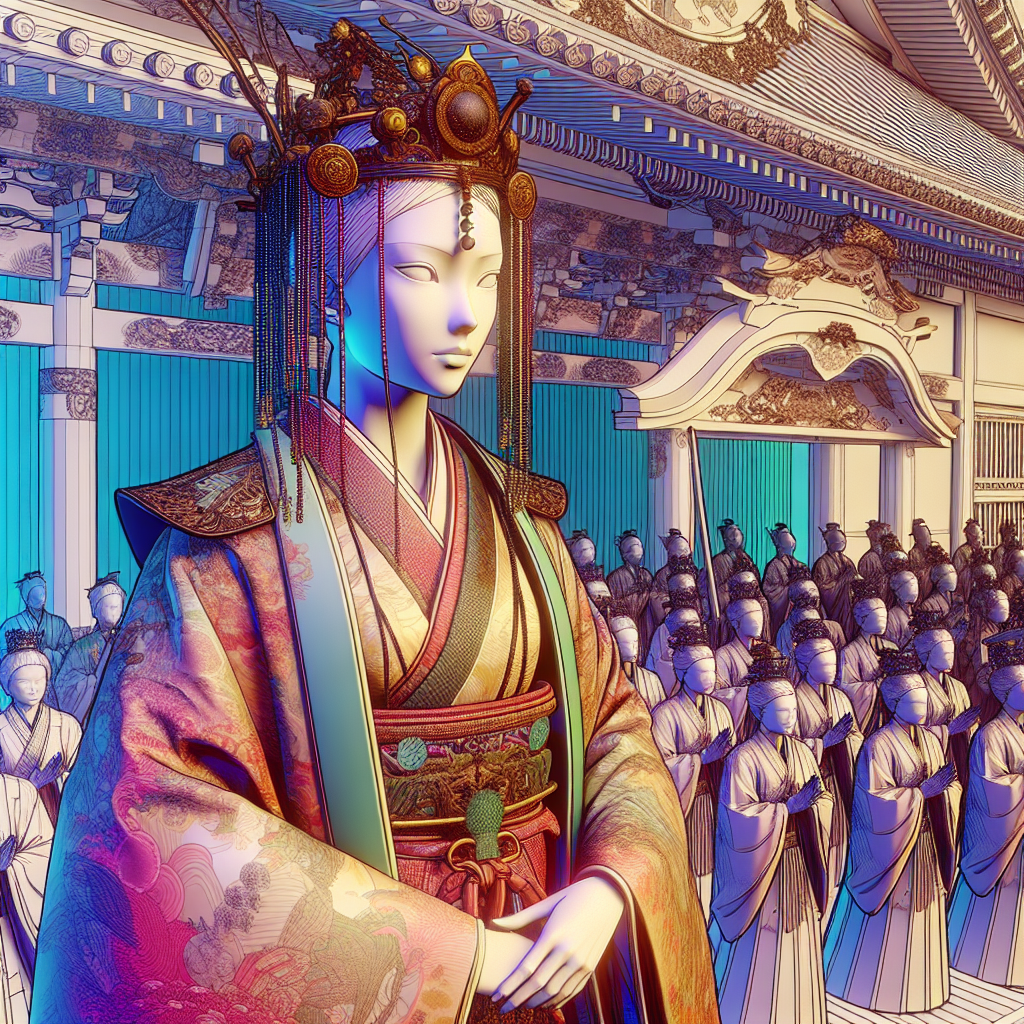

Prepare to dive headfirst into the labyrinthine world of medieval Japan, and meet Kujō Michiie, a fascinating figure who wielded power during the Kamakura period with the precision of a samurai's sword. Born into the prestigious Fujiwara clan in 1193, Kujō Michiie was a central political player who navigated complex familial and political dynamics. His legacy offers an illuminating window into the intricacies of influence and governance in 13th-century Japan. But what makes this historical figure so captivating is not just who he was, but how he maneuvered within a web of intricate alliances and rivalries.
Who was Kujō Michiie?
Let’s start at the beginning: who exactly was Kujō Michiie? To put it simply, he was a statesman who held the position of kampaku, or regent, showing an adroit ability to balance power amidst the constant tensions between the imperial court in Kyoto and the burgeoning samurai government of the Kamakura period. Growing up within the Fujiwara clan, one of Japan’s most influential families, he was groomed from a young age to take on roles of leadership and governance. His family connections placed him in an advantageous position to act as an intermediary between the cloistered emperor and the emerging samurai class. His life was set against a background of political intrigue and shifting power dynamics—a period some might describe as Japan’s own 'Game of Thrones.'
A Time of Transition
The Kamakura period (1185–1333) was a time of great change in Japan as the shogunate rose to prominence, challenging the power held by the imperial court. This era saw the transition of power from the aristocracy to the emerging samurai class. The nation was shifting from the Heian period's courtly elegance to a more militarized, feudal system. As kampaku, Michiie effectively held the role of acting chief advisor to the emperor, which at this time, was a ceremonial position held by youthful emperors or retired ones. Through his role, Michiie sought to sustain the Fujiwara influence by marrying his family’s daughters into the imperial line, fortifying the relationship between the court and his influential family.
Strategic Alliances
One of Kujō Michiie’s most enduring impacts was his strategic approach to politics. He was not merely a political figure of his time but a political architect. By arranging marriages for his daughters with key officials and members of the imperial family, including marriages into the Minamoto and Taira clans, he fortified the status of the Kujō family within the intricate hierarchy of court politics. Moreover, Michiie's own marriage to a member of the Minamoto clan further solidified alliances that safeguarded his influence. During an era where family connections equated to power, Michiie's strategic marriages were akin to today’s public relations campaigns—a testament to his foresight and adeptness at statecraft.
Crafting His Legacy
Michiie's legacy is also marked by his involvement in cultural and religious activities, reflecting a blend of political acumen with cultural sophistication. He was known to be a patron of the arts and supported the Kitayama Culture, which was characterized by a revival of Heian classical elegance. Moreover, he was deeply engrossed in the promotion of Buddhist thought, notably supporting the influential sect of Pure Land Buddhism. His patronage helped elevate Buddhist institutions to positions of great influence, shaping not just the religious landscape, but also playing a subtle yet significant role in the socio-political realm.
A Lasting Impact
Even after his death in 1252, Kujō Michiie’s influence permeated through the tapestry of Japanese history. His descendants continued to play vital roles within the political arena in Japan. The sophisticated strategies he employed to sustain power in an era dominated by samurai and shifting allegiances serve as a study case of ancient power politics. His life and legacy speak volumes about the continuance and adaptation of traditional power structures amidst the emergence of new political orders.
Why Kujō Michiie's Story Matters Today
In reflecting on Kujō Michiie's life, we are reminded of the intricate dance between governance and power—a dance still very much in play today. While the players and settings have evolved, the fundamental strategies remain relatable. The art of influence, strategic alliances, and the importance of adaptability are as relevant now as they were in medieval Japan. Kujō Michiie’s story enriches our understanding of history, demonstrating the fascinating ways in which personal ambition and political strategy can shape entire societies.
In exploring Kujō Michiie's life, we do more than just revisit the annals of Japanese history; we are given a lens through which to view political strategy and legacy. His life underscores the timelessness of strategy and influence, urging us to reflect on how we utilize the tools of diplomacy and alliance in our own lives. Let the story of Kujō Michiie inspire us to approach modern challenges with the same blend of ingenuity, foresight, and humanity.