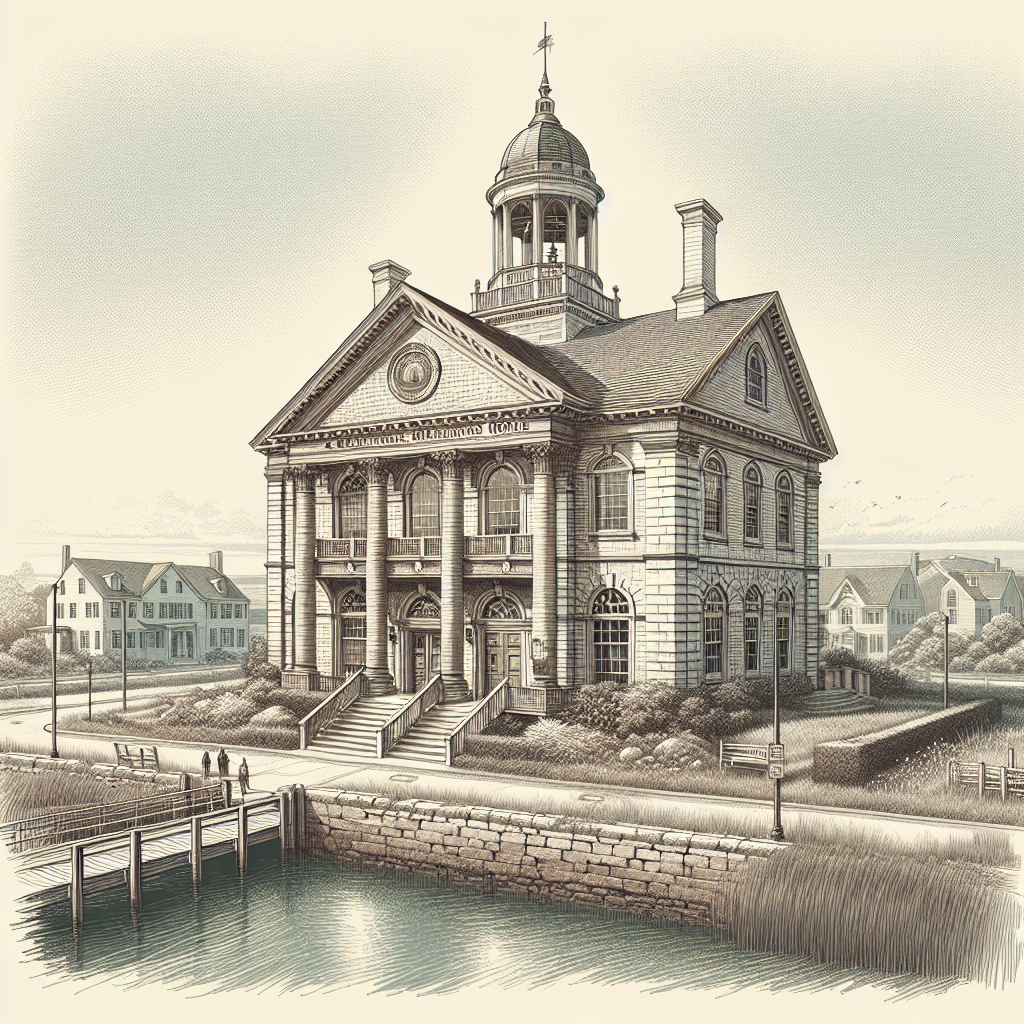

A Historical Beacon of Harmony and Fellowship
In the heart of Newport, Rhode Island, stands a testament to the power of simplicity, community, and resilience—a structure that whispers stories of the past to anyone who cares to listen. Enter the Great Friends Meeting House, a building that is as much about its architectural grace as it is about the spirit of friendship it fosters. Constructed in 1699, this iconic meeting house served the burgeoning Quaker community, providing a space for contemplation and fellowship. What an incredible place to witness history!
Understanding the Architecture: Simplicity Meets Functionality
The Great Friends Meeting House is an excellent example of early colonial architecture. Unlike the elaborate and decorated churches that were being constructed in Europe during the same period, this meeting house embodies the Quaker principles of simplicity and humility. Its plain wooden structure with unpainted interiors speaks volumes about the values held by its builders. One cannot help but admire how this simplicity contributes to the focus and mindfulness within its walls, allowing the community to connect deeply with their spiritual and communal life.
The Dynamic Timeline: A Point of Gatherings Through Centuries
Since its inception in 1699, the Great Friends Meeting House has seen eras of change and adaptation. During the American Revolutionary War, it served as a hospital for French soldiers, linking its peaceful ethos to acts of genuine humanitarian aid. Over the centuries, as the Quaker population evolved, the meeting house transformed into a historical site, welcoming diverse visitors eager to soak up the rich history echoing through its corridors. How fascinating it is to see a building maintain relevance and purpose over such a long period!
The People: A Community Defined by Unity and Progress
The Quakers, or Friends, are a religious group renowned for fostering peace, equality, and integrity. The Great Friends Meeting House is a cornerstone of this mission in Newport. Imagine listening to the whispered prayers of abolitionists meeting here, or the silent contemplation during anti-slavery gatherings. This site not only supported spiritual endeavours; it also played an integral role in societal progress. One can feel a deep sense of optimism reverberating from its walls—a reminder of just how far we have come, and how far we can still go as a community.
Educational Significance: Lessons in Architecture and History
Fast forward to today, where the Great Friends Meeting House stands as an invaluable educational resource. It invites modern-day visitors to learn about colonial life, Quaker traditions, and the overarching narrative of human resilience and progress. Archaeological efforts and meticulous preservation have made it an exemplary site for anyone keen on American history and the development of civil society. Think of the joy that comes from learning history not just through books, but by stepping into a living, breathing piece of it.
Why Visit? A Journey through Roots and Reflection
For those of us hungry for inspiration and understanding, the Great Friends Meeting House offers more than just a trip back in time. The experience enriches the present, uniting communities across centuries. As visitors walk through its doors, they feel part of something continuous, something bigger than themselves—a bridge between humanity's past aspirations and its future potential.
Accessibility and Visitor Information
Located at 21 Farewell Street and easily accessible, the Great Friends Meeting House invites you to explore its history firsthand. The site is open to the public, with various tours and educational programs welcoming lifelong learners and curious travelers alike. Each visit offers an opportunity to connect not only with a vital piece of New England’s history but also with a universal narrative of persistence and hope.
Embracing a Legacy of Empathy and Growth
Imagine a place where the walls have ears not just to hear stories, but to share them—the Great Friends Meeting House provides this and so much more. Its legacy of fostering empathy, dialogue, and fellowship makes it a cornerstone in understanding how architecture can encapsulate and encourage human ideals. Here’s to realizing our shared journey through time through unyielding optimism and an intimate connection with the past.