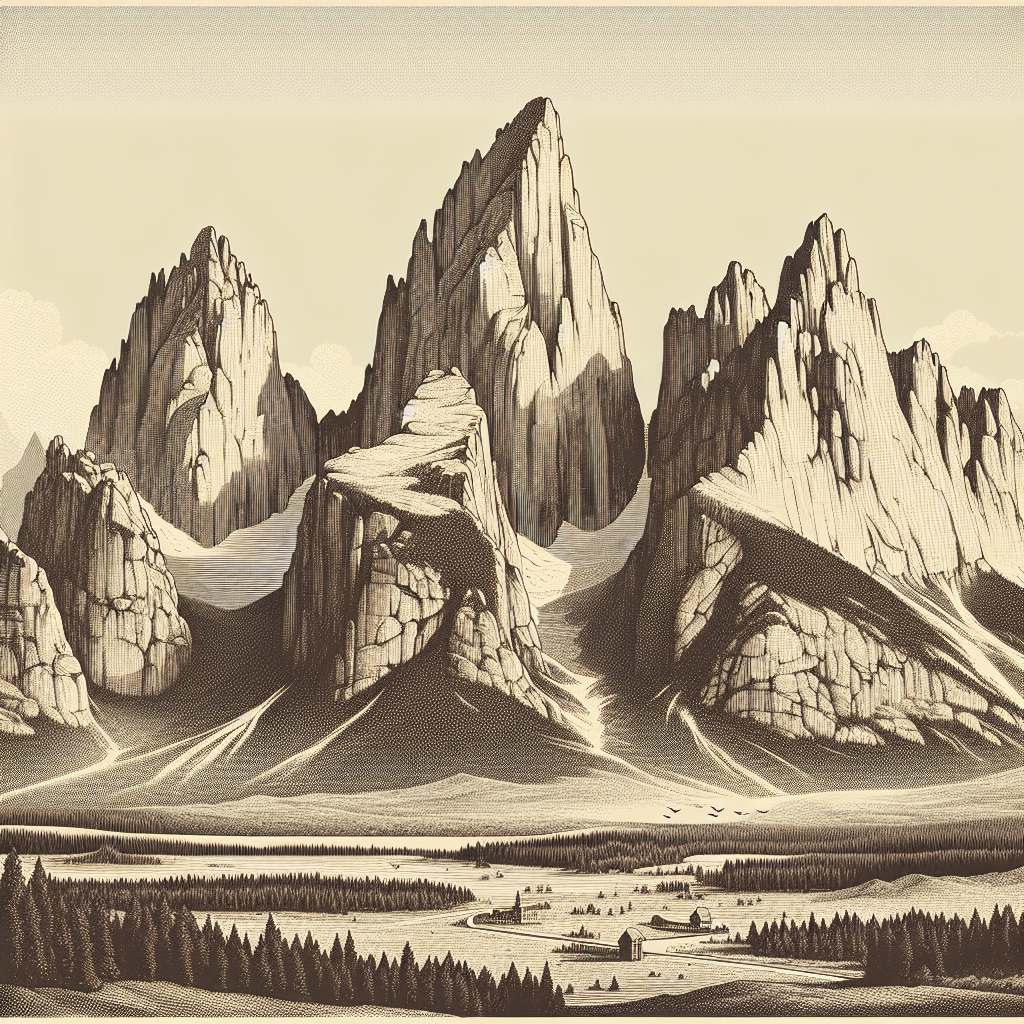

In the heart of Wyoming, the mesmerism of geology takes on a grand scale as a rugged and awe-inspiring formation known as the Granite Mountains reveals its ancient secrets. Who could guess that these peaks and canyons hold such a vast narrative within their rocky confines? What’s truly captivating about them is how these mountains, shaped around 1 to 1.4 billion years ago during the Precambrian era, continue to stand as natural sentinels. Here, in the high deserts and woodland patches of central Wyoming, they narrate a grand tale of geological processes, tranquil beauty, and vibrant history.
Stretching some 60 miles from east to west, the Granite Mountains are distinct for more than their impressive granite faces. With their location northwest of Lander and south of the Wind River Range, they serve as a crucial landmark for settlers and travelers alike. These mountains, albeit less popular than other ranges in the West, boast not only their towering granitic outcrops but also rich tapestry of flora and fauna, making them a haven for naturalists and thrill-seekers yearning for a sense of isolation and splendor.
The Geological Wonders: A Heritage Etched in Stone
First, let's talk geology—a subject as intriguing as the rocks that grace the earth with their presence. This mountain range is predominately composed of granite, an igneous rock formed from slowly cooled magma beneath the Earth's surface. Geologists estimate that their current form began solidifying over a billion years ago. This ancient foundation reveals the saga of tectonic movements, pressure, and heat that forged the basement structures of our continent.
Granite's intrinsic durability and resilience make these mountains enduring monuments. Even today, the Granite Mountains sustain ongoing erosion and weathering, subtly yet persistently altering their form. It’s fascinating to think that these tidal waves of rock change shape almost imperceptibly, yet surely, and have done so since the dawn of earth’s history.
A Day in the Life: Flora, Fauna, and Beyond
While the geology of the Granite Mountains provides an intriguing backdrop, the thriving ecosystems atop these granite features paint a vivid picture of life amid the desolate wilderness. The array of habitats, from arid shrublands to sparse woodlands nourished by the scant rain, is a testament to nature’s adaptability.
For the flora enthusiasts, expect to encounter rugged junipers, dwarf sagebrush, and resilient grasses that thrive in the harsh environment. Meanwhile, the fauna finds life and sustenance in these same lands. Despite the tough conditions, mule deer, pronghorns, and elusive bobcats traverse with sure-footed confidence across these rocky ridges. The sky above is regularly patrolled by ravens and golden eagles, soaring with predatory grace.
This region plays host to a rich tapestry of life, each organism perfectly attuned to the demands of such an environment. Watching how ecosystems manage to flourish here underlines nature's unlimited ingenuity—something that can leave any observer feeling awestruck.
Starry Nights and Human History: A Testament to Timelessness
Under the inky blanket of night, the Granite Mountains offer a captivating stargazing experience. With minimal light pollution, visitors can marvel at the celestial wonders much as our ancestors did. The night sky adorns the ancient terrain with iconic constellations, making a trip not just a view into the horizon, but also into the depths of time itself.
Speaking of history, these mountains are imbued with the footsteps of those who've passed long before us. Long a haven for Native American tribes, this range carries whispers of the past. Petroglyphs etched into rock faces provide a glimpse into the lives of people who once called this secluded landscape home.
Ecological and Economic Significance
In an optimistic note for both environment and economy, the Granite Mountains host a valuable natural resource: minerals. The area is known for deposits of uranium, gold, and other minerals, mined over the years to fuel economies and livelihoods. While these ventures raise sustainability questions, technological advancements now make it possible for more environmentally responsible extraction methods.
Moreover, conservation efforts ensure the balance between extracting resources and maintaining the ecological integrity of this region. Organizations and governmental bodies work tirelessly to guard the mountain's natural heritage while allowing for the responsible use of its resources, proving that humanity and nature can indeed coexist in harmony when guided by careful stewardship.
Exploring Today’s Granite Mountains Trek
Today, intrepid explorers can embark on an excursion into these magnificent lands, but be prepared for both the splendor and the challenges the terrain presents. The Granite Mountains offer an array of trails weaving through breathtaking sceneries, but the adventure comes with its demands for preparation: ensuring maps, extra food, water supplies, and gear are on hand.
Brimming with beauty, the climb to their summits provides sweeping views of the Wyoming horizon. The sense of accomplishment in reaching those heights while connecting with the Earth’s ancient heartbeat instills a renewed sense of optimism and appreciation for the world around us.
In summary, the Granite Mountains of Wyoming stand as a testament to the intricate tapestry of time and life. They invite our curiosity, holding lessons in geology, ecology, and history. Whether through science, outdoor adventure, or simply a poetic contemplation of the world, these mountains evoke a distinctive appreciation for the enduring strength and profound beauty of Nature.