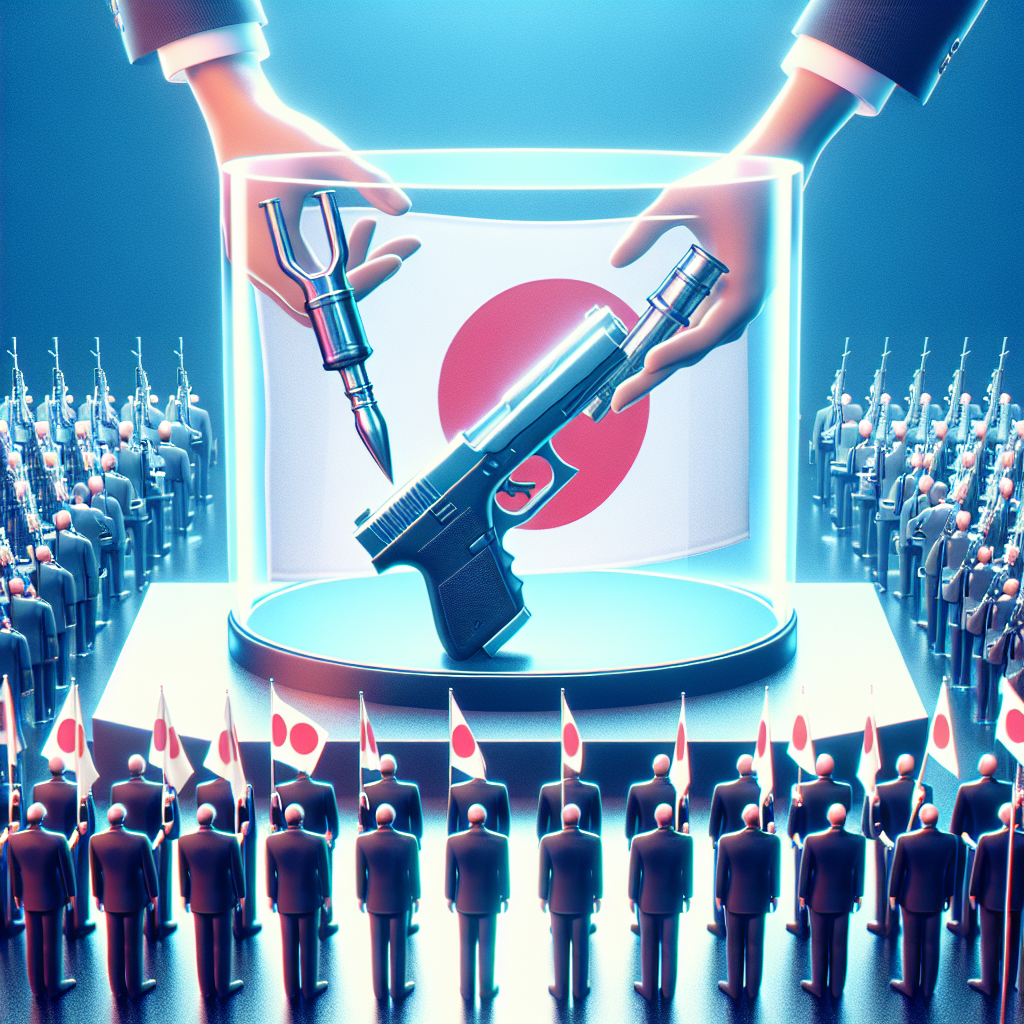

The Fascinating Tale of Japan's Decision to Give Up the Gun
Imagine a nation that voluntarily decided to abandon firearms, a decision that seems almost unthinkable in today's world. This is the captivating story of Japan, a country that, during the Edo period (1603-1868), chose to give up the gun. The decision was made by the ruling Tokugawa shogunate, who, in a bid to maintain peace and stability, restricted the use of firearms. This remarkable choice took place in Japan, a nation that had previously embraced gunpowder weapons with enthusiasm after their introduction by Portuguese traders in 1543. The shogunate's decision was driven by a desire to preserve the samurai's traditional way of life and to prevent the social upheaval that widespread gun use could cause.
The story begins in the mid-16th century when Japan was embroiled in a period of intense civil war known as the Sengoku period. During this time, the introduction of firearms by the Portuguese revolutionized warfare. Japanese warlords, or daimyo, quickly adopted these new weapons, and guns became a significant factor in battles. However, once the Tokugawa shogunate established peace and unified Japan, they saw firearms as a threat to their control and the social order.
The Tokugawa shogunate implemented strict policies to limit the production and use of firearms. They restricted gun manufacturing to a few select locations and imposed rigorous controls on who could own and use them. The samurai, Japan's warrior class, were encouraged to return to traditional weapons like swords and bows, which were seen as more honorable and in line with the samurai code of bushido.
This decision to give up the gun was not just about maintaining control; it was also about preserving a cultural identity. The samurai were not just warriors but also cultural icons, embodying ideals of honor, discipline, and loyalty. By emphasizing traditional weapons, the shogunate reinforced these values and ensured that the samurai remained a distinct and revered class.
The impact of this decision was profound. For over two centuries, Japan experienced a period of relative peace and stability known as the Edo period. This era saw the flourishing of Japanese culture, arts, and economy, largely free from the devastation of war. The decision to give up the gun allowed Japan to develop a unique society that valued harmony and order over military might.
In a world where firearms have become ubiquitous, Japan's historical choice to give up the gun stands as a fascinating example of how a society can prioritize cultural values and social stability over technological advancement. It reminds us that the path of progress is not always linear and that sometimes, stepping back can lead to a more harmonious future.