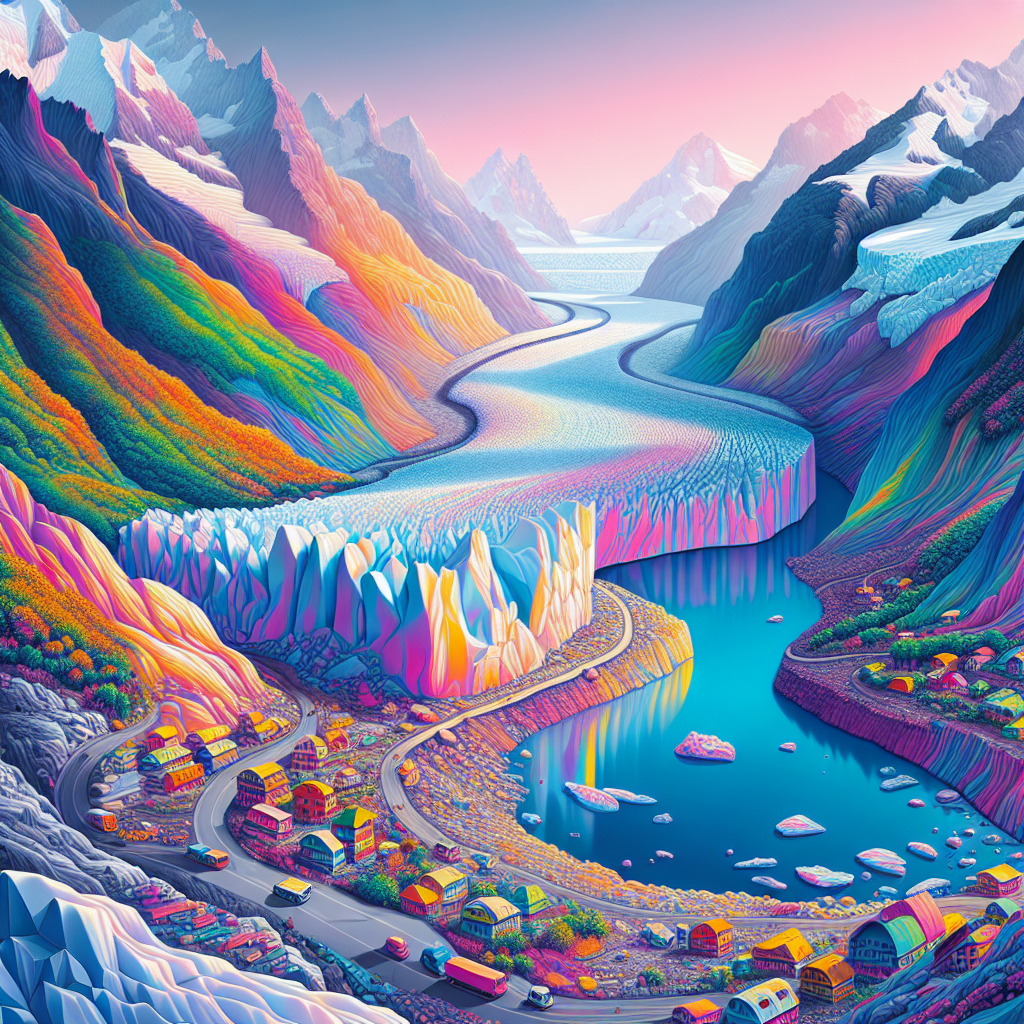

The Gauli Glacier: Nature's Icy Odyssey
Did you know that a tale of resilience and natural wonder hides within the icy folds of the Gauli Glacier? Perched proudly in the Bernese Alps of Switzerland, Gauli Glacier is not just a static stretch of ice—it's a dynamic force of nature that has been sculpting landscapes and seeding curiosity among scientists and adventure enthusiasts alike for centuries. But what exactly makes this glacier tick, and why has it captured the imaginations of so many?
A Location with Stories to Tell
Nestled in the rugged terrain of Central Switzerland, Gauli Glacier stretches majestically from the Finsteraarhorn all the way to Lake Gauli. Its breathtaking expanse is a sight to behold, fielding an impressive array of ice formations and snow-capped peaks. Since the 19th century, it has been a focal point for glaciologists and explorers, seeking not only to understand its mysterious allure but also to uncover the secrets of Earth's climatic past.
A Journey Through Time
Glaciers are often described as the Earth's vast time capsules. The same holds true for Gauli Glacier, which has stored centuries' worth of climate information within its icy layers. Much like tree rings tell the age and climate conditions of past years, the complex strata in a glacier's ice layers serve as a record of our planet’s climate history. Analyses of the Gauli Glacier's ancient ice have yielded invaluable insights, such as historical atmospheric composition and past temperatures, which in turn help us predict future climate scenarios.
The Exciting World of Glacier Movements
One of the most fascinating aspects of glaciers is their movement. Although they might appear static, glaciers are constantly flowing under the force of their own weight—a mesmerizing and protracted dance between gravity and the solid ground beneath. Gauli Glacier is no exception. As it carves its path down the mountain, it shapes the very landscape, leaving behind U-shaped valleys and sharp ridges that tell tales of its journey.
Understanding these movements is no trivial task. Scientists employ an array of tools, from satellite imagery to on-the-ground measurements, to map the glacier's trajectory and rate of travel. This data is critical—not only does it deepen our understanding of glacial dynamics, but it also aids in predicting the fate of glaciers globally in a warming world.
An Unexpected Marker in History
Of significant note in the history of Gauli Glacier is its association with a pivotal event in 1946: the rescue operation following the crash of a C-53 Skytrooper military aircraft. This event marked one of the first large-scale alpine rescue missions involving flight over rugged, glaciated terrain. The operation wasn't just a breakthrough in search and rescue techniques but also helped foster critical developments in the collaboration between aviation and mountain rescue teams, setting standards that benefit humanity to this day.
Ecology and Biodiversity
While glaciers might seem barren at first glance, they support a surprisingly complex ecosystem. As Gauli Glacier retreats, a fascinating process of ecological succession unfolds. Pioneer species like mosses and lichens begin to colonize the exposed terrain, gradually creating a habitable environment for more complex plant species. This pioneering plant life supports a diversity of microfauna and, eventually, larger fauna which adapt to these new conditions, proving yet again nature's tenacity and adaptability.
Why Understanding Gauli Glacier Matters
The continued study of glaciers like Gauli isn't just for academic curiosity—it has tangible impacts on our understanding of global warming, water resources, and sea-level rise. With its layers upon layers of data locked in ice, Gauli Glacier provides a critical archive for climate scientists frustrated with the piecemeal nature of historical weather records.
Moreover, glaciers are significant freshwater reservoirs. As they melt, they contribute to river systems that millions of people rely on for drinking water, irrigation, and power. The flow from Gauli Glacier feeds the Aare River, which, in turn, plays a vital role in the hydrological dynamics of Switzerland.
Breathing Life into Science
The Gauli Glacier doesn't merely stand as an icy symbol of nature’s enduring beauty. It’s a testament to the incredible stories that our planet has to offer, stories teeming with scientific intrigue and human ingenuity. Inspired by its icy narrative and delighted by its contribution to our understanding of the Earth, there’s no denying the optimism for what the future of climate science and glaciology holds. Let's marvel at it, study it, and protect it—for in Gauli Glacier and others like it lie the keys to knowing our world more completely.