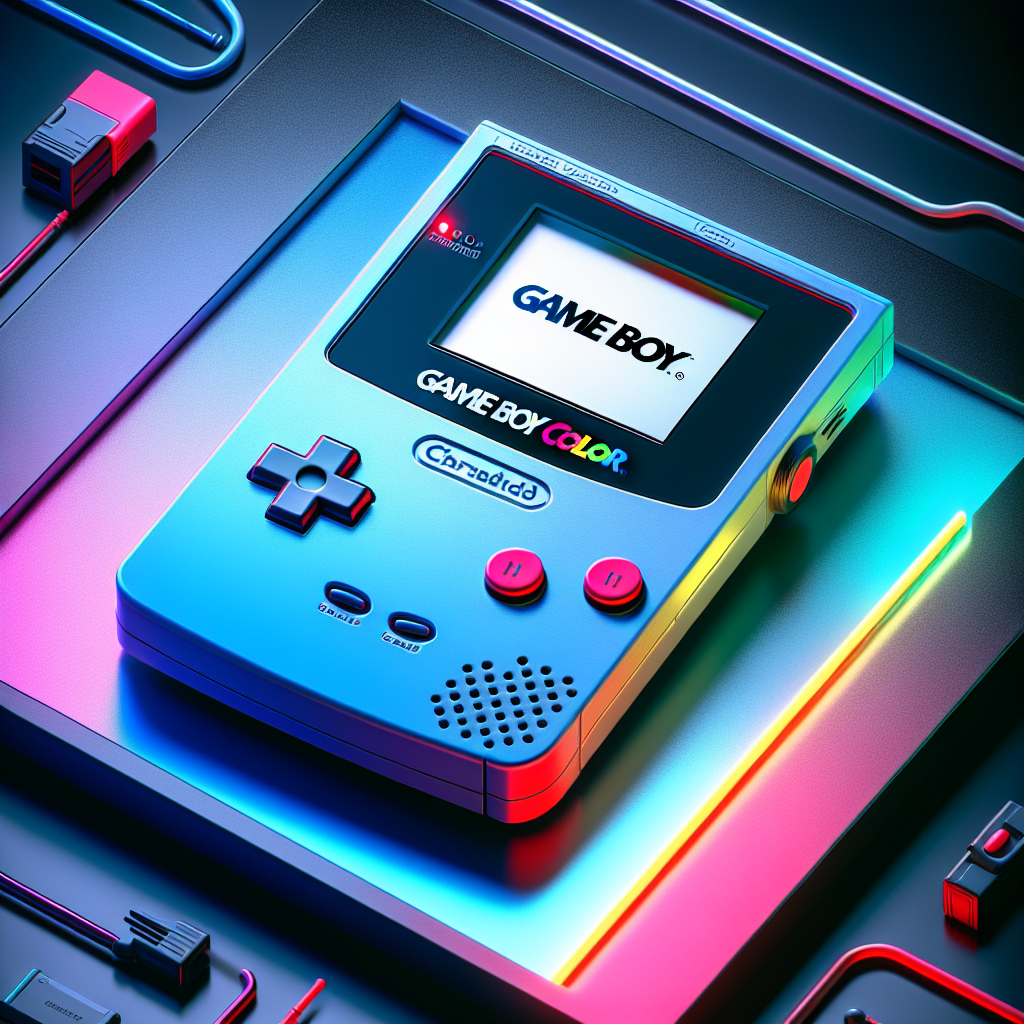

The Colorful Revolution: Game Boy Color
Imagine a world where gaming was mostly in shades of gray, and then, suddenly, a burst of color changed everything! That's exactly what happened when Nintendo released the Game Boy Color on October 21, 1998, in Japan, followed by a North American release on November 18, 1998. This handheld gaming console was a vibrant upgrade to the original Game Boy, which had been a monochrome staple since its debut in 1989. The Game Boy Color was developed by Nintendo, a company renowned for its innovative contributions to the gaming industry, and it was designed to bring a new dimension to portable gaming by introducing a color screen, which was a significant leap forward in handheld gaming technology.
The Game Boy Color was not just about adding a splash of color; it was a technological marvel for its time. It featured a 160x144 pixel resolution display capable of showing up to 56 different colors simultaneously from a palette of 32,768. This was a massive improvement over its predecessor, allowing for more detailed and visually appealing games. The device was powered by a custom 8-bit processor, which was faster than the original Game Boy, enabling more complex and engaging gameplay.
One of the most exciting aspects of the Game Boy Color was its backward compatibility. It could play all the original Game Boy games, which meant that players could enjoy their existing library of games in a new, colorful way. This feature was a huge selling point, as it provided a seamless transition for gamers who were already invested in the Game Boy ecosystem.
The Game Boy Color also introduced a range of new games that took full advantage of its color capabilities. Titles like "Pokémon Gold and Silver," "The Legend of Zelda: Link's Awakening DX," and "Super Mario Bros. Deluxe" became instant classics, showcasing the console's ability to deliver rich, immersive experiences. These games not only captivated players with their engaging storylines and gameplay but also with their vibrant graphics that brought characters and worlds to life like never before.
The impact of the Game Boy Color was profound. It sold over 118 million units worldwide, solidifying Nintendo's dominance in the handheld gaming market. The console's success paved the way for future innovations, leading to the development of more advanced handheld systems like the Game Boy Advance and the Nintendo DS. The Game Boy Color was a testament to Nintendo's commitment to pushing the boundaries of gaming technology and providing players with unforgettable experiences.
In essence, the Game Boy Color was more than just a gaming device; it was a cultural phenomenon that brought color to the lives of millions of gamers around the world. Its legacy continues to influence the design and development of modern handheld gaming systems, reminding us of the joy and excitement that a simple splash of color can bring.