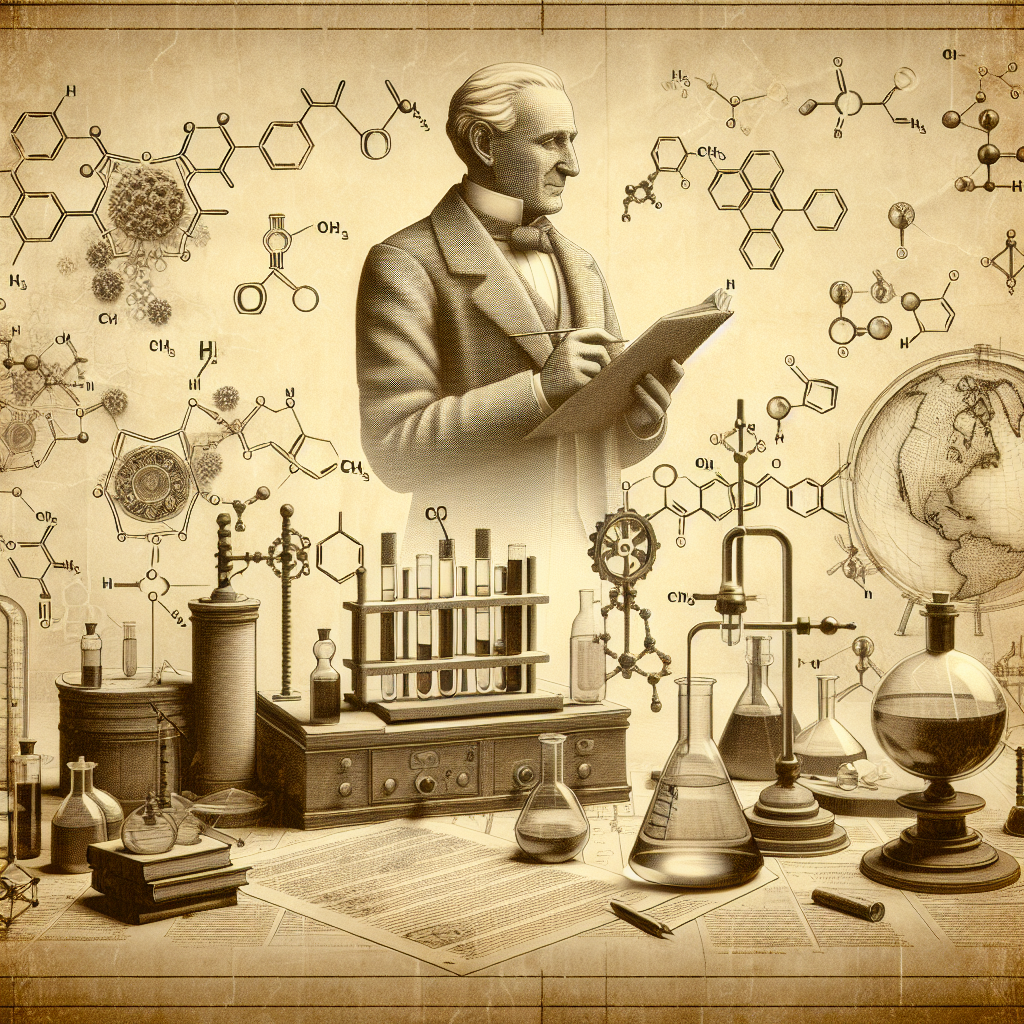

Have you ever thought about translating hydrogen from a pipe dream into an everyday reality? Let me introduce you to the visionary, Franz Joseph Emil Fischer—a German chemist who turned the wheels of industrial chemistry with his pioneering contributions to artificial fuel synthesis. Born in Germany on March 19, 1877, Fischer pursued his scientific endeavors passionately in the heart of Europe during the early 20th century. His indelible mark on chemistry, thanks to a process known now as the Fischer-Tropsch process, remains a cornerstone in synthesizing liquid hydrocarbons, making a universe of difference in energy production and consumption.
Who Was Franz Joseph Emil Fischer?
A sea of innovation flooded the scientific landscape of the early 1900s, and Franz Fischer was riding the crest. Teaming up with Hans Tropsch in the vibrant industrial climate of Germany, Fischer capitalized on his extensive chemistry background to birth a solution that would capture both scientific curiosity and industrial need. But who exactly was this scientific maestro?
Fischer was more than just a chemist; he was also a visionary who imagined a world not constrained by the limits of natural hydrocarbons. Born in Freiburg, Germany, Fischer took his first steps into the world of chemistry at the University of Leipzig, where he completed his Ph.D. His life became a testament to the transformative power of science, as he constantly sought solutions to the burgeoning energy crises of his time.
What Did Fischer Achieve?
Fischer's most notable accomplishment came in 1925 with the development of the Fischer-Tropsch process, alongside his collaborator, Hans Tropsch. This groundbreaking technique involves converting a mixture of hydrogen and carbon monoxide, derived typically from coal, natural gas, or biomass, into liquid hydrocarbons. In layman's terms, he found a way to manufacture liquid fuel from coal—a resource that was abundant, unlike liquid oil.
Before this, fuel production was heavily dependent on the limited sources of natural petroleum. The Fischer-Tropsch process not only provided an alternative but also paved the way for nations to secure their energy futures. Imagine, an era where automobiles and industries could run seamlessly without entirely depending on foreign oil. This innovation couldn't have come at a better time, as countries were searching for more self-sufficient energy sources amidst growing industrial demands.
Where Did the Magic Happen?
Much of Fischer's wonderous work was conducted at the Kaiser Wilhelm Institute for Coal Research in Mülheim, Germany—an epicenter for pivotal scientific advancements during that period. This institute served as fertile ground for Fischer's chemical explorations and subsequent innovations, providing an environment that combined both quiet contemplation and rigorous experimentation.
It was within this cradle of innovation that the Fischer-Tropsch process was carefully nurtured and brought into the world. The Institute not only amplified Fischer’s intellectual pursuits but also stood as a beacon of scientific progress, playing a crucial role in Germany’s industrial development.
Why Is Fischer’s Work Important Today?
Fast-forward to our current century, and the significance of Fischer's work spirals ever upward. With global climates bearing the weight of our energy consumption habits, Fischer’s century-old innovations become increasingly relevant. His processes have seen a renaissance, becoming pivotal in synthesizing cleaner-burning fuels, such as synthetic diesel, offering promising reductions in greenhouse gas emissions.
Additionally, nations with coal, natural gas, or biomass but lacking oil reserves can now consider Fischer-Tropsch as a means to bolster their energy independence. In today’s context, where geopolitical tensions sometimes influence oil supply, having alternatives like synthetic fuels becomes not just practical, but necessary.
How Did Fischer Impact Humanity?
Franz Joseph Emil Fischer's legacy penetrates beyond chemistry textbooks and factory pipelines. He stands as a testament to human curiosity and its ability to reshape our understanding of what's possible. His scientific rigor and inventive spirit offer a parable on the power of ingenuity. Franz Fischer’s impact extends to how we perceive sustainability in the 21st century, and his work continues to inspire new generations of scientists eager to make their mark on this ever-evolving field.
As we navigate the complexities of climate challenges and energy demands, dear reader, remember Franz Fischer. He reminds us that even in the confines of scientific laboratories, in the midst of academia's theories, solutions to monumental problems can be found. Not only did he show that innovation can be a key to future sustainability, but he also reinvigorated the belief that science, tirelessly applied, can drive humanity forward.
So, as you commute, whether by car powered by traditional fuel or the futuristic variations his work inspired, tip your hat to Franz Joseph Emil Fischer—an optimistic purveyor of possibilities that reshaped how humanity progresses.