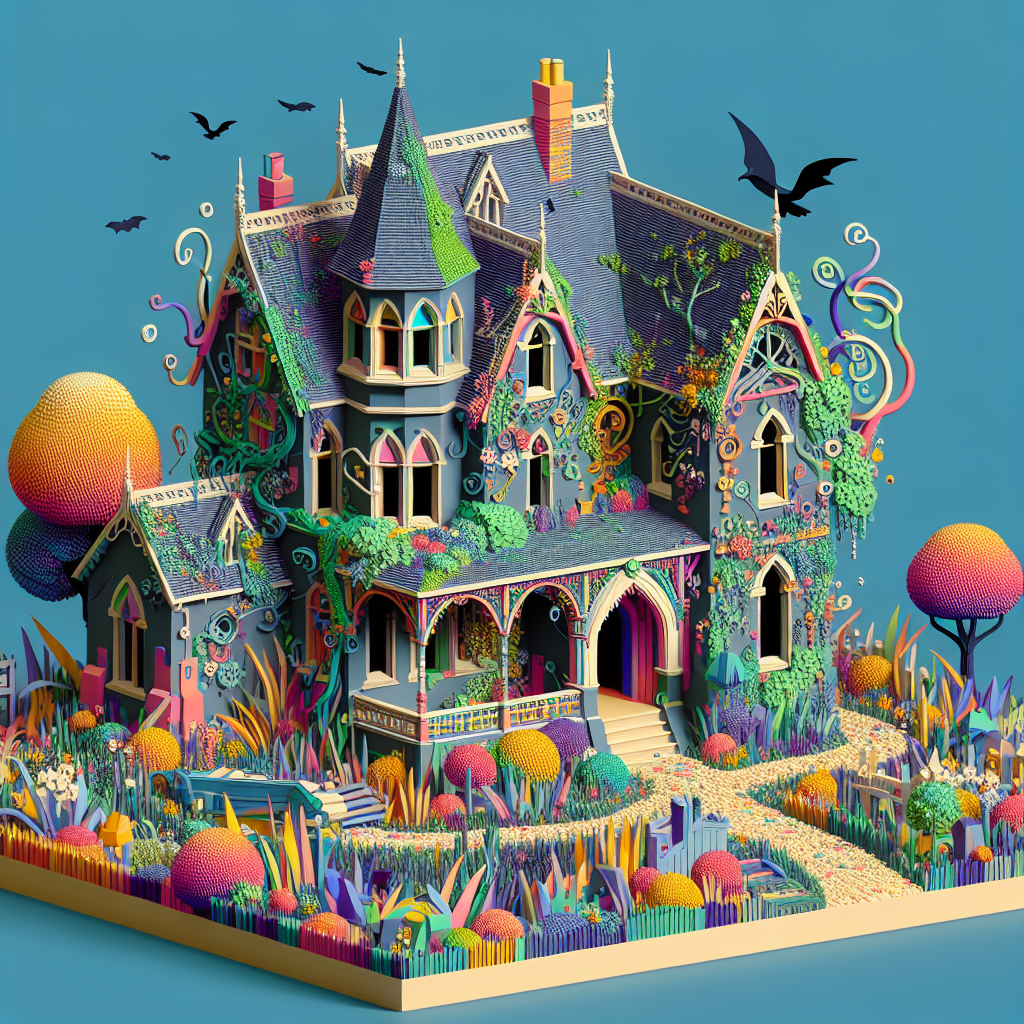

Have you ever wondered what happens when you fuse architectural whimsy with scientific precision? Enter Folly House, a structure that stands not only as a testament to human ingenuity but also as a playful exploration of aesthetic creativity and functional design. Located in the picturesque realm of architecture and history, Folly House captures the imagination with its intriguing concept. Built in the 18th century, these whimsical structures popped up predominantly across the English countryside, defined by their ornamental purpose rather than utilitarian function.
The Essence of Folly House
A folly, by definition, is a building constructed primarily for decoration, yet under ordinary purposes serves no discernible function. But before you dismiss it as an extravagant architectural joke, consider the layers of complexity it embodies. Originating as garden ornaments or eccentric garden buildings, follies often resemble romantic ruins, temples, medieval castles, and more. They celebrate a carefree spirit and an appreciation for craftsmanship and nature, echoing an era where nature and human creativity intermingled freely.
The Folly House captivated the wealthy elite of its time, who were eager to display their wealth and taste through these farcical constructions. Today, they are beacons of historical curiosity, inviting visitors to ponder human expression's playful and unrestrained side.
Architectural Adventures Await
Although at first glance, a Folly House might seem like a trivial extravagance, it’s much more than a mere visual treat. They are architectural experiments, where builders and designers pushed the boundaries of art and function. Architects were emboldened to ignore structural conventions in favor of artistic expression, creating texturally rich human experiences. Inside, they sometimes hosted gatherings of elite intellectuals who discussed the philosophical, artistic, and scientific advancements of their time.
Think of them as predecessors to some of the conceptual and modern art installations we see today. In the ever-shifting landscape of architectural history, follies demonstrate how creativity can be interwoven with structural integrity, leading one to reimagine what buildings can mean beyond their function.
Historical Context and Modern Revival
It's fascinating to consider why these curious structures emerged prominently in the 1700s. A period characterized by Enlightenment thinking, this era was all about questioning norms and embracing new ideas. The Age of Enlightenment inspired a culture that eagerly flirted with the boundaries of innovation across all domains.
Contemporary architects and enthusiasts have, in recent years, tapped into the whimsical ethos of the folly. As you walk through a modern park or a private estate, don't be surprised if you stumble upon updated versions of these structures reflecting cultural symbolism and presenting challenging visual narratives.
Today's follies may incorporate sustainable methods and technologies, making them environmentally friendly while maintaining their imaginative traditions. Modern versions might include solar-paneled roofs or sustainable materials. These small architectural feats continue to woo our senses while broadening our understanding of the space around us.
Folly House Ambassadors
From England to the Americas, several famous folly lovers have left their mark. A most notable example is the eccentric Sir Francis Dashwood, whose 18th-century Dashwood House mimicked the Pan Temple from classical antiquity, complete with strategically placed ruins to engender atmospheric mystery.
Similarly, the UK’s folly master Charles Hamilton created Painshill Park—a treasure trove of artificial ruins such as the Grotto and Gothic Temple, transforming the park into a theatrical set frequented by lovers of the arts. Across the pond, in the United States, architect Bruce Goff drew inspiration from follies in his organic geometrical designs, providing modern interpretations with a twist of American flair.
An Invitation to Play and Discover
Folly Houses remind us of the power of imagination and stand as a symbol that not all rooms need roofs, nor all buildings doors. They continue to inspire those who love the blend of fantasy and reality, encouraging us to dream and consider new possibilities. Folly House serves as a playful prompt to question the limits we impose upon art and creativity, inviting us to appreciate their unpredictable charm.
In a world teeming with functionality and purpose, Folly Houses beckon us to pause, admire, and reflect on the relentless creativity of the human mind. Beyond their aesthetic appeal, they anchor us to the idea that we can always inject a little wonder and delight into our landscapes, leaving a legacy of joy and curiosity for generations to explore.