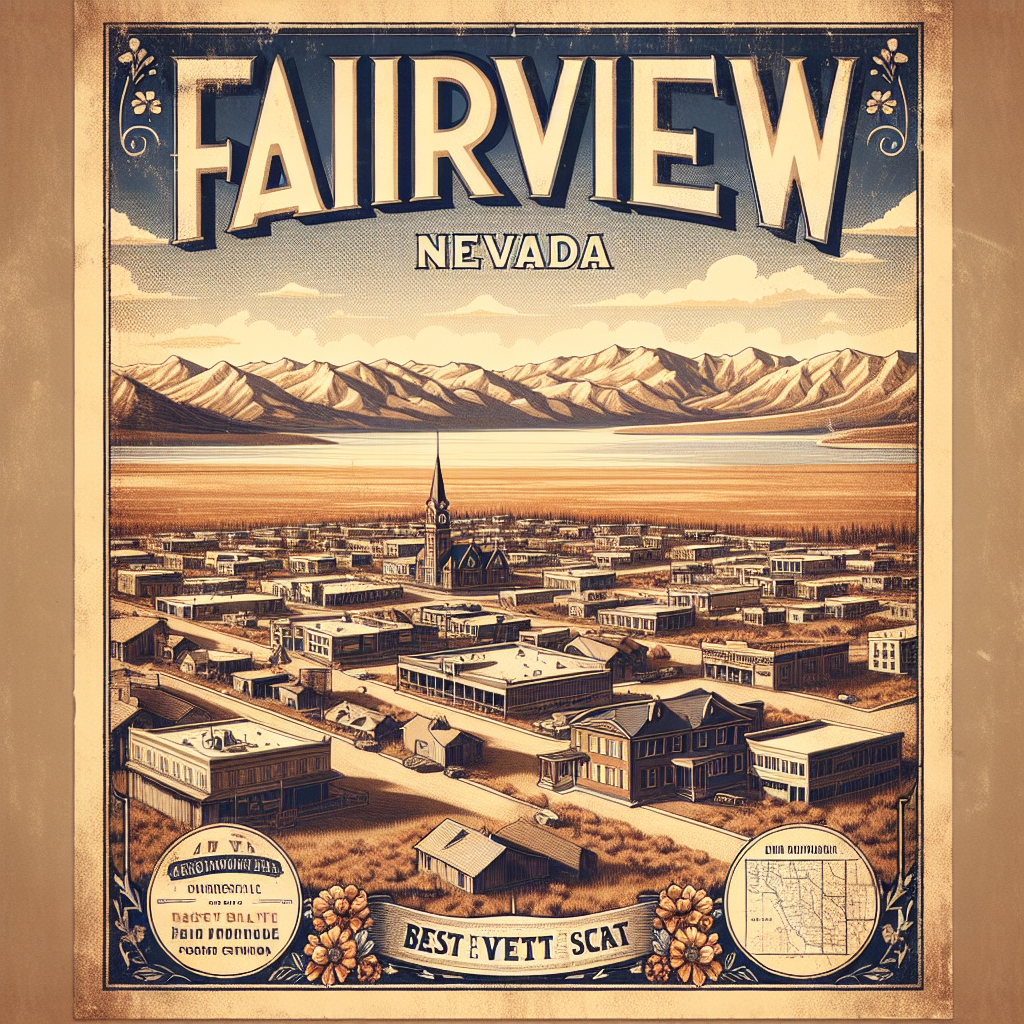

Exploring the Enigmatic Legacy of Fairview, Nevada
If ghost towns could speak, Fairview, Nevada would narrate a captivating tale of ambition, prosperity, and resilience. What is Fairview, Nevada, and why does it stand out in the annals of ghost towns across the United States? Fairview is a deserted town located in Churchill County, Nevada, best known for its meteoric rise and fall during the early 20th century—a story fueled by the silver boom that swept the state. Situated approximately four hours east of Reno, this once-bustling mining community sparked to life in 1905, dazzled for a bright yet brief moment, and succumbed to the harsh realities of economic hardship by 1919. But even within this timeline, profound elements could be appreciated, revealing crucial insights about human endeavor and economic opportunity.
A Brief History
At the heart of Fairview’s allure is its historical significance during the Nevada mining era. Initially founded due to the discovery of silver in 1905, Fairview exploded onto the scene as hopeful prospectors and opportunists headed west, driven by burgeoning dreams of wealth and prosperity. Within no time, the town swelled to house over 2000 inhabitants, charmingly crowded with saloons, hotels, schools, and even a newspaper.
By 1906, Fairview had acquired modern amenities such as an electric power plant, and its extravagant promises of fortune led to more than 27 mining companies setting up operations. Such rapid development begs an interesting question: What exactly drew so many people to this barren part of Nevada? Simply put, silver and the irresistible allure of fortune fueled a migration reminiscent of the allure surrounding the Gold Rush.
The Meteoric Rise and the Overshadowing Fall
Despite Fairview's promising inception, the economic reality hit hard and fast. As early as 1908, the silver veins that attracted so many began to dry up. This led to an inevitable decline in the town’s bustling activity, a classic example of how boom-and-bust economies operate with pronounced intensity. By 1919, the population dwindled, and remaining operations were consolidated with those in nearby districts, leaving Fairview a shadow of its former glory.
The town’s rise and fall provide an excellent lens through which to view exploratory economics—how towns formed almost overnight based on resource availability, and how they collapsed just as quickly. Isn’t it fascinating how economic principles so starkly dictate human settlement patterns?
Geology and the Silver Rush
Fairview's story is as much about geology as it is about human tenacity. The hills of central Nevada are rich with minerals, a fact well acknowledged by geologists and historians alike. Silver was particularly abundant in Nevada, courtesy of volcanic activities that richened the earth with mineral deposits. This geological landscape was the perfect playground for adventurers willing to gamble on nature’s bounty and thrive, albeit for a short while.
But Fairview wasn’t just any run-of-the-mill mining location. Its silvery lode was unusually rich, a fact that didn’t stay hidden for long, catalyzing waves of investment and development. So, when we think of Fairview, we should appreciate the perfect confluence of natural resources, human ambition, and emerging economic dynamics.
The Enduring Attractions Today
Although Fairview’s heydays are long gone, the town retains a mystic allure that attracts historians, photographers, and curious wanderers who venture into ghost town territories. Why venture into a ghost town? For the stories etched within its fading structures that whisper of a once-flourishing life—exploring these ruins is like leafing through the compelling pages of a real-life historical novel.
When visiting today, you’ll find remnants of antiquated machinery, dilapidated wooden frames, and the old mill site—a testament to Fairview's industrious past. For archaeologists and historians, these relics are precious artifacts presenting tangible links to Nevada’s past, helping to decode the cultural and economic narratives of yesteryears.
The Legacy of Fairview
Despite its short-lived prosperity, Fairview imparts valuable lessons on economic sustainability and environmental interaction. As you wander through its dusty lanes today, you’ll find remnants quietly chronicling the ceaseless tide of human aspiration. The inevitable decline prompts reflections on sustainable development and the pragmatic balancing of resource extraction with ecological stewardship.
Moreover, Fairview’s story becomes a part of a larger tapestry—a mosaic that illustrates Western expansionism, the mining industry's power, and human capacity for collective migration when propelled by promise and hope.
The Science of Rediscovery
Rediscovering Fairview, Nevada means appreciating it as an exemplar of geology, economics, and historical migration patterns—an interdisciplinary exploration rather than just a tale of desolation. Its eerie silence is counterbalanced by the echoes of its once-lively past, each visit offering fresh insights into the human condition.
In making sense of its enduring appeal, we are reminded that our world is made richer by such places—microcosms that teach resilience, caution, and the importance of balance. Fairview’s story continues, not only in old newspapers and archival materials but in every visitor who listens to the echoes, bridges the temporal divide, and learns from the past.