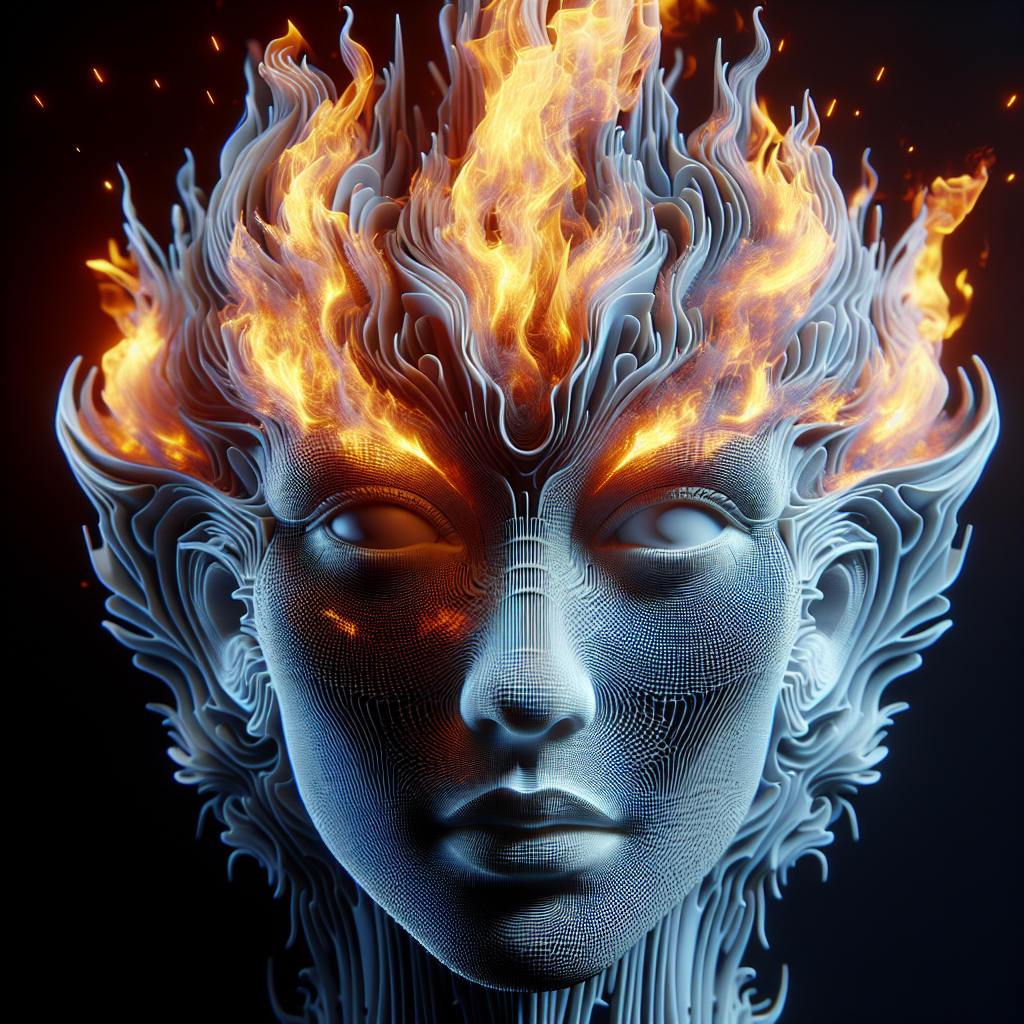

The Face of Fire: Unraveling the Mysteries of Flames
Imagine a world without fire—no cozy campfires, no warm meals, and no industrial advancements. Fire, a captivating and essential element, has been a part of human history for over a million years. It was first harnessed by our ancestors, Homo erectus, around 1.5 million years ago in Africa. But what exactly is fire, and why does it play such a crucial role in our lives? Fire is a chemical reaction known as combustion, occurring when a fuel source, oxygen, and heat come together to produce light, heat, and various reaction products. This process has been pivotal in human development, from providing warmth and protection to enabling technological progress.
The Science Behind Fire
At its core, fire is a fascinating interplay of chemistry and physics. When a fuel source, such as wood or gas, is heated to its ignition temperature, it begins to release volatile gases. These gases mix with oxygen in the air, and when the right conditions are met, a chemical reaction occurs. This reaction breaks down the fuel molecules, releasing energy in the form of heat and light. The visible part of fire, the flame, is a result of this energy release, as excited particles emit light.
The Colors of Flames
The mesmerizing colors of flames are not just for show; they tell us a lot about the fire's temperature and the materials being burned. For instance, a blue flame indicates a hotter and more efficient combustion, often seen in gas stoves. In contrast, a yellow or orange flame, common in wood fires, suggests incomplete combustion and the presence of soot particles. The colors are a result of different elements and compounds emitting light at specific wavelengths when heated.
Fire's Role in Human Evolution
Fire has been a game-changer in human evolution. It provided warmth, allowing early humans to survive in colder climates. Cooking food with fire made it easier to digest and unlocked more nutrients, contributing to the development of larger brains. Fire also offered protection from predators and enabled the creation of tools and pottery, laying the groundwork for complex societies.
Fire in Modern Society
Today, fire remains a vital part of our lives, from powering engines and generating electricity to its symbolic use in rituals and celebrations. However, with its benefits come challenges, such as wildfires and pollution. Understanding the science of fire helps us harness its power responsibly and mitigate its risks.
Fire is not just a destructive force; it is a symbol of human ingenuity and survival. By studying its properties and effects, we continue to learn and innovate, ensuring that this ancient element remains a friend rather than a foe.