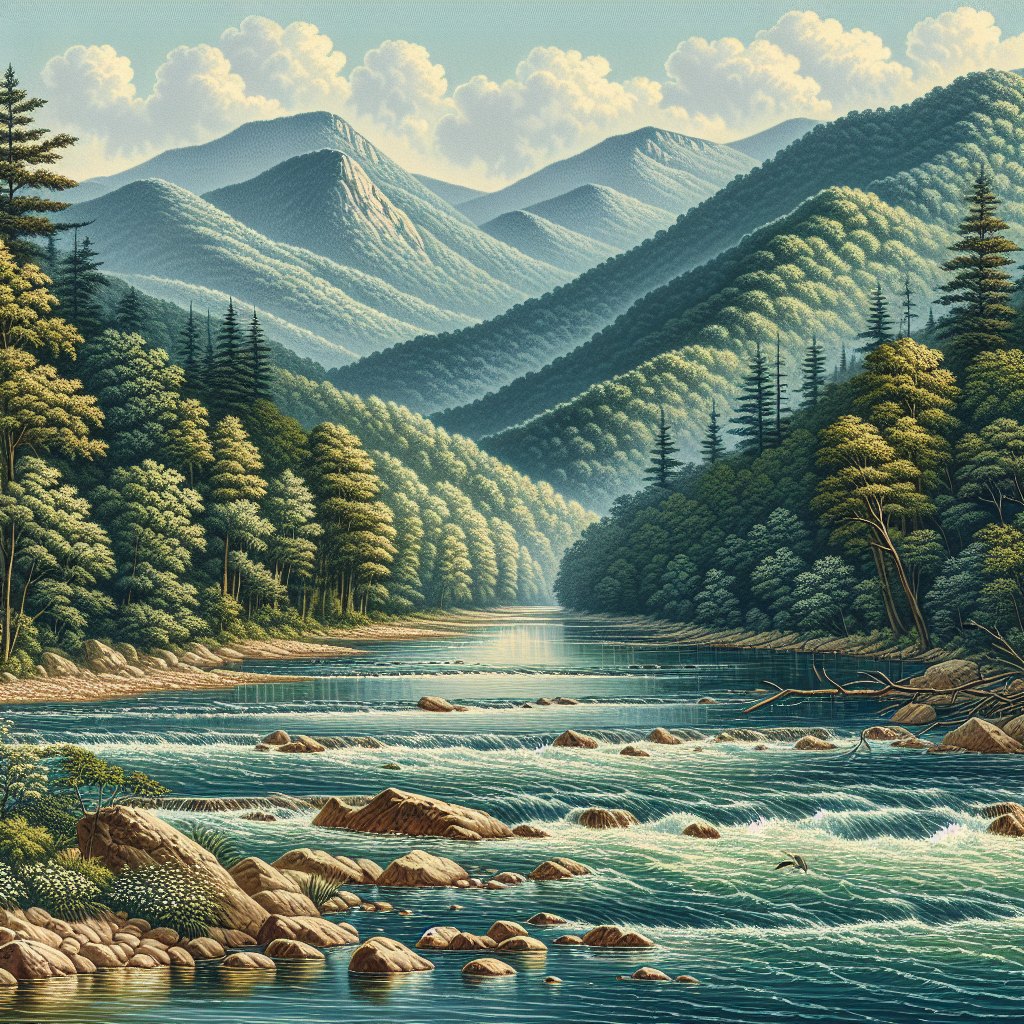

Imagine if rivers could tell their stories of ancient landscapes shaped by time and nature's relentless artistry. The Elk River in West Virginia is one such storyteller, its waters cradling tales of geology, wildlife, and human interaction. Flowing exuberantly through the Appalachian Mountains, this river was named by the early European settlers who mistakenly thought the numerous bison in the area were elk.
Originating in the dense, verdant heartlands of Pocahontas County, this waterway courses instrumentally through the topography of West Virginia for over 172 miles, ultimately meeting the Kanawha River in Charleston. Yet, beyond its physical journey, the Elk River signifies a historical passage—where the past dances with the present in the symphony of nature.
The Birthplace of the River: A Geological Miracle
The Elk River springs to life in West Virginia's Pocahontas County, renowned for its lush landscapes and majestic mountain ranges. Nestled amidst the Alleghenies, this area provides ideal conditions for the formation of such a prominent river. However, the river doesn't just emerge; it bursts forth from the convergence of several small streams, a testament to the intricate interplay of ecological dynamics and geographical resilience.
The geological underpinning of the Elk River provides a fascinating glimpse into the Earth's deep past. Celebrated for its rich deposits of coal and natural gas, the surroundings embody a mosaic of ancient sedimentary formations. This complex geological tapestry not only supports a diverse array of life but also underlines the immense evolutionary journey that the region has undertaken over millions of years.
A Bounty of Biodiversity
The Elk River is a lifeline for an impressive range of biodiversity. Complementing West Virginia's rugged charm, the river's banks are adorned with wildlife, where species thrive amidst the sanctuary of the river's fertile environment. Many anglers are drawn to its waters, lured by the promise of catching smallmouth bass, muskellunge, and walleye.
Beyond fish, the river nurtures a vibrant ecological community—from otters playfully gliding through its currents to bald eagles soaring high above its surface. These ecosystems reflect the river’s capacity to harbor life while illustrating a microcosm of the Appalachian wilderness. It's a living laboratory, inviting enthusiasts and scientists to immerse themselves in studying these interconnected life forms.
Human Interaction: From Settlers to Society
The Elk River has long been more than just a ribbon of water to the communities along its edges. The Cherokee and Shawnee tribes initially made their homes near its waters, utilizing its resources and respecting its natural course. European settlers followed, capitalizing on the river's abundance and strategic significance. The Elk River served not only as a critical natural resource but as a pathway for trade, fostering economic and cultural development within the region.
Construction of infrastructure like the Sutton Dam in the mid-20th century marked a period of transformation, harnessing the river’s potential for flood control and recreation. This interplay between development and conservation underscores an ongoing narrative about human ingenuity and environmental stewardship.
A Resource for Recreation and Conservation
Today, the Elk River epitomizes both opportunity and responsibility. For outdoor enthusiasts, it offers canoeing, kayaking, and hiking along its expansive network. The river is a fusion of adrenaline-inducing rapids and tranquil vistas that provide the perfect backdrop for nature appreciation and adventure.
Moreover, ongoing conservation efforts aim to maintain the ecological integrity of the Elk River. These initiatives focus on reducing pollution, preserving aquatic habitats, and ensuring sustainable land use practices. By investing in the river’s health, both the government and community stakeholders champion a future where nature and humanity harmoniously coexist.
The Future of the Elk River
The Elk River is more than a geological formation; it is an evolving narrative of life and adaptation. As we peer into the future, poised at the cusp of technological and ecological transformations, the river serves as an emblem of our shared journey. By learning from its past and addressing present challenges, the Elk River becomes a beacon of hope and resilience.
From the adventurous hiker to the dedicated scientist, this West Virginian gem invites all of humanity to listen, learn, and be inspired by the stories it has etched into the landscape. As we continue to explore its depths, may we also be inspired to preserve it for future generations, ensuring that the Elk River remains a vibrant chapter in the annals of history.