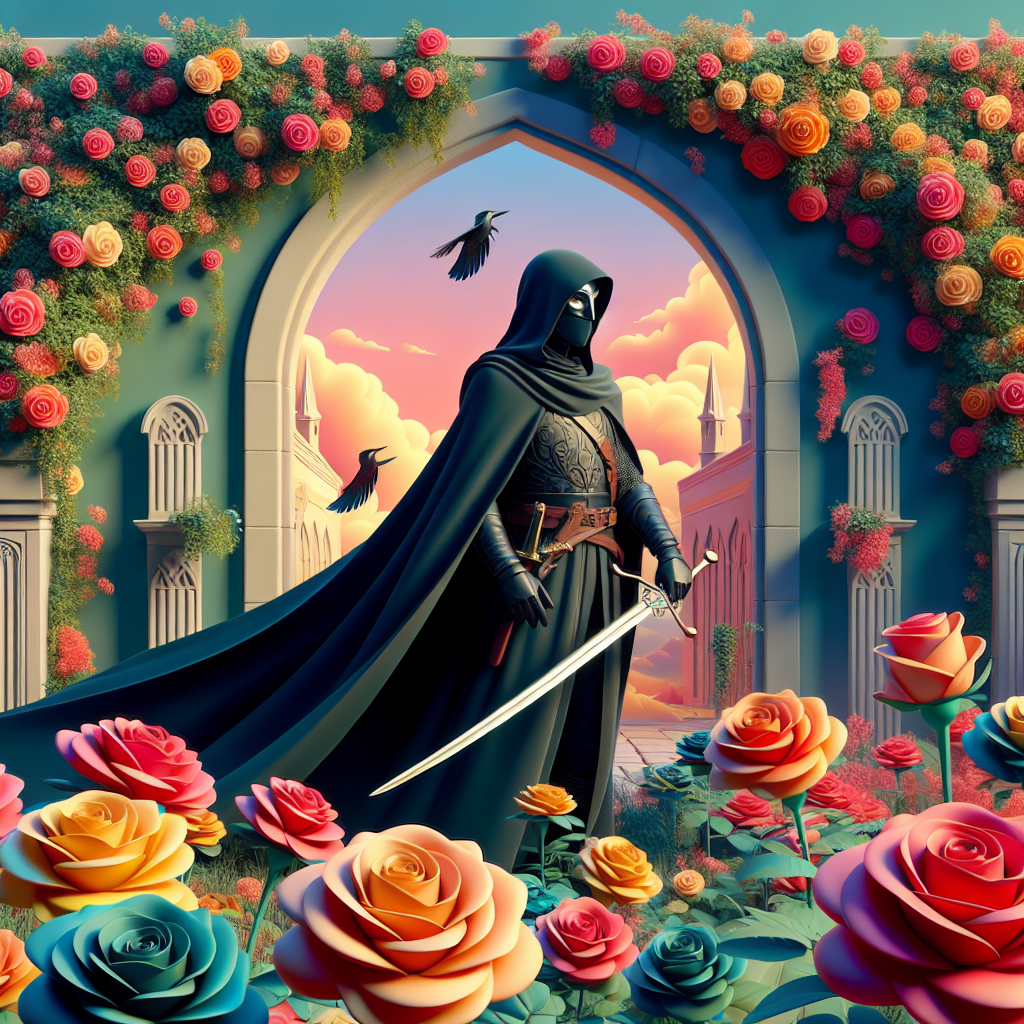

Once upon a stormy desert night in the thrilling world of telenovelas, Telemundo whisked viewers into a whirlwind of romance, adventure, and swashbuckling heroism with El Zorro, la Espada y la Rosa. Released in 2007, this vibrant series stars Christian Meier as the legendary masked crusader, Zorro, and Marlene Favela as his fierce and beautiful counterpart, Esmeralda Sánchez de Moncada. Set against the backdrop of colonial California, they navigate a world teetering between duty and desire. This magical blend of history, romance, and action quakes with complexity but blossoms into an epic you can't help but be drawn to.
Science teaches us that when the known meets the unknown, a new dimension of reality blooms—and isn’t that the charm of El Zorro, la Espada y la Rosa? Let’s break down the chemistry of this romantic series through character dynamics and its entwinement with historical elements.
The Return of Zorro: More Than Just a Mask
El Zorro, la Espada y la Rosa delights fans of the original Zorro legend by retaining the essence of this iconic character—a legendary masked vigilante known for his wit, charm, and unmatched swordsmanship. Christian Meier plays the character of Don Diego de la Vega, a man who morphs from a masked hero into a mere mortal. Balancing humor and keen intellect, Meier’s Zorro maneuvers through societal justice and personal desires with deft artistry. As in any scientific exploration, context sets the scene, and here, 19th-century California marked by Spanish colonial rule becomes fertile ground for Zorro's adventures.
Esmeralda: The Rosa in This Tale
Esmeralda, portrayed by Marlene Favela, stands as an embodiment of strength and allure. With an unwavering resolve to change her destiny, she challenges both male dominion and societal expectations. Her character vividly represents the era's push for independence and gender equality—a theme historically relevant yet curiously futuristic in its reach. The journey of Esmeralda and Zorro can be paralleled with how a hypothesis evolves into theory: full of trials, noble intentions, and eventual triumph.
The Science of Romance and Action
This novel-like adaptation weaves romance and action together like the double helix of DNA, interlaced yet retaining unique functions. Think of romance not merely as physical chemistry but a powerful, binding energy creating episodes filled with tension and passionate subplots. The choreography of fight scenes likewise uses kinetic energy to build climax, drawing viewers into the spectacle as participants rather than casual observers.
An Enthralling Tapestry with Historical Threads
Now let's hang some threads onto this thrilling tapestry. Colonial California, the period backdrop integral to the storytelling, provides a canvas mirroring real-life struggles and conquests of human history. The influence of European grandeur and Spanish orthodoxy paints a vivid picture of societal norms, against which the rebellion of Zorro gains explosive relevance. The weakest societal links, often shackled by the era's complexities, find a voice and champion in Zorro.
Moreover, the series pays homage to the cultural dynamics of the period, accentuating themes of loyalty, honor, and liberation. Understanding the gravity of societal change through such narratives adds layers of richness, just as an experiment reveals deeper insights when dissected.
Cultural Resonance: A Universal Echo
Appealing across generations, El Zorro, la Espada y la Rosa isn't simply a cultural phenomenon but a bridge across time linking past struggles with present hopes. The universal resonance of its themes—love, justice, identity—finds root in the psychological and emotional landscapes inherent in every society. The shared human longing for autonomy drives these characters, making them relateable to viewers despite temporal and geographical boundaries.
Conclusion
Enthusiasm for scientific progress and cultural narrative dance effortlessly when understanding shows like El Zorro, la Espada y la Rosa. As researchers in human potential, viewers find in it not just entertainment but inspiration—a clarion call encouraging us to question societal constructs through love and bravery. Just as scientific discoveries leave indelible marks on humanity, so too do timeless tales like those of Zorro and Esmeralda, enriching our knowledge of what it means to live courageously while embracing our most authentic selves.