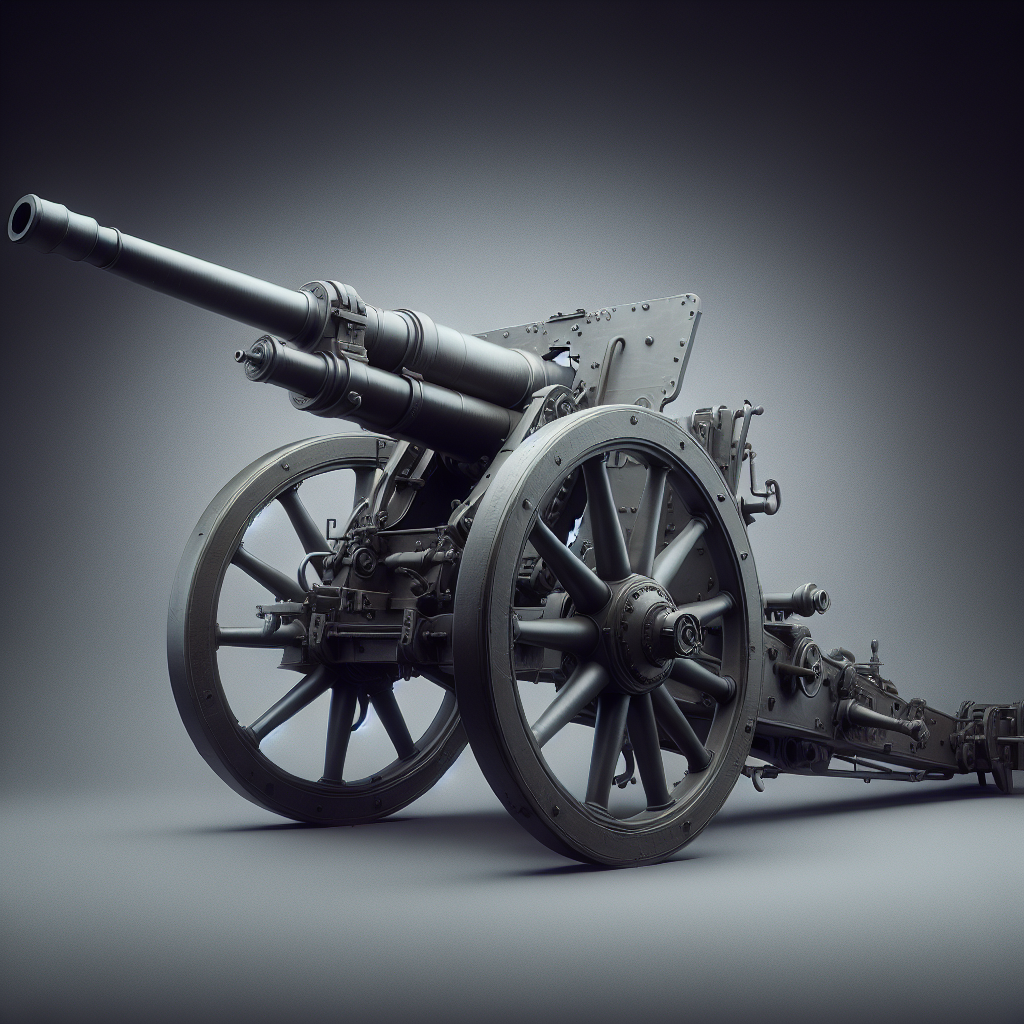

If you've ever wondered about the creative engineering solutions of early 20th-century armaments, the Ehrhardt 7.5 cm Model 1904 is an indispensable chapter in this thrilling saga. Designed by the renowned German manufacturer Rheinmetall's Ehrhardt, it was introduced in 1904 as a cutting-edge field gun that served in multiple armies before and during World War I. Mostly deployed by German and Ottoman forces, this artillery piece played a significant role in military history, showcasing an exquisite blend of function and form fostered by the industrial innovations of its time.
The Technical Marvel That Captured Many's Attention
At a time when militaries across the globe were hungry for advanced weaponry, the Ehrhardt 7.5 cm Model 1904 emerged sharply on the scene. This piece of artillery was immensely significant for its innovative hydraulic recoil system—an engineering marvel that not only improved the efficiency of the gun but also increased the rate of fire. Before this time, the need to reposition artillery after each shot due to recoil was a limiting factor, constraining the rapid response and strategic efficiency in battle. Equipped with a horizontal sliding wedge breech and a sophisticated design, the Model 1904 represented a leap forward in artillery technology.
How It Worked: Breaking It Down
Understanding the functionality of the Ehrhardt 7.5 cm Model 1904 is akin to decoding a fascinating chapter in the history of physics applied to practical ingenuity. The hydraulic recoil system offered stability and accuracy, rooted in principles that absorbed the immense energy released upon firing. This translated into less movement for the operators to manage, drastically cutting down the time between shots. Simultaneously, the horizontal sliding wedge breech, an advanced feature at the time, facilitated the quick loading of ammunition—a feature that was significantly more efficient than the screw breech systems it replaced.
A Global Player: The Who's Who
Rheinmetall's revolutionary design didn't just linger in German arsenals. The Model 1904 was exported and manufactured under license by several countries, including Spain and the Ottoman Empire. Each nation adopted it to their strategic requirements, reflecting the global applicability and demand for its advanced functionalities. These cross-border adaptations often came with specific modifications to cater to local operational needs, further cementing the gun's place in international military arsenals.
Where Did It Make Its Mark?
The Ehrhardt 7.5 cm Model 1904 has left imprints across diverse terrains—whether in European battlegrounds or the varied landscapes of the Ottoman territories. As the cloud of World War I loomed large, this artillery piece became a backbone for military operations that required both mobility and power. From the muddy trenches of Europe to more arid venues of battle, the Model 1904 saw extensive action, efficiently fulfilling the needs of military strategists of the time.
The 'Why' That Matters: A Milestone in Innovation
The significance of the Ehrhardt 7.5 cm Model 1904 can't be overstated. It was a weapon ahead of its time, typifying the spirit of the industrial age, where rapid advancements were not only desired but necessary for survival. The gun encapsulated what humanity could achieve through scientific understanding and technological evolution. Watching its influence on later artillery designs clearly illustrates its role as a catalyst for more advanced systems that would soon follow.
Why You Should Care
Exploring pieces like the Ehrhardt 7.5 cm Model 1904 helps us appreciate where we've come from and recognizes the impact of engineering milestones on contemporary technologies. It provides a tangible connection to our shared past and showcases how human ingenuity can solve complex problems, setting the stage for future innovation. In a world continuously fraught with conflict, appreciating historical engineering can inspire solutions with greater accuracy, efficiency, and—hopefully—a touch more compassion for preserving peace.
Further Readings and Explorations
For those with an insatiable curiosity about military history and early 20th-century innovations, there are myriad resources to explore, including military archives, museum exhibits, and comprehensive texts detailing the precise mechanics and influence of German engineering during this era. These documents not only catalog the evolution of armaments but also provide crucial insights into the broader social and political fabrics of the time.