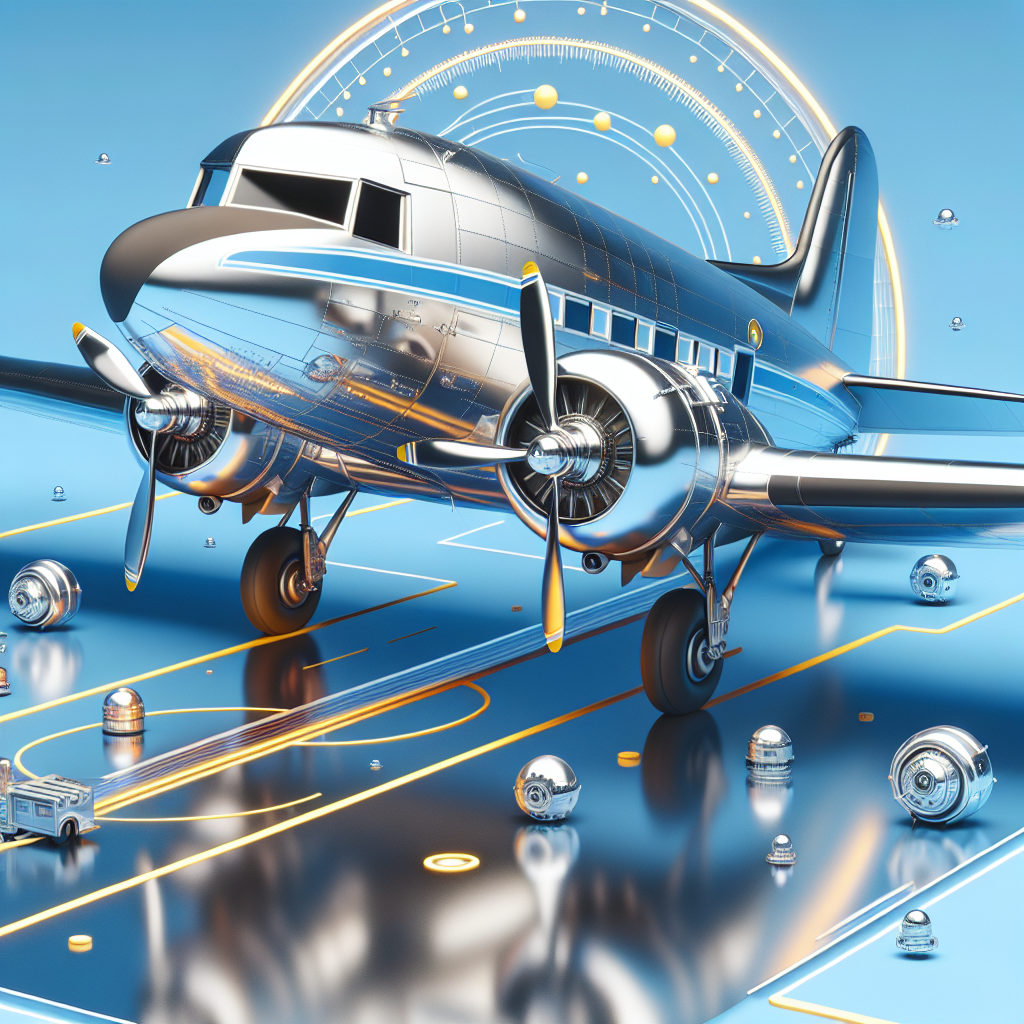

The Legendary Douglas DC-3: The Plane That Changed the World
Imagine a plane so revolutionary that it transformed the entire aviation industry and became a symbol of air travel's golden age. The Douglas DC-3, developed by the Douglas Aircraft Company in the 1930s, is precisely that aircraft. First taking to the skies on December 17, 1935, in Santa Monica, California, the DC-3 was designed by a team led by the visionary Donald Douglas. This aircraft was a game-changer, offering unprecedented reliability, comfort, and efficiency, which made it the backbone of commercial aviation and military transport during its heyday.
The DC-3 was born out of a need for a more efficient and comfortable passenger aircraft. Airlines in the early 1930s were looking for a plane that could carry more passengers over longer distances without the need for frequent refueling stops. The DC-3 met these demands with its innovative design, featuring a robust all-metal construction, a spacious cabin that could accommodate up to 32 passengers, and a range of over 1,500 miles. This made it the first aircraft capable of making a profit solely from passenger service, without relying on mail contracts.
The impact of the DC-3 was felt worldwide. During World War II, it was adapted for military use as the C-47 Skytrain, playing a crucial role in transporting troops and supplies. Its versatility and reliability earned it the nickname "Gooney Bird" among pilots. After the war, surplus DC-3s flooded the civilian market, further cementing its status as a workhorse of the skies. It was used by airlines across the globe, from the United States to Europe, Asia, and beyond, helping to connect the world like never before.
The DC-3's legacy is enduring. Even today, nearly a century after its first flight, a number of these aircraft are still in operation, a testament to their remarkable engineering and durability. Aviation enthusiasts and historians celebrate the DC-3 not just for its technical achievements but for its role in shaping modern air travel. It stands as a symbol of human ingenuity and the spirit of exploration, reminding us of a time when the sky was no longer the limit but a new frontier to be conquered.