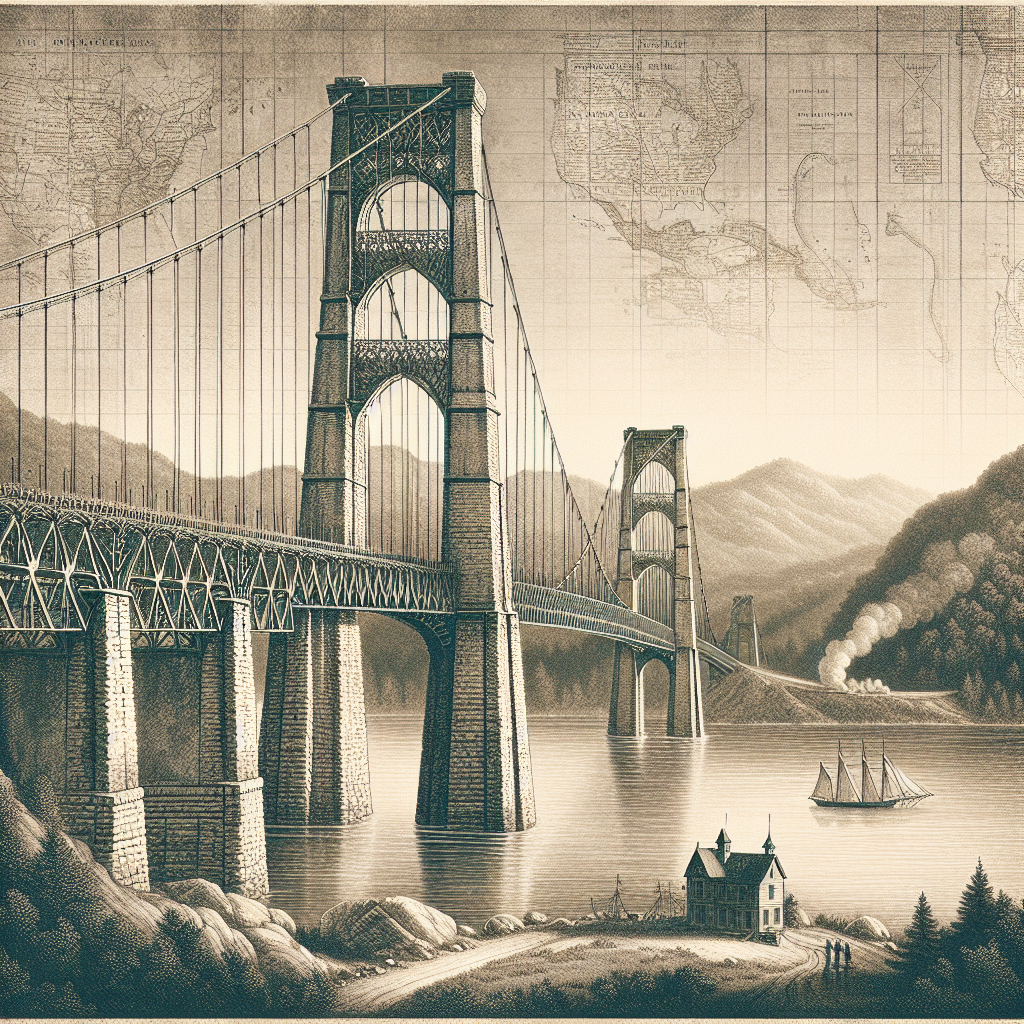


Imagine crossing the grand Mississippi on wings of steel! Well, while Dodd Ford Bridge might not be the Arthur Ravenel Jr. Bridge, it certainly captures the essence of engineering and history wrapped in a more understated package. Situated near Amboy, Minnesota, this bridge is not just a crossing over the Blue Earth River but a testament to the vibrant history of architecture and transportation in the United States.
A Portal to the Past: Who Built This Masterpiece?
Constructed in 1901, Dodd Ford Bridge was designed by A.Y. Bayne, a visionary civil engineer of his time who knew his way around trusses and rivets like Mozart knew his notes. This engineering marvel was built by the American Bridge Company, a juggernaut in its own right during the industrial boom of the early 20th century, known for building resilient and elegant structures nationwide.
The bridge's purpose was simple yet essential: to connect the local communities by providing a dependable route over the sometimes treacherous Blue Earth River. At a time when rural connectivity played a crucial role in socio-economic development, Dodd Ford Bridge acted as a tangible link for people, goods, and even dreams.
The Art of Engineering: What Makes This Bridge Special?
Dodd Ford Bridge is a pin-connected, Camelback through truss design—terms that might seem daunting at first but are a joy to unfold. The 'Camelback' name refers to the hump-like shape of the top chord, while 'through truss' means the truss extends above and below the deck you drive on. These aren’t just engineering jargon; they're key elements that distribute weight satisfactorily and add a dash of architectural elegance.
The pin-connected system allows for flexibility, distributing tension and compression more efficiently across its structure, which is why this design was popular at the turn of the century when heavy loads needed optimized support yet fluid adaptation to expansions and contractions due to temperature changes.
Bridging Conservation with Progress
Skipping a century to the year 2007, the bridge was no longer fit to serve the rising modern heavy traffic. Many such bridges have faced the fate of demolition, but Dodd Ford was lucky. Instead of succumbing to time, it was reclaimed by conservationists and history buffs who appreciated its historical value and engineering brilliance.
In 2010, it was added to the National Register of Historic Places, receiving recognition that catapulted it from a local treasure to a national point of interest. This recognition also paved the way for a rehabilitative facelift in 2011, balancing modern needs while preserving historical integrity. The restoration aimed to prolong the bridge’s life while maintaining its aesthetic charm, utilizing like-for-like repairs that honored the original techniques and materials.
Why Does Dodd Ford Bridge Matter?
Beyond its functional role, Dodd Ford Bridge stands as a symbol of an era that laid down the very roads and bridges leading to today's achievements in infrastructure. It epitomizes an exciting period of innovation and embodies how the blend of form and function can lead to structures that transcend their utilitarian use to become beloved landmarks.
For science enthusiasts or anyone with a curiosity for hidden histories, bridges like Dodd Ford offer a tangible connection to the past. Touching the riveted metalwork or walking across the timber decking provides a dash of nostalgia combined with an appreciation for human ingenuity.
Can Technology Preserve Such History?
Yes, and it has been done! By integrating modern technology in restoration efforts, we are not merely preserving physical structures but the stories they tell. Techniques such as laser scanning and 3D modeling have become crucial in documenting existing conditions before any restoration work begins. This digital preservation ensures that future generations can revisit and learn from these architectural gems, even if they encounter natural wear and tear over time.
An Invitation to Visit and Reflect
For those with an adventurous spirit or who fancy a touch of rust-filled romance, a visit to Dodd Ford Bridge is worth considering. It's a marvelous example of how nostalgia and modernity can coexist harmoniously. As you walk across this heritage structure, take a moment to reflect on how far we've come as a society, yet how some cornerstone achievements remain as relevant today as they were when they first emerged.
In this optimistic exploration of engineering nuance and historical significance, we celebrate Dodd Ford Bridge not only as a remarkable piece of history but as a beacon for future conservation efforts. Isn't it wonderful how humanity can retain its treasures, adapting them for future use while keeping their past firmly alive?