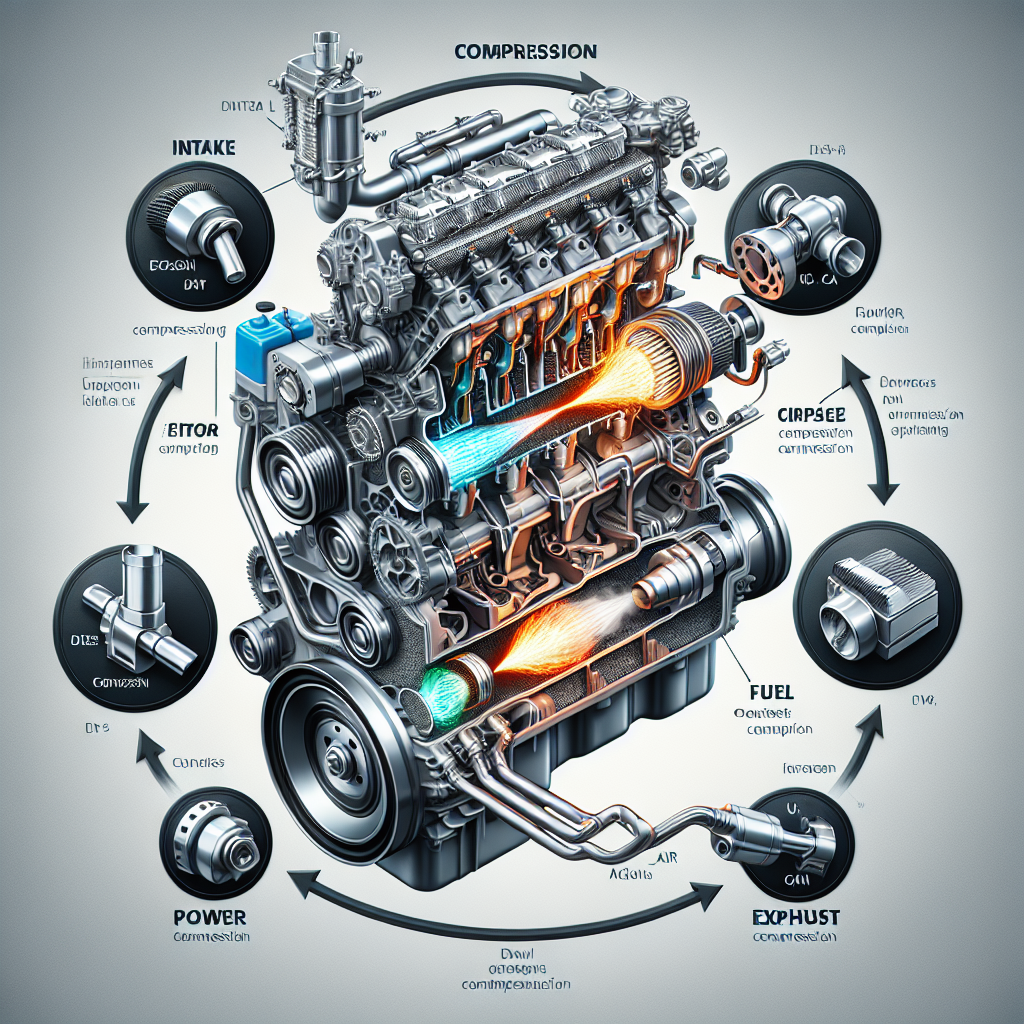

Igniting Our Curiosity: Unraveling the Mysteries of the Diesel Cycle
Have you ever wondered how your car gets the energy to cruise down the highway or how trucks carry massive loads across continents? The answer lies in a fascinating piece of engineering known as the Diesel cycle. The Diesel cycle, pioneered by Rudolf Diesel in the late 1800s, is a thermodynamic cycle that powers many of the world's heavy-duty engines. It's an incredible blend of science and practicality, combining complex physics with everyday functionality.
What is the Diesel Cycle?
In its essence, the Diesel cycle is a type of internal combustion engine cycle. Unlike the gasoline engine, which relies on spark plugs to ignite a mixture of air and vaporized fuel, the Diesel cycle compression-ignites. This means that it compresses air to such high pressures and temperatures that when fuel is injected, it ignites spontaneously. Intriguing, right? This principle not only makes diesel engines more efficient but also empowers them to deliver greater torque.
How the Diesel Cycle Works: Step by Step
Understanding the Diesel cycle involves breaking it down into its key steps or phases. Let’s unbox each phase in a manner as simple and exciting as opening a gift!
Intake Stroke: The cycle begins with the intake stroke, where the engine piston moves downwards, and the cylinder gets filled with pure air. Imagine the cylinder as a sponge soaking up every bit of air it can.
Compression Stroke: Next up is the compression stroke. The piston moves back up, squeezing the air into a much smaller space. This is where the Diesel engine reveals its magic trick—compressing the air enough to increase its temperature significantly. That's heating up the stage for combustion!
Power Stroke: At the peak of compression, fuel is injected into the cylinder. The high temperature of the compressed air ignites the fuel immediately, pushing the piston back down with fuel-generated power. This work phase is where the Diesel cycle flexes its muscles, powering up the engine.
Exhaust Stroke: Finally, the exhaust stroke occurs. The piston rises once more, expelling burnt gases out of the cylinder and making way for the cycle to start anew.
Why Diesel?
Diesel engines are renowned for their efficiency and durability. They can convert a higher portion of fuel into usable energy, which means not only do you get more bang for your buck at the pump, but they also produce less CO2 per mile traveled. This is great for those who are fervent about eco-friendliness. Additionally, Diesel engines often last longer than their gasoline counterparts due to their robust design.
Applications of Diesel Engines
The application of the Diesel cycle spans a variety of sectors, highlighting its versatility. Heavy machinery like bulldozers and backhoes, as well as marine vessels and locomotives, rely heavily on Diesel engines. On a smaller scale, diesel cars continue to serve drivers around the world with their long-lasting and efficient performance.
In industrial settings, Diesel generators provide essential power, especially in remote locations without access to mainline electricity. The cycle’s consistent and reliable energy delivery makes it indispensable for construction sites, hospitals, and data centers, where an uninterrupted power supply is crucial.
The Future of Diesel
As we enthusiastically wave the banner for sustainable energy sources, diesel technology isn’t resting on its laurels; it's evolving! Researchers are exploring bio-diesel and synthetic fuels, aiming to reduce emissions while preserving the efficiency that makes Diesel engines so appealing. Innovations like particle filters and catalytic converters are also helping lower the environmental footprint of diesel engines.
Moreover, hybrid Diesel-electric systems are emerging as promising alternatives for both vehicles and power generation solutions, offering cleaner and highly efficient operations. These innovations reinforce the belief that Diesel technology will play a vital role as we transition to a future dominated by renewable energy.
Conclusion: Celebrating Innovation
The Diesel cycle is a marvel of human ingenuity that has been essential to the mechanisms of transport and industry. Its evolution remains promising as technological advancements align with global sustainability goals. So, let's keep the flame of curiosity alive and learn from how such a powerful system works, inspiring us to strive for an even more efficient and exciting future! Together, the journey with diesel continues as we innovate, optimize, and explore the possibilities of a more sustainable world.